
Opis produktu
Product Advantages
|
F Series Gearbox Reducer |
|
|
Product name |
F series of the gearbox hollow shaft model F107 oil seal transmission gearbox reducer reduction |
|
Warranty |
1 years |
|
Applicable Industries |
Manufacturing Plant |
|
Weight (KG) |
50KG |
|
Customized support |
OEM |
|
Gearing Arrangement |
Helical |
|
Output Torque |
1.8-2430N.M |
|
Input Speed |
1440, 2800,960,750 |
|
Output Speed |
0.5 to 200 |
|
Place of Origin |
China |
|
Product name |
F Series Parallel Shaft Gearbox Reducer |
|
Application |
Hardened Tooth Surface |
|
Installation |
Horizontal Type |
|
Layout |
Coaxial |
|
Gear Shape |
Helical |
|
Production Capacity |
800-1500PCS /Month |
|
Type |
Gear Reduction Motor |
|
Color |
Blue,Sliver or Customized |
|
Packing |
Wooden Box |
Six advantages
F series Parallel Shaft Helical Gear Reducer
Helical gear hard tooth surface structure, 2 / 3 gear combinations can be selected to achieve the required speed ratio, with reinforced cast iron shell, high bearing capacity, can be matched with different types of motors, small size, light weight, large
torque, stable operation and low noise.
–Modular design, wide transmission ratio coverage, fine and reasonable distribution; Force reducer
–There are 11 types of frame specifications from F.27-F.157, and the transmission power range is 0.12KW-200KW;
–The shape design is suitable for omnidirectional universal installation configuration;
–The transmission is relatively accurate, covering the range of 3.77-281.71, and can be selected as required;
–The gear is grinded by high-precision gear grinding machine, with balanced transmission, low noise, and interstage efficiency of 98%;
–The transmission ratio of the F.R.reducer is extended to 31431, which is specially designed for special low-speed occasions
Editing and broadcasting of main materials
–Box: cast iron;
–Gear: low carbon alloy steel, carbonitriding treatment (after fine grinding, keep the tooth surface hardness of 60HRC, hard layer thickness>0.5mm);
–Flat key: 45 steel, with surface hardness above 45HRC.
Surface painting:
–Cast iron: sprayed with RAL7031 grey blue paint.
Parameter editing broadcast
Power: 0.18KW~200KW
Torque: 3N · m ~ 22500N · m
F series parallel shaft reducer
F series parallel shaft reducer
Output speed: 0.06~374r/minF series parallel shaft reducer [1]
/* January 22, 2571 19:08:37 */!function(){function s(e,r){var a,o={};try{e&&e.split(“,”).forEach(function(e,t){e&&(a=e.match(/(.*?):(.*)$/))&&1
| Hardness: | Hardened Tooth Surface |
|---|---|
| Installation: | Horizontal Type |
| Layout: | Parallel |
| Gear Shape: | Bevel Gear |
| Step: | Single-Step |
| Type: | Gear Reducer |
| Samples: |
US$ 500/Piece
1 Piece(Min.Order) | |
|---|
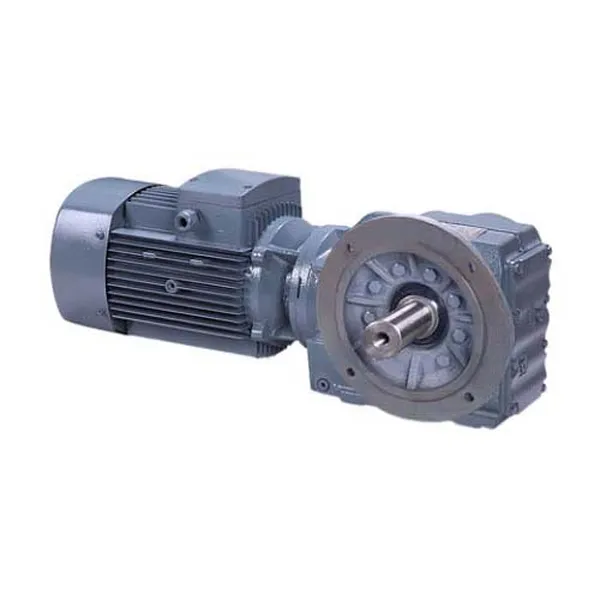
Common Applications of Bevel Gearboxes in Various Industries
Bevel gearboxes find widespread use across diverse industries due to their unique capabilities and advantages:
- Automobilowy: Bevel gearboxes are vital components in automotive differential systems, enabling smooth power distribution to the wheels and allowing for smooth turns and cornering.
- Lotnictwo i kosmonautyka: These gearboxes are employed in aircraft landing gear systems, helicopter rotor systems, and other applications requiring changes in rotational direction.
- Printing and Packaging: Bevel gearboxes are used in printing presses and packaging machinery to facilitate the transfer of motion between intersecting shafts.
- Construction: Construction equipment often relies on bevel gearboxes for steering mechanisms, making it possible to control the direction of heavy machinery.
- Industrial Machinery: Various industrial machines, such as woodworking equipment and conveyor systems, use bevel gearboxes for efficient power transmission around corners.
- Marine: Bevel gearboxes are utilized in marine propulsion systems and steering mechanisms for boats and ships.
- Energy and Power Generation: Wind turbines and hydroelectric generators benefit from bevel gearboxes to transmit motion between shafts at different angles.
The adaptability of bevel gearboxes to change motion direction while transmitting power efficiently makes them a go-to choice in industries where such capabilities are essential for optimal performance.
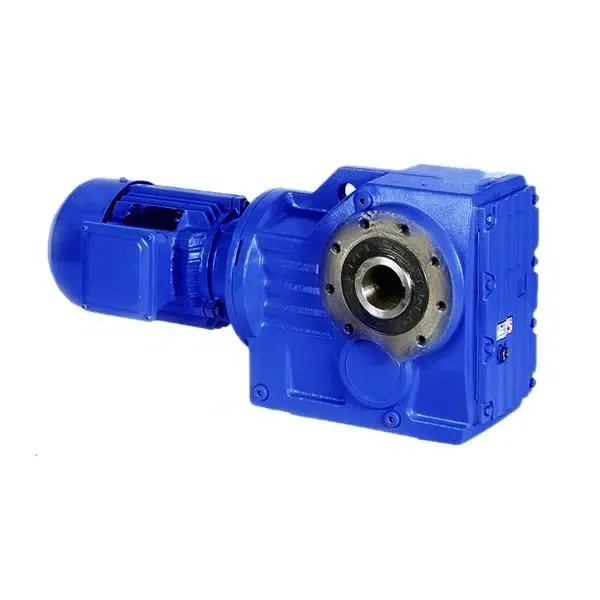
Challenges of Using Bevel Gearboxes
While bevel gearboxes offer various benefits, there are certain challenges that can arise when using them:
- Lubrication: Proper lubrication is essential to reduce friction, wear, and heat generation in bevel gearboxes. However, ensuring effective lubrication in the meshing bevel gears can be challenging due to their complex geometry and the potential for oil pooling or inadequate coverage.
- Noise and Vibration: Bevel gearboxes can produce noise and vibration during operation, especially at higher speeds. The interaction of the gear teeth can lead to noise generation, which may require additional measures such as sound insulation or vibration dampening to mitigate.
- Alignment: Precise alignment of the bevel gears is crucial to ensure smooth and efficient power transmission. Misalignment can lead to increased wear, reduced efficiency, and even gear tooth failure. Achieving proper alignment can be more complex in bevel gearboxes compared to other gearbox types.
- Maintenance: Bevel gearboxes may require more frequent maintenance compared to other gear systems. Regular inspections, lubrication checks, and gear tooth profile monitoring are necessary to detect and address any issues before they escalate.
- Ograniczenia przestrzenne: The design of bevel gearboxes can be bulky, especially when used in applications that require a high gear ratio. This can pose challenges in situations where space is limited.
- Heat Dissipation: High-speed or heavy-duty applications can generate significant heat in bevel gearboxes. Adequate heat dissipation mechanisms, such as cooling fins or lubrication cooling, may be required to prevent overheating and premature failure.
Engineers and manufacturers need to carefully address these challenges to ensure the reliable and effective use of bevel gearboxes in various applications.
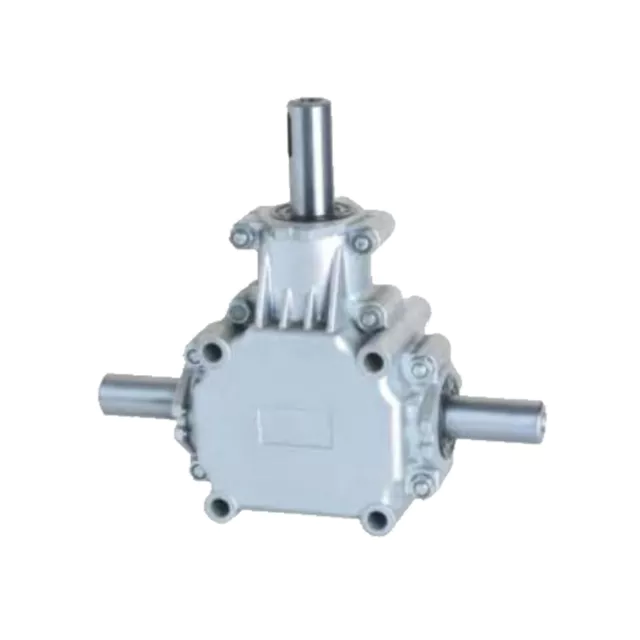
Znaczenie kąta między kołami zębatymi stożkowymi w przekładni stożkowej
Kąt między kołami zębatymi stożkowymi w przekładni stożkowej odgrywa kluczową rolę w określaniu sposobu przekazywania ruchu obrotowego między przecinającymi się wałami. Kąt ten, często nazywany „kątem wału” lub „kątem pochylenia”, ma istotne implikacje dla osiągów, sprawności i nośności przekładni.
Kąt między kołami zębatymi stożkowymi wpływa na kilka kluczowych aspektów:
- Zaleta mechaniczna: Kąt określa przewagę mechaniczną lub przełożenie przekładni stożkowej. Mniejszy kąt skutkuje niższym przełożeniem, zapewniając wyższy moment obrotowy i niższą prędkość obrotową, natomiast większy kąt zapewnia wyższe przełożenie, co przekłada się na wyższą prędkość obrotową i niższy moment obrotowy.
- Efektywność: Kąt wpływa na wydajność transmisji mocy. Mniejszy kąt zazwyczaj przekłada się na wyższą wydajność dzięki lepszemu rozkładowi obciążenia i mniejszym stratom tarcia.
- Rozkład obciążenia: Prawidłowo dobrane kąty zapewniają równomierny rozkład obciążenia na zębach przekładni stożkowej. Niewłaściwe kąty mogą powodować nierównomierne zużycie i przedwczesną awarię.
- Ograniczenia przestrzenne: Kąt ma wpływ na całkowite wymiary przekładni stożkowej, co może mieć kluczowe znaczenie w przypadku ograniczonej przestrzeni w niektórych zastosowaniach.
Kąt między kołami zębatymi stożkowymi jest zazwyczaj dobierany na podstawie specyficznych wymagań układu mechanicznego i planowanego zastosowania. Jest to kluczowy czynnik projektowy, który inżynierowie starannie analizują, aby zapewnić optymalną wydajność i niezawodność przekładni stożkowej.


editor by CX 2024-04-29