
Descrizione del prodotto
Product Advantages
|
F Series Gearbox Reducer |
|
|
Product name |
F series of the gearbox hollow shaft model F107 oil seal transmission gearbox reducer reduction |
|
Garanzia |
1 years |
|
Applicable Industries |
Manufacturing Plant |
|
Weight (KG) |
50KG |
|
Customized support |
OEM |
|
Gearing Arrangement |
Helical |
|
Output Torque |
1.8-2430N.M |
|
Input Speed |
1440, 2800,960,750 |
|
Output Speed |
0.5 to 200 |
|
Place of Origin |
China |
|
Product name |
F Series Parallel Shaft Gearbox Reducer |
|
Application |
Hardened Tooth Surface |
|
Installation |
Horizontal Type |
|
Layout |
Coaxial |
|
Gear Shape |
Helical |
|
Production Capacity |
800-1500PCS /Month |
|
Tipo |
Gear Reduction Motor |
|
Colore |
Blue,Sliver or Customized |
|
Packing |
Wooden Box |
Six advantages
F series Parallel Shaft Helical Gear Reducer
Helical gear hard tooth surface structure, 2 / 3 gear combinations can be selected to achieve the required speed ratio, with reinforced cast iron shell, high bearing capacity, can be matched with different types of motors, small size, light weight, large
torque, stable operation and low noise.
–Modular design, wide transmission ratio coverage, fine and reasonable distribution; Force reducer
–There are 11 types of frame specifications from F.27-F.157, and the transmission power range is 0.12KW-200KW;
–The shape design is suitable for omnidirectional universal installation configuration;
–The transmission is relatively accurate, covering the range of 3.77-281.71, and can be selected as required;
–The gear is grinded by high-precision gear grinding machine, with balanced transmission, low noise, and interstage efficiency of 98%;
–The transmission ratio of the F.R.reducer is extended to 31431, which is specially designed for special low-speed occasions
Editing and broadcasting of main materials
–Box: cast iron;
–Gear: low carbon alloy steel, carbonitriding treatment (after fine grinding, keep the tooth surface hardness of 60HRC, hard layer thickness>0.5mm);
–Flat key: 45 steel, with surface hardness above 45HRC.
Surface painting:
–Cast iron: sprayed with RAL7031 grey blue paint.
Parameter editing broadcast
Power: 0.18KW~200KW
Torque: 3N · m ~ 22500N · m
F series parallel shaft reducer
F series parallel shaft reducer
Output speed: 0.06~374r/minF series parallel shaft reducer [1]
/* January 22, 2571 19:08:37 */!function(){function s(e,r){var a,o={};try{e&&e.split(“,”).forEach(function(e,t){e&&(a=e.match(/(.*?):(.*)$/))&&1
| Hardness: | Hardened Tooth Surface |
|---|---|
| Installation: | Horizontal Type |
| Layout: | Parallel |
| Gear Shape: | Bevel Gear |
| Step: | Single-Step |
| Type: | Gear Reducer |
| Samples: |
US$ 500/Piece
1 Piece(Min.Order) | |
|---|
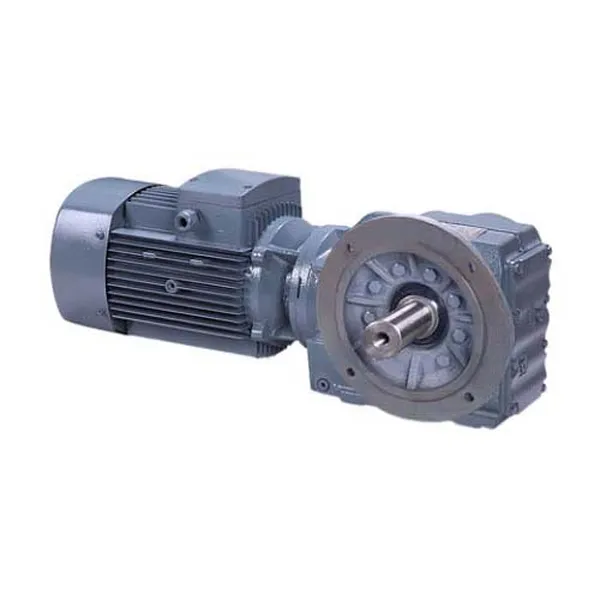
Common Applications of Bevel Gearboxes in Various Industries
Bevel gearboxes find widespread use across diverse industries due to their unique capabilities and advantages:
- Settore automobilistico: Bevel gearboxes are vital components in automotive differential systems, enabling smooth power distribution to the wheels and allowing for smooth turns and cornering.
- Aerospaziale: These gearboxes are employed in aircraft landing gear systems, helicopter rotor systems, and other applications requiring changes in rotational direction.
- Printing and Packaging: Bevel gearboxes are used in printing presses and packaging machinery to facilitate the transfer of motion between intersecting shafts.
- Construction: Construction equipment often relies on bevel gearboxes for steering mechanisms, making it possible to control the direction of heavy machinery.
- Industrial Machinery: Various industrial machines, such as woodworking equipment and conveyor systems, use bevel gearboxes for efficient power transmission around corners.
- Marine: Bevel gearboxes are utilized in marine propulsion systems and steering mechanisms for boats and ships.
- Energy and Power Generation: Wind turbines and hydroelectric generators benefit from bevel gearboxes to transmit motion between shafts at different angles.
The adaptability of bevel gearboxes to change motion direction while transmitting power efficiently makes them a go-to choice in industries where such capabilities are essential for optimal performance.
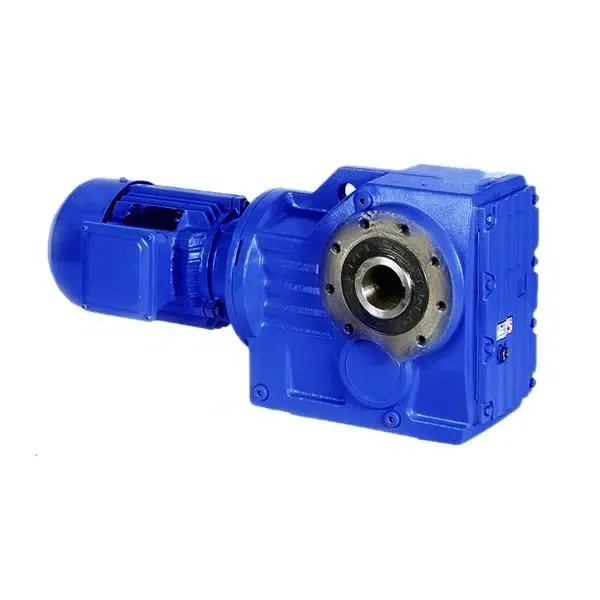
Sfide nell'utilizzo dei riduttori a ingranaggi conici
Sebbene i riduttori a ingranaggi conici offrano diversi vantaggi, il loro utilizzo può presentare alcune problematiche:
- Lubrificazione: Una lubrificazione adeguata è essenziale per ridurre l'attrito, l'usura e la generazione di calore nei riduttori a ingranaggi conici. Tuttavia, garantire una lubrificazione efficace negli ingranaggi conici in presa può essere difficile a causa della loro complessa geometria e del potenziale ristagno di olio o di una copertura insufficiente.
- Rumore e vibrazioni: I riduttori a ingranaggi conici possono produrre rumore e vibrazioni durante il funzionamento, soprattutto ad alte velocità. L'interazione tra i denti degli ingranaggi può generare rumore, che potrebbe richiedere misure aggiuntive come l'isolamento acustico o lo smorzamento delle vibrazioni per essere attenuato.
- Allineamento: L'allineamento preciso degli ingranaggi conici è fondamentale per garantire una trasmissione di potenza fluida ed efficiente. Un disallineamento può causare un'usura maggiore, una riduzione dell'efficienza e persino la rottura dei denti degli ingranaggi. Ottenere un allineamento corretto può essere più complesso nei riduttori a ingranaggi conici rispetto ad altri tipi di riduttori.
- Manutenzione: I riduttori a ingranaggi conici possono richiedere una manutenzione più frequente rispetto ad altri sistemi di ingranaggi. Ispezioni regolari, controlli della lubrificazione e monitoraggio del profilo dei denti degli ingranaggi sono necessari per individuare e risolvere eventuali problemi prima che si aggravino.
- Vincoli di spazio: I riduttori a ingranaggi conici possono risultare ingombranti, soprattutto se utilizzati in applicazioni che richiedono un elevato rapporto di trasmissione. Ciò può rappresentare una sfida in situazioni in cui lo spazio è limitato.
- Dissipazione del calore: Le applicazioni ad alta velocità o per impieghi gravosi possono generare un calore considerevole nei riduttori a ingranaggi conici. Per prevenire il surriscaldamento e i guasti prematuri, potrebbero essere necessari meccanismi di dissipazione del calore adeguati, come alette di raffreddamento o raffreddamento del lubrificante.
Gli ingegneri e i produttori devono affrontare attentamente queste sfide per garantire un utilizzo affidabile ed efficace dei riduttori a ingranaggi conici in diverse applicazioni.
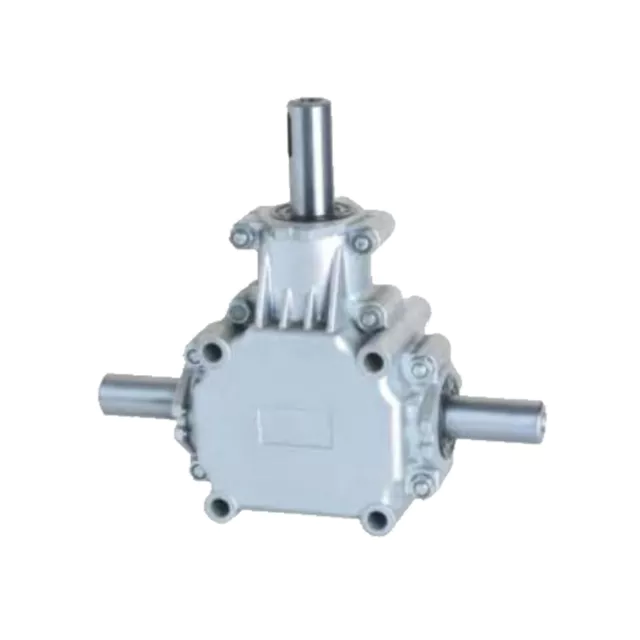
Significance of the Angle Between Bevel Gears in a Bevel Gearbox
The angle between bevel gears in a bevel gearbox plays a crucial role in determining how the rotational motion is transmitted between the intersecting shafts. This angle, often referred to as the “shaft angle” or “pitch angle,” has significant implications for the performance, efficiency, and load-bearing capacity of the gearbox.
The angle between bevel gears affects several key aspects:
- Mechanical Advantage: The angle determines the mechanical advantage or gear ratio of the bevel gearbox. A smaller angle results in a lower gear ratio, providing higher torque and slower rotational speed, while a larger angle yields a higher gear ratio, resulting in higher rotational speed and lower torque output.
- Efficiency: The angle affects the efficiency of power transmission. A smaller angle generally leads to higher efficiency due to improved load distribution and reduced friction losses.
- Load Distribution: Properly chosen angles contribute to even load distribution across the teeth of the bevel gears. Improper angles can cause uneven wear and premature failure.
- Vincoli di spazio: The angle impacts the overall dimensions of the bevel gearbox, which can be critical when space is limited in certain applications.
The angle between bevel gears is typically selected based on the specific requirements of the mechanical system and the intended application. It is a critical design consideration that engineers carefully analyze to ensure optimal performance and reliability of the bevel gearbox.


editor by CX 2024-04-29