
Описание продукта
Product Advantages
|
F Series Gearbox Reducer |
|
|
Product name |
F series of the gearbox hollow shaft model F107 oil seal transmission gearbox reducer reduction |
|
Warranty |
1 years |
|
Applicable Industries |
Manufacturing Plant |
|
Weight (KG) |
50KG |
|
Customized support |
OEM |
|
Зубчатая передача |
Helical |
|
Выходной крутящий момент |
1.8-2430N.M |
|
Входная скорость |
1440, 2800,960,750 |
|
Выходная скорость |
0.5 to 200 |
|
Place of Origin |
China |
|
Product name |
F Series Parallel Shaft Gearbox Reducer |
|
Приложение |
Затвердевшая поверхность зуба |
|
Установка |
Horizontal Type |
|
Layout |
Coaxial |
|
Gear Shape |
Helical |
|
Production Capacity |
800-1500PCS /Month |
|
Тип |
Gear Reduction Motor |
|
Цвет |
Blue,Sliver or Customized |
|
Packing |
Wooden Box |
Six advantages
F series Parallel Shaft Helical Gear Reducer
Helical gear hard tooth surface structure, 2 / 3 gear combinations can be selected to achieve the required speed ratio, with reinforced cast iron shell, high bearing capacity, can be matched with different types of motors, small size, light weight, large
torque, stable operation and low noise.
–Modular design, wide transmission ratio coverage, fine and reasonable distribution; Force reducer
–There are 11 types of frame specifications from F.27-F.157, and the transmission power range is 0.12KW-200KW;
–The shape design is suitable for omnidirectional universal installation configuration;
–The transmission is relatively accurate, covering the range of 3.77-281.71, and can be selected as required;
–The gear is grinded by high-precision gear grinding machine, with balanced transmission, low noise, and interstage efficiency of 98%;
–The transmission ratio of the F.R.reducer is extended to 31431, which is specially designed for special low-speed occasions
Editing and broadcasting of main materials
–Box: cast iron;
–Gear: low carbon alloy steel, carbonitriding treatment (after fine grinding, keep the tooth surface hardness of 60HRC, hard layer thickness>0.5mm);
–Flat key: 45 steel, with surface hardness above 45HRC.
Surface painting:
–Cast iron: sprayed with RAL7031 grey blue paint.
Parameter editing broadcast
Power: 0.18KW~200KW
Torque: 3N · m ~ 22500N · m
F series parallel shaft reducer
F series parallel shaft reducer
Output speed: 0.06~374r/minF series parallel shaft reducer [1]
/* 22 января 2571 19:08:37 */!function(){function s(e,r){var a,o={};try{e&&e.split(“,).forEach(function(e,t){e&&(a=e.match(/(.*?):(.*)$/))&&1
| Твердость: | Затвердевшая поверхность зуба |
|---|---|
| Установка: | Horizontal Type |
| Layout: | Parallel |
| Gear Shape: | Bevel Gear |
| Step: | Single-Step |
| Тип: | Gear Reducer |
| Образцы: |
US$ 500/Piece
1 штука (минимальный заказ) | |
|---|
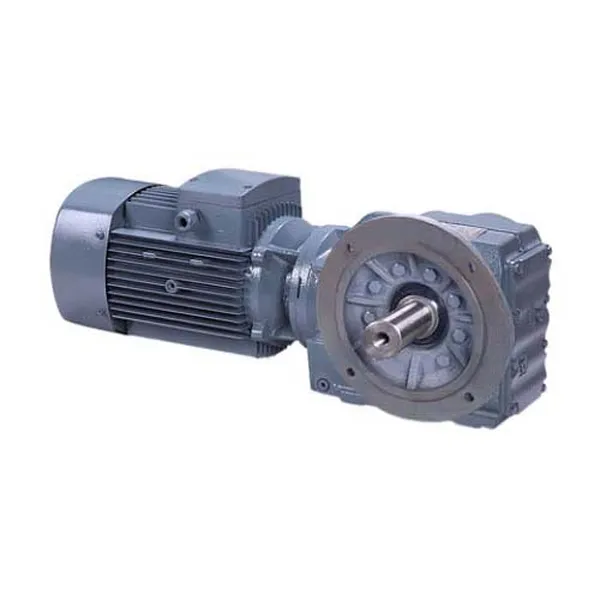
Типичные области применения конических редукторов в различных отраслях промышленности
Благодаря своим уникальным возможностям и преимуществам конические редукторы находят широкое применение в самых разных отраслях промышленности:
- Автомобильная промышленность: Конические редукторы являются важнейшими компонентами в автомобильных дифференциальных системах, обеспечивая плавное распределение мощности на колеса и позволяя плавно поворачивать и проходить повороты.
- Аэрокосмическая отрасль: Эти редукторы используются в системах шасси самолетов, системах несущих винтов вертолетов и других областях применения, требующих изменения направления вращения.
- Полиграфия и упаковка: Конические редукторы используются в печатных станках и упаковочном оборудовании для облегчения передачи движения между пересекающимися валами.
- Строительство: В строительной технике для управления рулевым механизмом часто используются конические редукторы, что позволяет контролировать направление движения тяжелой техники.
- Промышленное оборудование: В различных промышленных станках, таких как деревообрабатывающее оборудование и конвейерные системы, для эффективной передачи мощности на поворотах используются конические редукторы.
- Морской: Конические редукторы используются в морских силовых установках и рулевых механизмах лодок и судов.
- Энергетика и производство электроэнергии: Ветровые турбины и гидроэлектрогенераторы используют конические редукторы для передачи движения между валами под разными углами.
Способность конических редукторов изменять направление движения, эффективно передавая при этом мощность, делает их предпочтительным выбором в отраслях, где такие возможности необходимы для оптимальной производительности.
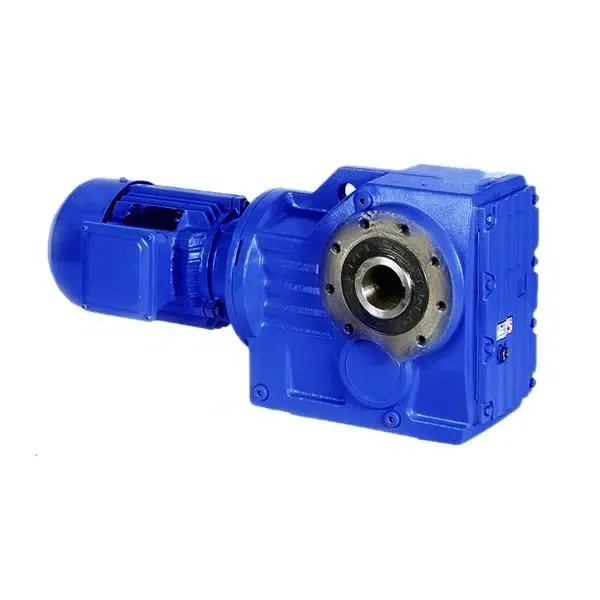
Challenges of Using Bevel Gearboxes
While bevel gearboxes offer various benefits, there are certain challenges that can arise when using them:
- Lubrication: Proper lubrication is essential to reduce friction, wear, and heat generation in bevel gearboxes. However, ensuring effective lubrication in the meshing bevel gears can be challenging due to their complex geometry and the potential for oil pooling or inadequate coverage.
- Noise and Vibration: Bevel gearboxes can produce noise and vibration during operation, especially at higher speeds. The interaction of the gear teeth can lead to noise generation, which may require additional measures such as sound insulation or vibration dampening to mitigate.
- Alignment: Precise alignment of the bevel gears is crucial to ensure smooth and efficient power transmission. Misalignment can lead to increased wear, reduced efficiency, and even gear tooth failure. Achieving proper alignment can be more complex in bevel gearboxes compared to other gearbox types.
- Maintenance: Bevel gearboxes may require more frequent maintenance compared to other gear systems. Regular inspections, lubrication checks, and gear tooth profile monitoring are necessary to detect and address any issues before they escalate.
- Space Constraints: The design of bevel gearboxes can be bulky, especially when used in applications that require a high gear ratio. This can pose challenges in situations where space is limited.
- Heat Dissipation: High-speed or heavy-duty applications can generate significant heat in bevel gearboxes. Adequate heat dissipation mechanisms, such as cooling fins or lubrication cooling, may be required to prevent overheating and premature failure.
Engineers and manufacturers need to carefully address these challenges to ensure the reliable and effective use of bevel gearboxes in various applications.
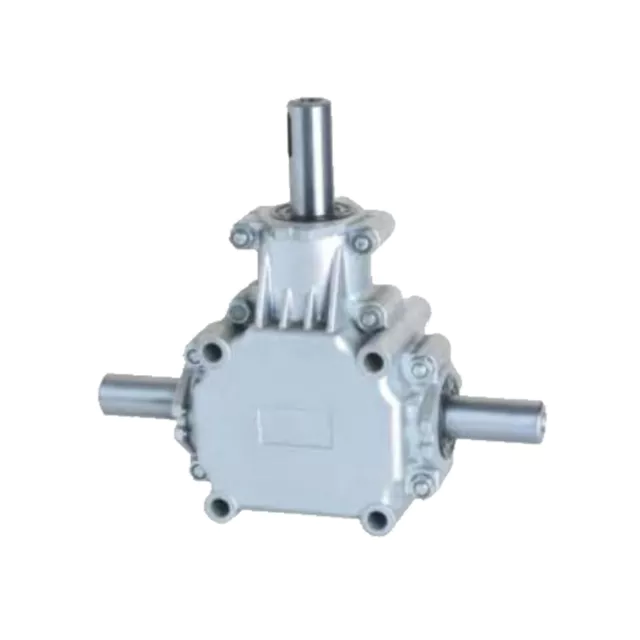
Significance of the Angle Between Bevel Gears in a Bevel Gearbox
The angle between bevel gears in a bevel gearbox plays a crucial role in determining how the rotational motion is transmitted between the intersecting shafts. This angle, often referred to as the “shaft angle” or “pitch angle,” has significant implications for the performance, efficiency, and load-bearing capacity of the gearbox.
The angle between bevel gears affects several key aspects:
- Mechanical Advantage: The angle determines the mechanical advantage or gear ratio of the bevel gearbox. A smaller angle results in a lower gear ratio, providing higher torque and slower rotational speed, while a larger angle yields a higher gear ratio, resulting in higher rotational speed and lower torque output.
- Efficiency: The angle affects the efficiency of power transmission. A smaller angle generally leads to higher efficiency due to improved load distribution and reduced friction losses.
- Load Distribution: Properly chosen angles contribute to even load distribution across the teeth of the bevel gears. Improper angles can cause uneven wear and premature failure.
- Space Constraints: The angle impacts the overall dimensions of the bevel gearbox, which can be critical when space is limited in certain applications.
The angle between bevel gears is typically selected based on the specific requirements of the mechanical system and the intended application. It is a critical design consideration that engineers carefully analyze to ensure optimal performance and reliability of the bevel gearbox.


editor by CX 2024-04-29