
Descrição do produto
Descrição do produto
-K Series Helical Bevel Gearbox
K series gear reducer, manufactured according to international technical requirements, has a high scientific and technological content; Space saving, reliable and durable, high overload capacity, power up to 132KW; Low energy consumption, superior performance, reducer efficiency up to 95%
It is designed and manufactured on the basis of module combination system. There are a lot of motor combinations, installation forms and structural schemes. The transmission ratio is classified carefully to meet different operating conditions and realize electromechanical integration.
High transmission efficiency, low energy consumption and superior performance.
Reinforced high rigid cast iron box; The hardened gear is made of high-quality alloy steel. Its surface is carburized, quenched and hardened, and the gear is finely ground. It features stable transmission, low noise, large bearing capacity, low temperature rise, and long service life. Performance and characteristics:
1. The gear is carburized and quenched with high-quality alloy, the hardness of the tooth surface is up to 60 ± 2hrc, and the grinding accuracy of the tooth surface is up to 5-6
2. The computer modification technology is used to pre modify the gear, which greatly improves the bearing capacity of the reducer
3. Complete modular structure design is adopted from the box to the internal gear, which is suitable for large-scale production and flexible selection
4. The standard reducer models are divided according to the form of decreasing torque. Compared with the traditional equal proportion division, they are more in line with customer requirements and avoid power waste
5. It is designed and manufactured by cad/cam to ensure the stability of quality
6. Multiple sealing structures are adopted to prevent oil leakage
7. Multi directional noise reduction measures to ensure the excellent low noise performance of the reducer
8. The installation mode of Liyi products is flexible, which makes it easy for customers to choose K57 reducer, K67 reducer, K77 reducer, K87 reducer, K97 reducer, KA87 reducer, KA97 reducer, KA107 reducer, KA127 reducer
Características do produto
1. Input mode: Coupled motor, belted motor, input shaft or connection flange.
2. Output: Right angle
3. Compact structure. Rigid tooth face. Carrying greater torque, high loading capacity.
4.High precision gear, ensuring the unit to operate stably, smooth transmission.
5. Low noise, long lifespan. Large overlap coefficient, abrasion resistant.
Our process of production
Our product line
/* March 10, 2571 17:59:20 */!function(){function s(e,r){var a,o={};try{e&&e.split(“,”).forEach(function(e,t){e&&(a=e.match(/(.*?):(.*)$/))&&1
| Hardness: | Hardened Tooth Surface |
|---|---|
| Installation: | 90 Degree |
| Layout: | Expansion |
| Gear Shape: | Bevel Gear |
| Step: | Single-Step |
| Type: | Gear Reducer |
| Samples: |
US$ 1000/Piece
1 Piece(Min.Order) | |
|---|
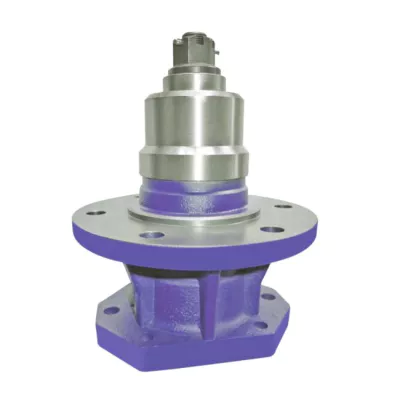
Handling High Torque and Speed Requirements in Bevel Gearboxes
Bevel gearboxes are versatile mechanical components capable of handling a wide range of torque and speed requirements, making them suitable for various industrial applications.
The ability of bevel gearboxes to handle high torque and speed requirements depends on several factors:
- Gear Material: The choice of gear material greatly influences the torque and speed capacity of the bevel gearbox. High-strength materials like alloy steel or hardened steel are often used to withstand higher loads and speeds.
- Design and Tooth Profile: The design of the bevel gears, including the tooth profile and size, plays a significant role in determining their load-bearing capacity and efficiency. Precisely engineered tooth profiles ensure smooth and efficient power transmission.
- Lubrication and Cooling: Proper lubrication and cooling mechanisms are essential to manage heat generated during high-speed and high-torque operations. Adequate lubrication reduces friction and wear, enhancing the gearbox’s overall performance and longevity.
- Bearing Selection: High-quality bearings that can handle both radial and axial loads are critical in supporting the rotational motion and absorbing forces generated by high torque and speed.
- Alignment and Installation: Accurate alignment and installation of the bevel gearbox are vital to prevent misalignment-related issues that can lead to premature failure under high loads.
Bevel gearboxes are commonly used in applications where both high torque and speed are required, such as heavy machinery, vehicles, industrial equipment, and more. Proper engineering, material selection, and maintenance practices contribute to the ability of bevel gearboxes to efficiently handle the demands of various high-performance scenarios.
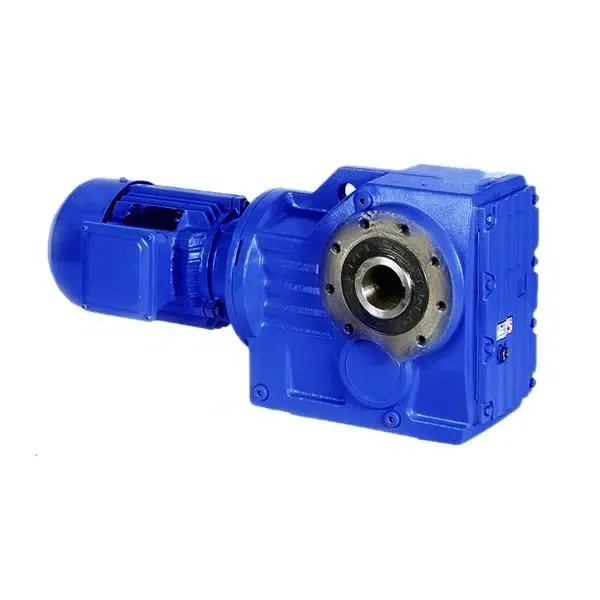
Desafios da utilização de caixas de engrenagens cônicas
Embora as caixas de engrenagens cônicas ofereçam várias vantagens, existem alguns desafios que podem surgir ao utilizá-las:
- Lubrificação: A lubrificação adequada é essencial para reduzir o atrito, o desgaste e a geração de calor em caixas de engrenagens cônicas. No entanto, garantir uma lubrificação eficaz nas engrenagens cônicas em contato pode ser um desafio devido à sua geometria complexa e ao potencial de acúmulo de óleo ou cobertura inadequada.
- Ruído e vibração: As caixas de engrenagens cônicas podem produzir ruído e vibração durante o funcionamento, especialmente em velocidades mais altas. A interação dos dentes das engrenagens pode gerar ruído, o que pode exigir medidas adicionais, como isolamento acústico ou amortecimento de vibrações, para atenuar esses problemas.
- Alinhamento: O alinhamento preciso das engrenagens cônicas é crucial para garantir uma transmissão de potência suave e eficiente. O desalinhamento pode levar ao aumento do desgaste, à redução da eficiência e até mesmo à quebra dos dentes da engrenagem. Obter o alinhamento adequado pode ser mais complexo em caixas de engrenagens cônicas em comparação com outros tipos de caixas de engrenagens.
- Manutenção: As caixas de engrenagens cônicas podem exigir manutenção mais frequente em comparação com outros sistemas de engrenagens. Inspeções regulares, verificações de lubrificação e monitoramento do perfil dos dentes das engrenagens são necessários para detectar e solucionar quaisquer problemas antes que se agravem.
- Restrições de espaço: O design das caixas de engrenagens cônicas pode ser volumoso, especialmente quando usadas em aplicações que exigem uma alta relação de transmissão. Isso pode representar um desafio em situações onde o espaço é limitado.
- Dissipação de calor: Aplicações de alta velocidade ou serviço pesado podem gerar calor significativo em caixas de engrenagens cônicas. Mecanismos adequados de dissipação de calor, como aletas de resfriamento ou refrigeração por lubrificação, podem ser necessários para evitar superaquecimento e falhas prematuras.
Engenheiros e fabricantes precisam abordar cuidadosamente esses desafios para garantir o uso confiável e eficaz de caixas de engrenagens cônicas em diversas aplicações.
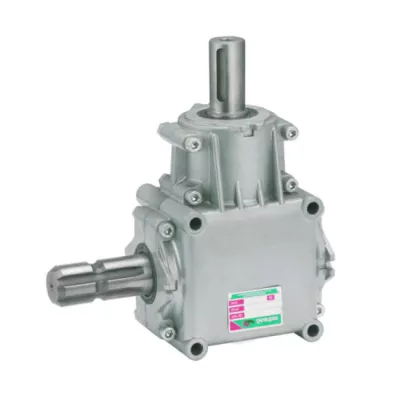
Tipos de caixas de engrenagens cônicas e sua classificação
As caixas de engrenagens cônicas são encontradas em diversos tipos, cada um projetado para aplicações e requisitos específicos. Elas são classificadas com base em fatores como arranjo das engrenagens, orientação do eixo e uso. Alguns tipos comuns de caixas de engrenagens cônicas incluem:
- Caixas de engrenagens cônicas retas: Essas caixas de engrenagens utilizam engrenagens cônicas retas e são adequadas para transmitir movimento entre eixos que se cruzam em um ângulo de 90 graus.
- Caixas de engrenagens cônicas espirais: Essas caixas de engrenagens utilizam engrenagens cônicas helicoidais e são empregadas quando os eixos que se cruzam formam ângulos diferentes de 90 graus. Elas oferecem operação mais suave e maior capacidade de carga.
- Caixas de engrenagens cônicas inclinadas: Em caixas de engrenagens cônicas inclinadas, os eixos de entrada e saída não são paralelos nem se cruzam. Essas caixas de engrenagens são utilizadas em aplicações onde é necessário conectar eixos não paralelos e não concorrentes.
- Caixas de engrenagens cônicas angulares: As caixas de engrenagens cônicas angulares são projetadas para conectar eixos em um ângulo específico, sendo frequentemente utilizadas em aplicações onde o ângulo do eixo exigido é diferente das configurações de engrenagens cônicas padrão.
A classificação das caixas de engrenagens cônicas baseia-se na disposição e orientação dos dentes das engrenagens e dos eixos. Os fabricantes oferecem uma variedade de modelos para atender a diferentes necessidades industriais e garantir a transmissão eficiente do movimento em vários ângulos.


editor by CX 2023-12-20