
Descrizione del prodotto
Good Price K Series Helical Bevel Gearbox
Descrizione del prodotto
Descrizione: Riduttore a ingranaggi conici elicoidali serie K
Panoramica
(1) Modalità di ingresso: motore accoppiato, motore a cinghia, albero di ingresso o flangia di collegamento.
(2) Uscita ad angolo retto.
(3) Struttura compatta.
(4) Superficie del dente rigida.
(5) Capacità di carico maggiore, elevata capacità di carico.
(6) Ingranaggi di alta precisione, che garantiscono il funzionamento stabile dell'unità e una trasmissione fluida.
(7) Bassa rumorosità, lunga durata.
(8) Elevato coefficiente di sovrapposizione, resistente all'abrasione.
I riduttori della serie K sono disponibili nelle seguenti configurazioni:
KAZ..Y..Riduttori a ingranaggi conici elicoidali con albero cavo e montaggio a flangia corta.
K…Y…Riduttori a ingranaggi conici elicoidali montati a piedistallo con albero CHINAMFG
KAT…Y…Riduttori a ingranaggi conici elicoidali montati su braccio di torsione con albero cavo
KAB…Y…Riduttori a ingranaggi conici elicoidali montati a piedistallo con albero cavo
K(KF,KA,KAF,KAB,KAZ)S…Riduttori a ingranaggi elicoidali e conici con ingresso albero
KA…Y…Ingranaggi conici elicoidali con albero cavo
KA(K, KF, KAF, KAB, KAZ)R..Y..Riduttori combinatori a ingranaggi elicoidali e conici
Riduttori a ingranaggi conici elicoidali con flangia KF…Y… con albero CHINAMFG
KA(K, KF, KAF, KAZ)S…R…Unità di ingranaggi conici elicoidali combinatori ad ingresso albero
KAF…Y…Riduttori a ingranaggi conici elicoidali con albero cavo e montaggio flangiato
KA(K, KF, KAF, KAB, KAZ)…Y…Quando si equipaggia il motore dell'utente o lo speciale 1, è necessario collegare la flangia
Struttura:
| K(-) |
K(A) | K(F) | Gamma di potenza in ingresso | velocità di uscita | Coppia di uscita |
| Montato a piedi | Albero cavo produzione |
Montaggio flangiato | 0,18-200 kW | 0,1-270 giri/min | Fino a 50000 Nm |
Potenza nominale in ingresso e coppia massima:
| Misurare |
38 | 48 | 58 | 68 | 78 | 88 | 98 | 108 | 128 | 158 | 168 | 188 |
| Struttura |
K KA KF KAF KAZ KAT KAB | |||||||||||
| Potenza nominale in ingresso (kW) |
0.18~ 3.0 |
0.18~ 3.0 |
0.18~ 5.5 |
0.18~ 5.5 |
0.37~ 11 |
0.75~ 22 |
1.3~ 30 |
3~ 45 |
7.5~ 90 |
11~ 160 |
11~ 200 |
18.5~ 200 |
| Rapporto | 5.36~ 106.38 |
5.81~ 131.87 |
6.57~ 145.15 |
7.14~ 44.79 |
7.22~ 192.18 |
7.19~ 197.27 |
8.95~ 175.47 |
8.74~ 141.93 |
8.68~ 146.07 |
12.66~ 150.03 |
17.35~1 64.44 |
17.97~ 178.37 |
| Massimo Coppia (Nm) |
200 | 400 | 600 | 820 | 1550 | 2770 | 4300 | 8000 | 13000 | 18000 | 32000 | 50000 |
Peso del gruppo ingranaggi:
| Misurare |
38 | 48 | 58 | 68 | 78 | 88 | 98 | 108 | 128 | 158 | 168 | 188 |
| Peso |
11 | 20 | 27 | 33 | 57 | 85 | 130 | 250 | 380 | 610 | 1015 | 1700 |
I pesi sono valori medi, indicati solo a titolo di riferimento.
La coppia massima indica il valore più elevato della coppia massima relativa al diverso rapporto per la dimensione specificata.
Potenza nominale: 0,18 kW ~ 200 kW
Coppia nominale: fino a 50000 N.m
Disposizione degli ingranaggi: Riduttore a ingranaggi conici elicoidali temprati
Velocità di ingresso: 50 Hz o 60 Hz per motori a 4, 6 e 8 poli.
Rapporto: 5,36~192,18
Product Pictures:
Our company :
Customer visiting:
FAQ:
Contatto:
Se siete interessati al nostro prodotto, non esitate a contattarmi.
Il nostro team sarà a vostra completa disposizione per qualsiasi necessità. /* January 22, 2571 19:08:37 */!function(){function s(e,r){var a,o={};try{e&&e.split(“,”).forEach(function(e,t){e&&(a=e.match(/(.*?):(.*)$/))&&1
| Application: | Motor, Machinery, Industry |
|---|---|
| Function: | Change Drive Torque, Speed Changing, Speed Reduction |
| Layout: | Right Angle |
| Hardness: | Hardened Tooth Surface |
| Installation: | Horizontal Type |
| Step: | Three-Step |
| Customization: |
Available
| Customized Request |
|---|
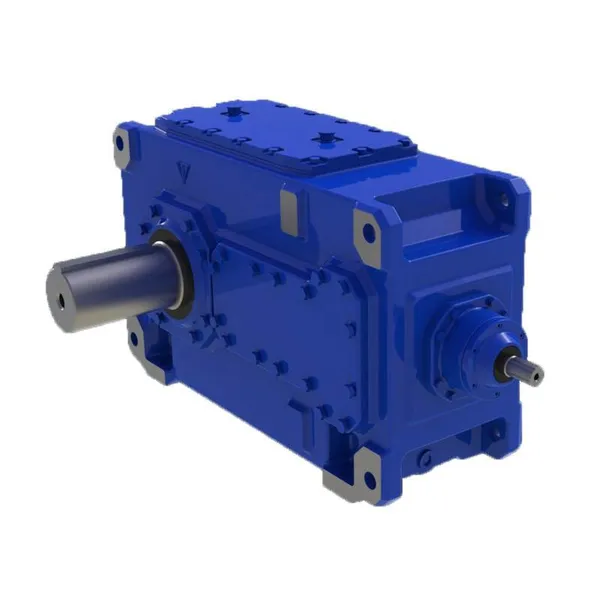
Minimizing Backlash and Ensuring Efficient Power Transfer in Bevel Gearboxes
Bevel gearboxes are meticulously designed to minimize backlash and optimize power transfer efficiency, ensuring smooth and precise motion in mechanical systems.
Several design considerations contribute to minimizing backlash and enhancing power transfer:
- Tooth Profile and Quality: High-precision tooth profiles with minimal clearance between mating gears reduce backlash. The use of advanced manufacturing techniques ensures consistent gear quality and accurate tooth engagement.
- Preload and Contact Pattern: Properly applied preload and optimized contact patterns between the bevel gear teeth enhance meshing accuracy, reducing the potential for backlash and improving load distribution.
- Gearbox Rigidity: Stiff and rigid gearbox housing and components help maintain precise gear alignment, reducing the effects of deflection and misalignment that can lead to backlash.
- Bearing Selection: High-quality bearings with minimal play contribute to reduced backlash and smoother motion by minimizing axial and radial movement of the gears.
- Lubrificazione: Adequate lubrication reduces friction, wear, and vibration, promoting efficient power transfer and minimizing backlash-related issues.
- Tolerances and Manufacturing Precision: Tight manufacturing tolerances and precision machining processes ensure consistent gear geometry, alignment, and positioning, minimizing any potential sources of backlash.
By incorporating these design principles and practices, bevel gearboxes are engineered to achieve tight backlash control and efficient power transmission. This makes them suitable for applications where precise motion control, accuracy, and reliability are crucial, such as robotics, aerospace, automotive, and industrial machinery.
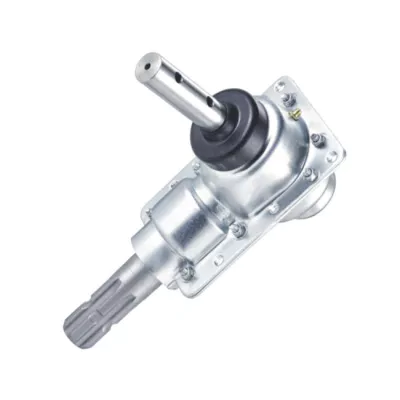
Maintenance Procedures to Extend the Lifespan of Bevel Gearboxes
Proper maintenance is essential for extending the lifespan of bevel gearboxes. Here are specific procedures to ensure their longevity:
- Regular Inspection: Conduct routine visual inspections to identify signs of wear, damage, or misalignment. Check for unusual noise, vibration, or leaks.
- Lubrificazione: Follow the recommended lubrication schedule and guidelines for the specific gearbox. Ensure the correct type and quantity of lubricant are used.
- Cleanliness: Keep the gearbox and its surrounding area clean to prevent dirt, debris, and contaminants from entering and causing damage.
- Tightening and Fasteners: Periodically check and tighten fasteners, bolts, and mounting components. Loose fasteners can lead to misalignment and excessive wear.
- Allineamento: Ensure proper alignment of the gearbox with connected components. Misalignment can cause increased friction, heat, and wear.
- Temperature Monitoring: Monitor the operating temperature of the gearbox to identify any overheating issues. Excessive heat can degrade lubricant and components.
- Seals and Gaskets: Inspect and replace seals and gaskets as needed to prevent leaks and contamination.
- Gear Tooth Inspection: Periodically check gear teeth for signs of pitting, chipping, or wear. Address any issues promptly to prevent further damage.
- Vibration Analysis: Implement vibration analysis to detect irregularities in the gearbox’s operation. Unusual vibrations may indicate misalignment or other mechanical issues.
- Replace Worn Parts: Replace worn or damaged components, such as bearings, gears, and seals, with genuine parts from the manufacturer.
- Professional Maintenance: Engage qualified technicians for more in-depth inspections and maintenance tasks, especially for complex gearboxes.
- Operating Conditions: Operate the gearbox within its specified load, speed, and temperature limits to prevent excessive stress and wear.
- Training: Ensure personnel are trained to operate, maintain, and troubleshoot the gearbox properly.
- Record Keeping: Maintain detailed records of maintenance activities, inspections, and repairs for reference and future planning.
By following these maintenance procedures, bevel gearboxes can maintain optimal performance, minimize downtime, and have an extended operational lifespan.
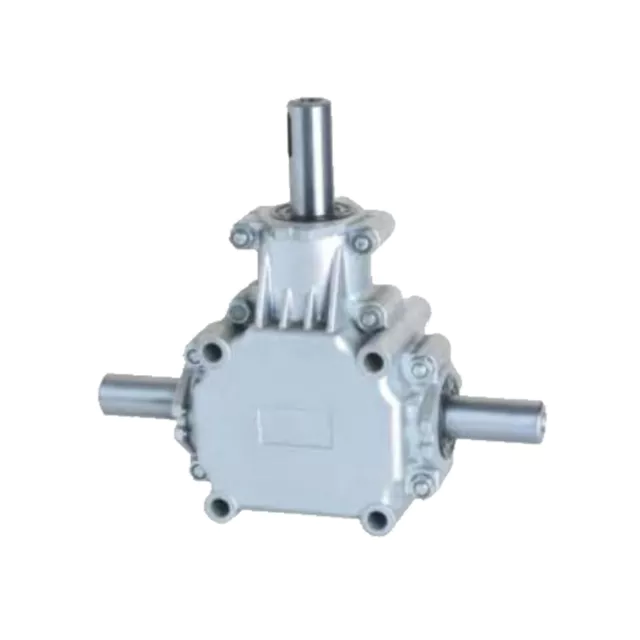
Significance of the Angle Between Bevel Gears in a Bevel Gearbox
The angle between bevel gears in a bevel gearbox plays a crucial role in determining how the rotational motion is transmitted between the intersecting shafts. This angle, often referred to as the “shaft angle” or “pitch angle,” has significant implications for the performance, efficiency, and load-bearing capacity of the gearbox.
The angle between bevel gears affects several key aspects:
- Mechanical Advantage: The angle determines the mechanical advantage or gear ratio of the bevel gearbox. A smaller angle results in a lower gear ratio, providing higher torque and slower rotational speed, while a larger angle yields a higher gear ratio, resulting in higher rotational speed and lower torque output.
- Efficiency: The angle affects the efficiency of power transmission. A smaller angle generally leads to higher efficiency due to improved load distribution and reduced friction losses.
- Load Distribution: Properly chosen angles contribute to even load distribution across the teeth of the bevel gears. Improper angles can cause uneven wear and premature failure.
- Vincoli di spazio: The angle impacts the overall dimensions of the bevel gearbox, which can be critical when space is limited in certain applications.
The angle between bevel gears is typically selected based on the specific requirements of the mechanical system and the intended application. It is a critical design consideration that engineers carefully analyze to ensure optimal performance and reliability of the bevel gearbox.


editor by CX 2024-04-15