
Description du produit
Bevel Gearbox For Biogas Energy Generator Plant
GEAR MATERIALS
20CrMnTi/20CrMnMo for your choice
CASTINGS MATERIALS
Gray cast iron HT250 according to standard GB/T 1348-2009 Ductile iron QT450-10 according to standard GB/T 1348-2009 Cast steel ZG310-570 according to standard GB/T 5613-2014
SHAFTS MATERIALS
40Cr,45#,20CrMnTi,20CrMnMo for your choice according to your request.
POWER To ensure the correct use of the product we recommand to pay attention to the specifications mentioned on our technical sheet.Consider also the input rotation speed,the power input and the transmission ratios.Where the rotation or other working conditions are different,please contact LongQuan technical department.
LUBRICATION
The reducer is usually supplied without lubricant.The recommended quantity of lubricant is indicated on our catalogue and the first replaced must be done after 50-60 hours of running,then replaced after 600-800 working hours. The emptying of the gearbox should be made immediately after the working,with the oil still hot,in order to avoid the deposition of sludge.Check frequently the oil level and top up the oil whenever necessary.
Related Products
Factory
Extensive use for agricultural machines
Guarantee: High precision, high wear resistance, low noise, smooth and steady, high strength
Our factory
/* January 22, 2571 19:08:37 */!function(){function s(e,r){var a,o={};try{e&&e.split(“,”).forEach(function(e,t){e&&(a=e.match(/(.*?):(.*)$/))&&1
| Type: | Agricultural Gearbox |
|---|---|
| Usage: | Agricultural Products Processing, Farmland Infrastructure, Tillage, Harvester, Planting and Fertilization, Grain Threshing, Cleaning and Drying, Agricultural Machine |
| Material: | Carbon Steel |
| Power Source: | Electricity |
| Weight: | OEM |
| After-sales Service: | Installation Guide |
| Samples: |
US$ 999/Piece
1 Piece(Min.Order) | |
|---|
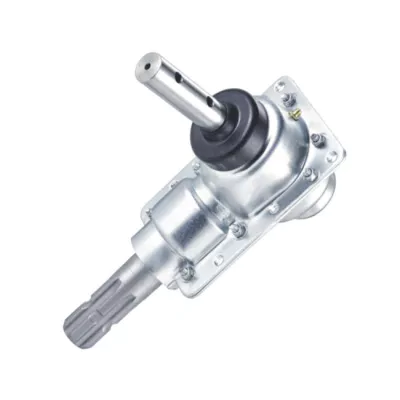
Advantages of Bevel Gearboxes in Specific Scenarios
Bevel gearboxes offer distinct advantages in certain scenarios, making them preferred over other gearbox types:
- Angular Transmission: When rotational motion needs to be transmitted between intersecting shafts at different angles, bevel gearboxes excel due to their ability to change direction.
- Compact Spaces: Bevel gearboxes are well-suited for applications with limited space, as they can fit into tight configurations without sacrificing performance.
- High Torque at 90 Degrees: In situations requiring high torque transmission at a 90-degree angle, bevel gearboxes are more efficient than other types.
- Steering Mechanisms: Bevel gearboxes are commonly used in steering systems of vehicles and machinery, providing smooth and accurate directional control.
- Complex Motion Requirements: When machinery or equipment requires intricate motion patterns involving changes in direction and speed, bevel gearboxes offer the necessary versatility.
- Heavy-Duty Applications: Bevel gearboxes excel in heavy-duty environments where robustness, torque transmission, and durability are crucial.
The specific design and capabilities of bevel gearboxes make them a preferred choice in these scenarios, contributing to optimal performance and efficiency in various industrial applications.
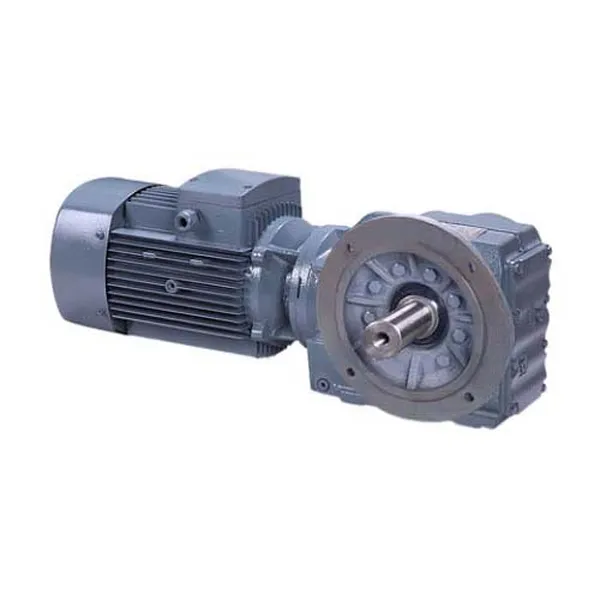
Proper Installation and Alignment of Bevel Gearboxes
Installing and aligning a bevel gearbox correctly is essential to ensure its optimal performance and longevity. Here are the steps typically involved in the process:
- Preparation: Before installation, thoroughly clean the mounting surfaces of both the gearbox and the driven equipment to ensure proper contact. Check that all components are in good condition and free from damage.
- Positioning: Carefully position the gearbox and the driven equipment according to the manufacturer’s specifications and the intended orientation of the bevel gears.
- Alignment: Use precision alignment tools, such as dial indicators or laser alignment systems, to ensure accurate alignment of the bevel gears. The goal is to achieve proper concentricity and parallelism between the input and output shafts of the gearbox.
- Bolt and Fasten: Securely bolt and fasten the gearbox to the mounting surface. Use appropriate torque settings as recommended by the manufacturer to ensure proper clamping force without overloading the fasteners.
- Lubrication: Apply the recommended lubricant to the bevel gears and other relevant components according to the manufacturer’s guidelines. Proper lubrication is crucial for reducing friction and wear during operation.
- Testing: After installation, perform a thorough functional test of the bevel gearbox. Check for any abnormal noise, vibration, or overheating during operation. Ensure that the gearbox operates smoothly and efficiently under different load conditions.
- Monitoring: Regularly monitor the performance of the bevel gearbox through routine inspections and maintenance. Keep an eye out for any signs of misalignment, wear, or other issues that may affect performance.
It’s important to follow the manufacturer’s installation and alignment guidelines closely, as proper installation practices contribute to the reliable and efficient operation of the bevel gearbox.
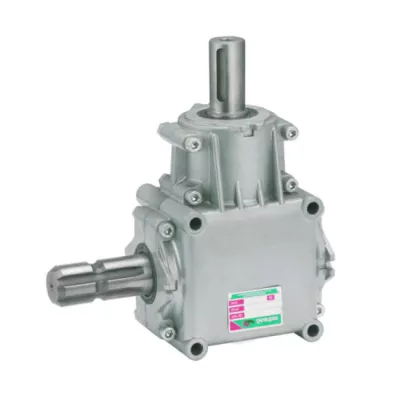
Types of Bevel Gearboxes and Their Classification
Bevel gearboxes come in various types, each designed for specific applications and requirements. They are classified based on factors such as gear arrangement, shaft orientation, and usage. Some common types of bevel gearboxes include:
- Straight Bevel Gearboxes: These gearboxes use straight bevel gears and are suitable for transmitting motion between intersecting shafts at a 90-degree angle.
- Spiral Bevel Gearboxes: These gearboxes use spiral bevel gears and are employed when the intersecting shafts are at angles other than 90 degrees. They offer smoother operation and higher load capacity.
- Skew Bevel Gearboxes: In skew bevel gearboxes, the axes of the input and output shafts are not parallel or intersecting. These gearboxes are used in applications where non-parallel and non-intersecting shafts need to be connected.
- Angular Bevel Gearboxes: Angular bevel gearboxes are designed to connect shafts at a specific angle, often used in applications where the required shaft angle is different from standard bevel gear configurations.
The classification of bevel gearboxes is based on the arrangement and orientation of the gear teeth and shafts. Manufacturers offer a variety of designs to accommodate different industrial needs and ensure efficient motion transmission at various angles.


editor by CX 2024-05-16