
Descripción del Producto
Agricultural Bevel gear RC-200 Rotary Cutters Gearboxes Replacement of Omni
Torque 21,000 – 28,350 lb-in.
(2,371 – 3,201 Nm.)
Ratios 1.21:1, 1:1, 1:1.21, 1:1.46
Gear Type Bevel
Seal type Triple lip spring loaded
Bearing Tapered Roller
Oil capacity 174 oz.
(5.2 liters)
Weight 220 lbs.
(99.8 kg.)
Important: In the factory, the gearbox is not filled with gear oil. The gear box must be filled up before the tool is put into use. If the amount of gear oil is not appropriate, the gear box will be damaged.
Check that cotter pins and roll pins (top of gearbox output shaft and through tailwheel shaft) are securely installed to ensure equipment is in safe condition for cutting tool service.
Connect the lawn mower to the three-point joint of the tractor. Do not install the driveline. Raise and lower the cutter to determine the maximum and minimum distance between the tractor PTO shaft and the gearbox input shaft. If the distance is too large, the drivetrain will be too short for proper meshing; This can damage the driveline during operation. If the distance is too small, the drivetrain can hit the bottom during operation, damaging the cutter or tractor. If the drivetrain is too short, ask your bad boy Cutter dealer for a longer drivetrain. If the drivetrain is too long, follow the instructions below to shorten the drivetrain.
Related Products
Factory
Application
Our factory
/* January 22, 2571 19:08:37 */!function(){function s(e,r){var a,o={};try{e&&e.split(“,”).forEach(function(e,t){e&&(a=e.match(/(.*?):(.*)$/))&&1
| Tipo: | Agricultural Gearbox |
|---|---|
| Usage: | Farmland Infrastructure, Agricultural Machine |
| Material: | Carbon Steel |
| Power Source: | Electricity |
| Weight: | OEM |
| After-sales Service: | Installation Guide |
| Samples: |
US$ 999/Piece
1 Piece(Min.Order) | |
|---|
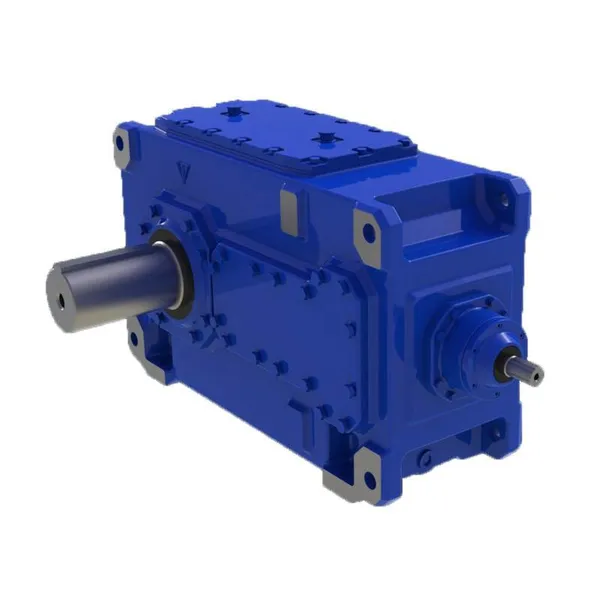
Minimizing Backlash and Ensuring Efficient Power Transfer in Bevel Gearboxes
Bevel gearboxes are meticulously designed to minimize backlash and optimize power transfer efficiency, ensuring smooth and precise motion in mechanical systems.
Several design considerations contribute to minimizing backlash and enhancing power transfer:
- Tooth Profile and Quality: High-precision tooth profiles with minimal clearance between mating gears reduce backlash. The use of advanced manufacturing techniques ensures consistent gear quality and accurate tooth engagement.
- Preload and Contact Pattern: Properly applied preload and optimized contact patterns between the bevel gear teeth enhance meshing accuracy, reducing the potential for backlash and improving load distribution.
- Gearbox Rigidity: Stiff and rigid gearbox housing and components help maintain precise gear alignment, reducing the effects of deflection and misalignment that can lead to backlash.
- Bearing Selection: High-quality bearings with minimal play contribute to reduced backlash and smoother motion by minimizing axial and radial movement of the gears.
- Lubrication: Adequate lubrication reduces friction, wear, and vibration, promoting efficient power transfer and minimizing backlash-related issues.
- Tolerances and Manufacturing Precision: Tight manufacturing tolerances and precision machining processes ensure consistent gear geometry, alignment, and positioning, minimizing any potential sources of backlash.
By incorporating these design principles and practices, bevel gearboxes are engineered to achieve tight backlash control and efficient power transmission. This makes them suitable for applications where precise motion control, accuracy, and reliability are crucial, such as robotics, aerospace, automotive, and industrial machinery.
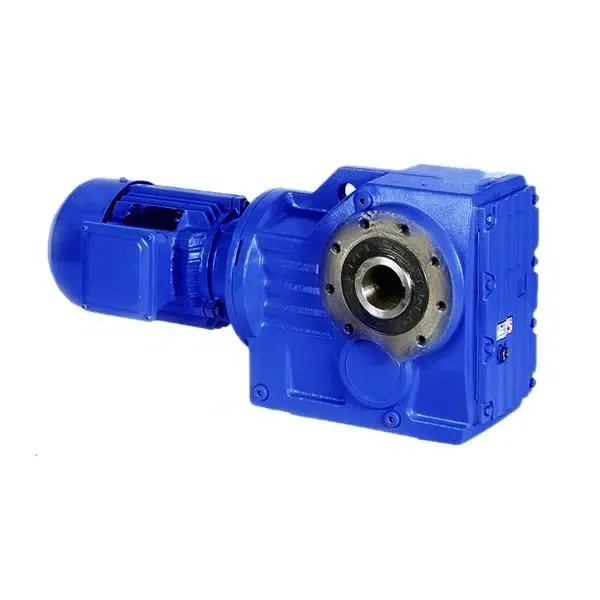
Challenges of Using Bevel Gearboxes
While bevel gearboxes offer various benefits, there are certain challenges that can arise when using them:
- Lubrication: Proper lubrication is essential to reduce friction, wear, and heat generation in bevel gearboxes. However, ensuring effective lubrication in the meshing bevel gears can be challenging due to their complex geometry and the potential for oil pooling or inadequate coverage.
- Noise and Vibration: Bevel gearboxes can produce noise and vibration during operation, especially at higher speeds. The interaction of the gear teeth can lead to noise generation, which may require additional measures such as sound insulation or vibration dampening to mitigate.
- Alignment: Precise alignment of the bevel gears is crucial to ensure smooth and efficient power transmission. Misalignment can lead to increased wear, reduced efficiency, and even gear tooth failure. Achieving proper alignment can be more complex in bevel gearboxes compared to other gearbox types.
- Maintenance: Bevel gearboxes may require more frequent maintenance compared to other gear systems. Regular inspections, lubrication checks, and gear tooth profile monitoring are necessary to detect and address any issues before they escalate.
- Restricciones de espacio: The design of bevel gearboxes can be bulky, especially when used in applications that require a high gear ratio. This can pose challenges in situations where space is limited.
- Heat Dissipation: High-speed or heavy-duty applications can generate significant heat in bevel gearboxes. Adequate heat dissipation mechanisms, such as cooling fins or lubrication cooling, may be required to prevent overheating and premature failure.
Engineers and manufacturers need to carefully address these challenges to ensure the reliable and effective use of bevel gearboxes in various applications.
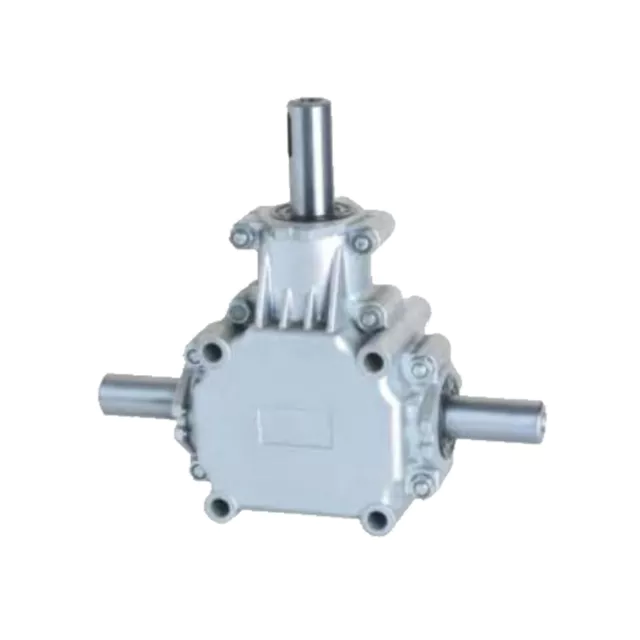
Importancia del ángulo entre los engranajes cónicos en una caja de engranajes cónicos
El ángulo entre los engranajes cónicos en una caja de engranajes cónicos desempeña un papel crucial en la transmisión del movimiento de rotación entre los ejes que se cruzan. Este ángulo, a menudo denominado «ángulo del eje» o «ángulo de paso», tiene implicaciones significativas para el rendimiento, la eficiencia y la capacidad de carga de la caja de engranajes.
El ángulo entre los engranajes cónicos afecta a varios aspectos clave:
- Ventaja mecánica: El ángulo determina la ventaja mecánica o la relación de transmisión de la caja de engranajes cónicos. Un ángulo menor resulta en una menor relación de transmisión, lo que proporciona un mayor par motor y una menor velocidad de rotación, mientras que un ángulo mayor produce una mayor relación de transmisión, lo que resulta en una mayor velocidad de rotación y un menor par motor.
- Eficiencia: El ángulo afecta la eficiencia de la transmisión de potencia. Un ángulo menor generalmente conlleva una mayor eficiencia debido a una mejor distribución de la carga y a la reducción de las pérdidas por fricción.
- Distribución de carga: Los ángulos elegidos correctamente contribuyen a una distribución uniforme de la carga entre los dientes de los engranajes cónicos. Los ángulos incorrectos pueden provocar un desgaste desigual y fallos prematuros.
- Restricciones de espacio: El ángulo influye en las dimensiones generales de la caja de engranajes cónicos, lo cual puede ser fundamental cuando el espacio es limitado en ciertas aplicaciones.
El ángulo entre los engranajes cónicos se selecciona generalmente en función de los requisitos específicos del sistema mecánico y la aplicación prevista. Se trata de un aspecto fundamental del diseño que los ingenieros analizan minuciosamente para garantizar un rendimiento y una fiabilidad óptimos de la caja de engranajes cónicos.


editor by CX 2024-04-16