
Descrizione del prodotto
Agricultural Bevel gear RC-200 Rotary Cutters Gearboxes Replacement of Omni
Torque 21,000 – 28,350 lb-in.
(2,371 – 3,201 Nm.)
Ratios 1.21:1, 1:1, 1:1.21, 1:1.46
Gear Type Bevel
Seal type Triple lip spring loaded
Bearing Tapered Roller
Oil capacity 174 oz.
(5.2 liters)
Weight 220 lbs.
(99.8 kg.)
Important: In the factory, the gearbox is not filled with gear oil. The gear box must be filled up before the tool is put into use. If the amount of gear oil is not appropriate, the gear box will be damaged.
Check that cotter pins and roll pins (top of gearbox output shaft and through tailwheel shaft) are securely installed to ensure equipment is in safe condition for cutting tool service.
Connect the lawn mower to the three-point joint of the tractor. Do not install the driveline. Raise and lower the cutter to determine the maximum and minimum distance between the tractor PTO shaft and the gearbox input shaft. If the distance is too large, the drivetrain will be too short for proper meshing; This can damage the driveline during operation. If the distance is too small, the drivetrain can hit the bottom during operation, damaging the cutter or tractor. If the drivetrain is too short, ask your bad boy Cutter dealer for a longer drivetrain. If the drivetrain is too long, follow the instructions below to shorten the drivetrain.
Related Products
Factory
Application
Our factory
/* January 22, 2571 19:08:37 */!function(){function s(e,r){var a,o={};try{e&&e.split(“,”).forEach(function(e,t){e&&(a=e.match(/(.*?):(.*)$/))&&1
| Type: | Agricultural Gearbox |
|---|---|
| Usage: | Farmland Infrastructure, Agricultural Machine |
| Material: | Carbon Steel |
| Power Source: | Electricity |
| Peso: | OEM |
| After-sales Service: | Installation Guide |
| Samples: |
US$ 999/Piece
1 Piece(Min.Order) | |
|---|
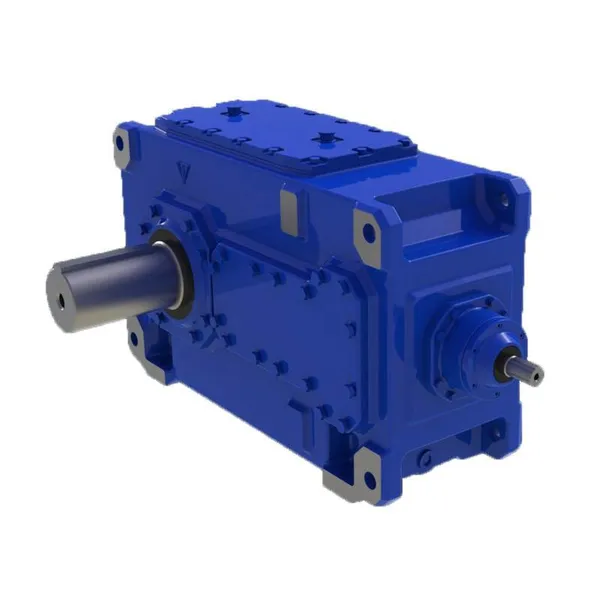
Minimizing Backlash and Ensuring Efficient Power Transfer in Bevel Gearboxes
Bevel gearboxes are meticulously designed to minimize backlash and optimize power transfer efficiency, ensuring smooth and precise motion in mechanical systems.
Several design considerations contribute to minimizing backlash and enhancing power transfer:
- Tooth Profile and Quality: High-precision tooth profiles with minimal clearance between mating gears reduce backlash. The use of advanced manufacturing techniques ensures consistent gear quality and accurate tooth engagement.
- Preload and Contact Pattern: Properly applied preload and optimized contact patterns between the bevel gear teeth enhance meshing accuracy, reducing the potential for backlash and improving load distribution.
- Gearbox Rigidity: Stiff and rigid gearbox housing and components help maintain precise gear alignment, reducing the effects of deflection and misalignment that can lead to backlash.
- Bearing Selection: High-quality bearings with minimal play contribute to reduced backlash and smoother motion by minimizing axial and radial movement of the gears.
- Lubrificazione: Adequate lubrication reduces friction, wear, and vibration, promoting efficient power transfer and minimizing backlash-related issues.
- Tolerances and Manufacturing Precision: Tight manufacturing tolerances and precision machining processes ensure consistent gear geometry, alignment, and positioning, minimizing any potential sources of backlash.
By incorporating these design principles and practices, bevel gearboxes are engineered to achieve tight backlash control and efficient power transmission. This makes them suitable for applications where precise motion control, accuracy, and reliability are crucial, such as robotics, aerospace, automotive, and industrial machinery.
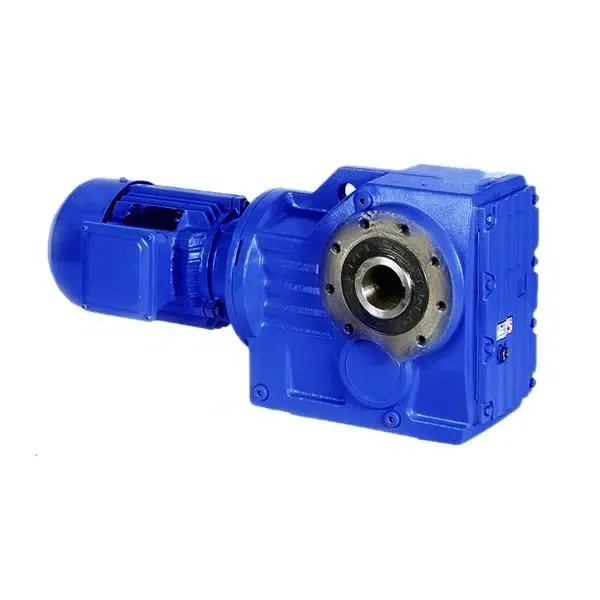
Sfide nell'utilizzo dei riduttori a ingranaggi conici
Sebbene i riduttori a ingranaggi conici offrano diversi vantaggi, il loro utilizzo può presentare alcune problematiche:
- Lubrificazione: Una lubrificazione adeguata è essenziale per ridurre l'attrito, l'usura e la generazione di calore nei riduttori a ingranaggi conici. Tuttavia, garantire una lubrificazione efficace negli ingranaggi conici in presa può essere difficile a causa della loro complessa geometria e del potenziale ristagno di olio o di una copertura insufficiente.
- Rumore e vibrazioni: I riduttori a ingranaggi conici possono produrre rumore e vibrazioni durante il funzionamento, soprattutto ad alte velocità. L'interazione tra i denti degli ingranaggi può generare rumore, che potrebbe richiedere misure aggiuntive come l'isolamento acustico o lo smorzamento delle vibrazioni per essere attenuato.
- Allineamento: L'allineamento preciso degli ingranaggi conici è fondamentale per garantire una trasmissione di potenza fluida ed efficiente. Un disallineamento può causare un'usura maggiore, una riduzione dell'efficienza e persino la rottura dei denti degli ingranaggi. Ottenere un allineamento corretto può essere più complesso nei riduttori a ingranaggi conici rispetto ad altri tipi di riduttori.
- Manutenzione: I riduttori a ingranaggi conici possono richiedere una manutenzione più frequente rispetto ad altri sistemi di ingranaggi. Ispezioni regolari, controlli della lubrificazione e monitoraggio del profilo dei denti degli ingranaggi sono necessari per individuare e risolvere eventuali problemi prima che si aggravino.
- Vincoli di spazio: I riduttori a ingranaggi conici possono risultare ingombranti, soprattutto se utilizzati in applicazioni che richiedono un elevato rapporto di trasmissione. Ciò può rappresentare una sfida in situazioni in cui lo spazio è limitato.
- Dissipazione del calore: Le applicazioni ad alta velocità o per impieghi gravosi possono generare un calore considerevole nei riduttori a ingranaggi conici. Per prevenire il surriscaldamento e i guasti prematuri, potrebbero essere necessari meccanismi di dissipazione del calore adeguati, come alette di raffreddamento o raffreddamento del lubrificante.
Gli ingegneri e i produttori devono affrontare attentamente queste sfide per garantire un utilizzo affidabile ed efficace dei riduttori a ingranaggi conici in diverse applicazioni.
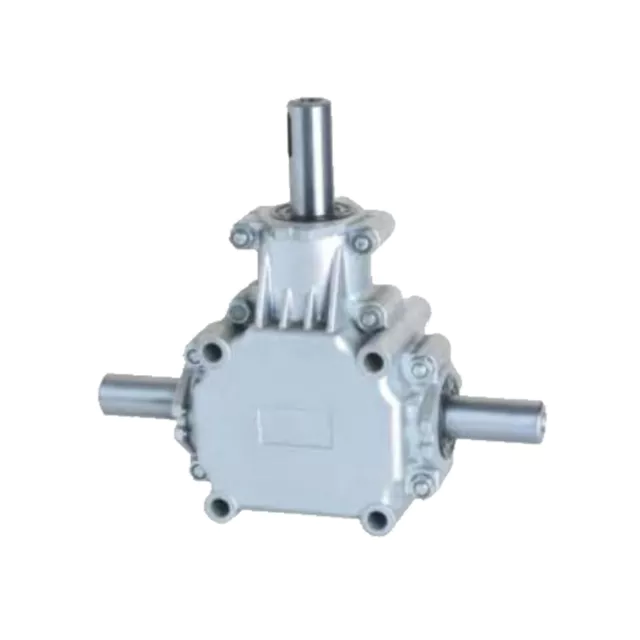
Significance of the Angle Between Bevel Gears in a Bevel Gearbox
The angle between bevel gears in a bevel gearbox plays a crucial role in determining how the rotational motion is transmitted between the intersecting shafts. This angle, often referred to as the “shaft angle” or “pitch angle,” has significant implications for the performance, efficiency, and load-bearing capacity of the gearbox.
The angle between bevel gears affects several key aspects:
- Mechanical Advantage: The angle determines the mechanical advantage or gear ratio of the bevel gearbox. A smaller angle results in a lower gear ratio, providing higher torque and slower rotational speed, while a larger angle yields a higher gear ratio, resulting in higher rotational speed and lower torque output.
- Efficiency: The angle affects the efficiency of power transmission. A smaller angle generally leads to higher efficiency due to improved load distribution and reduced friction losses.
- Load Distribution: Properly chosen angles contribute to even load distribution across the teeth of the bevel gears. Improper angles can cause uneven wear and premature failure.
- Vincoli di spazio: The angle impacts the overall dimensions of the bevel gearbox, which can be critical when space is limited in certain applications.
The angle between bevel gears is typically selected based on the specific requirements of the mechanical system and the intended application. It is a critical design consideration that engineers carefully analyze to ensure optimal performance and reliability of the bevel gearbox.


editor by CX 2024-04-16