
Descripción del Producto
Product Description
| Product Name | R series hard tooth flank gear reducer |
| Gear material | 20CrMnTi |
| Color | Customer Request |
| Case Material | HT250 |
| Material del eje | 20CrMnTi |
| Gear Processing | Grinding finish by HOFLER Grinding Machines |
| Noise Test | Bellow 65dB |
| Brand of bearings | C&U bearing, ZWZ,LYC, HRB,NSK ,etc |
| Brand of oil seal | NAK or other brand |
| Temp. rise (MAX) | 40ºC |
| Temp. rise (Oil)(MAX) | 50ºC |
| Vibración | ≤20µm |
R series reducer is a kind of gear is used to reduce the motor speed and improve the output torque of the principle of speed reducer. It uses the gear and gear meshing, with advanced design and novel structure of retarding mechanism.
It has beenwidely used in metallurgy, mining, petroleum, chemical industry, ship, light industry, food, textile, printing and dyeing.
Product Feature
Our R series helical gear reducers are based on the building block design, so its convenientfor them to fit all types of motors or to connect with other power input, and its possiblefor different types of machines to combine or connect.
1. Compact construction, saves space for mounting, large load-bearing capacity and long life.
2. High transmission efficiency and low noise. A single machine can reach a transmission efficiency as much as 96%.
3. Precise division of transmission ratio with a wide range. The combination of machines can produce a larger transmission ratio at a low output rotational speed.
4. Installation: Foot-mounted, B5/B14 flange-mounted, input shaft, hollow output shaft, etc.
Input power rating and permissible torque
| Tamaño | 37 | 57 | 67 | 77 | 87 | 97 | 107 | 127 | 157 | |
| Estructura | RX RXF | |||||||||
| Rated Power(kw) | 0.18-1.1 | 0.18-5.5 | 0.18-7.5 | 1.1-11 | 3-22 | 5.5-30 | 7.4-45 | 7.5-90 | 11-132 | |
| Relación | 1.62-4.43 | 1.3-5.5 | 1.4-6.07 | 1.42-8.00 | 1.39-8.65 | 1.42-8.23 | 1.44-6.63 | 1.51-6.2 | 1.57-6.2 | |
| Esfuerzo de torsión | 20 | 70 | 135 | 215 | 400 | 600 | 830 | 1110 | 1680 | |
| Gear Unit Weight | |||||||||||||
| Gear Unit Type | R17 | R27 | R37 | R47 | R57 | R67 | R77 | R87 | R97 | R107 | R137 | R147 | R167 |
| Weight(kg) |
4 | 5.5 | 8.5 | 10 | 18 | 25 | 36 | 63 | 101 | 153 | 220 | 400 | 700 |
| Gear Unit Type | RX37 | RX57 | RX67 | RX77 | RX87 | RX97 | RX107 | RX127 | RX157 | ||||
| Weight(kg) | 5 | 8 | 14 | 23 | 39 | 70 | 100 | 150 | 250 | ||||
| The weight are mean values, only for reference | |||||||||||||
Gear Unit Version
| Single Stage | Tamaño | |||||||||||
| 57 | 67 | 77 | 87 | 97 | 107 | |||||||
| RX.. | Montado en el pie | RX57 | RX67 | RX77 | RX87 | RX97 | RX107 | |||||
| RXF.. | Montaje con brida | RXF57 | RXF67 | RXF77 | RX87 | RX97 | RX107 | |||||
| Multi-stage | Tamaño (17/27/37/47/57/67/77/87/97/107/137/147/167) | |||||||||||
| R.. | Montado en el pie | R17 | R27 | R37 | R47 | R57 | R67 | |||||
| R..F | Foot-mounted and flange-mounted | R17F | R27F | R37F | R47F | R57F | R67F | |||||
| RF.. | B5 flange-mounted | RF17 | RF27 | RF37 | RF47 | RF57 | RF67 | |||||
| Multi-stage | Tamaño (17/27/37/47/57/67/77/87/97/107/137/147/167) | ||||||
| R.. | R77 | R87 | R97 | R107 | R137 | R147 | R167 |
| R..F | R77F | R87F | R97F | R107F | R137F | R147F | R167F |
| RF.. | RF77 | RF87 | RF97 | RF107 | RF137 | RF147 | RF167 |
Solicitud
Shipping & Tracking
/* 22 de enero de 2571 19:08:37 */!function(){function s(e,r){var a,o={};try{e&&e.split(“”,).forEach(function(e,t){e&&(a=e.match(/(.*?):(.*)$/))&&1
| Solicitud: | Machinery |
|---|---|
| Dureza: | Superficie dentada endurecida |
| Instalación: | as Request |
| Layout: | Coaxial |
| Step: | Three-Step |
| Tipo: | Engranaje cónico |
| Muestras: |
US$ 1/Piece
1 unidad (pedido mínimo) | |
|---|
| Personalización: |
Disponible
| Solicitud personalizada |
|---|
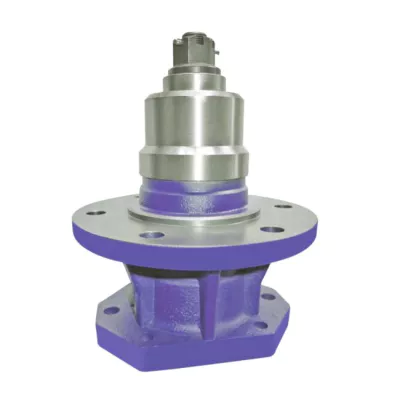
Handling High Torque and Speed Requirements in Bevel Gearboxes
Bevel gearboxes are versatile mechanical components capable of handling a wide range of torque and speed requirements, making them suitable for various industrial applications.
The ability of bevel gearboxes to handle high torque and speed requirements depends on several factors:
- Gear Material: The choice of gear material greatly influences the torque and speed capacity of the bevel gearbox. High-strength materials like alloy steel or hardened steel are often used to withstand higher loads and speeds.
- Design and Tooth Profile: The design of the bevel gears, including the tooth profile and size, plays a significant role in determining their load-bearing capacity and efficiency. Precisely engineered tooth profiles ensure smooth and efficient power transmission.
- Lubrication and Cooling: Proper lubrication and cooling mechanisms are essential to manage heat generated during high-speed and high-torque operations. Adequate lubrication reduces friction and wear, enhancing the gearbox’s overall performance and longevity.
- Bearing Selection: High-quality bearings that can handle both radial and axial loads are critical in supporting the rotational motion and absorbing forces generated by high torque and speed.
- Alignment and Installation: Accurate alignment and installation of the bevel gearbox are vital to prevent misalignment-related issues that can lead to premature failure under high loads.
Bevel gearboxes are commonly used in applications where both high torque and speed are required, such as heavy machinery, vehicles, industrial equipment, and more. Proper engineering, material selection, and maintenance practices contribute to the ability of bevel gearboxes to efficiently handle the demands of various high-performance scenarios.
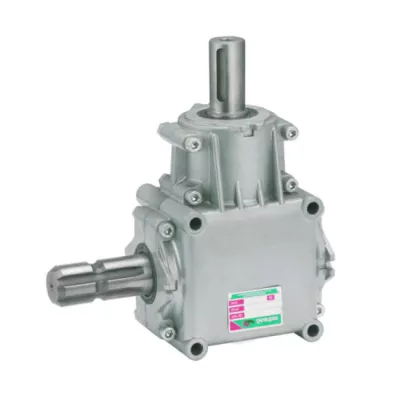
Lubrication Requirements for Maintaining Bevel Gearbox Efficiency
Proper lubrication is crucial for maintaining the efficiency and longevity of bevel gearboxes. Here are the essential lubrication requirements:
- Selection of Lubricant: Choose a high-quality lubricant specifically designed for bevel gear applications. The lubricant should have the appropriate viscosity and additives to withstand the operating conditions and loads.
- Correct Lubricant Quantity: Follow the manufacturer’s recommendations for the correct lubricant quantity. Insufficient lubrication can lead to increased friction and wear, while over-lubrication can cause overheating and inefficient operation.
- Lubrication Intervals: Establish a regular lubrication schedule based on the gearbox’s operating conditions. Factors such as load, speed, temperature, and environment can influence the frequency of lubrication.
- Proper Lubrication Points: Identify all the necessary lubrication points on the bevel gearbox, including bearings, gears, and other moving parts. Ensure that lubricant is applied precisely to these points for optimal coverage.
- Cleanliness: Keep the gearbox and its surrounding area clean to prevent contamination of the lubricant. Dirt, debris, and moisture can compromise the lubrication effectiveness and accelerate wear.
- Temperature Considerations: Choose a lubricant with temperature stability suitable for the operating conditions. Extreme temperatures can affect lubricant viscosity and performance.
- Monitoring: Regularly monitor the condition of the lubricant, including its color, consistency, and contamination level. Perform oil analysis if necessary to assess the lubricant’s health.
- Lubricant Compatibility: Ensure that the chosen lubricant is compatible with the gearbox materials to prevent corrosion or damage.
- Re-lubrication: During routine maintenance, clean and reapply lubricant as needed. Replace the lubricant when it reaches the end of its service life.
Adhering to proper lubrication requirements enhances the efficiency, performance, and reliability of bevel gearboxes, reducing friction, wear, and the risk of premature failure.
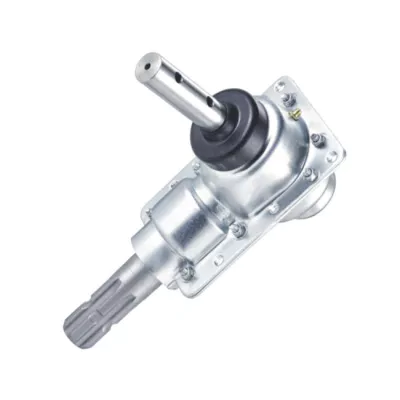
Cambio de dirección del movimiento de rotación mediante engranajes cónicos en una caja de engranajes cónicos.
Los engranajes cónicos en una caja de engranajes cónicos están diseñados específicamente para cambiar la dirección del movimiento de rotación entre ejes que se cruzan. Lo logran gracias a la geometría única de sus perfiles dentados, que les permite transmitir el movimiento de forma suave y eficiente incluso cuando los ejes están posicionados en un ángulo distinto de 90 grados.
Cuando dos engranajes cónicos engranan, sus dientes se acoplan y transfieren la fuerza de rotación de un engranaje a otro. Dependiendo de la disposición de los engranajes, el sentido de giro puede cambiar de entrada a salida o viceversa. Por ejemplo, en una configuración de engranajes cónicos rectos, los engranajes están dispuestos en un ángulo de 90 grados y los ejes de entrada y salida son perpendiculares entre sí. A medida que el engranaje de entrada gira, transfiere su movimiento al de salida, lo que provoca un cambio en el sentido de giro entre ambos ejes.
En configuraciones más complejas, como los engranajes cónicos espirales, los dientes están diseñados en espiral, lo que permite un acoplamiento más suave y una mejor distribución de la carga. Esto los hace adecuados para aplicaciones donde se requiere mayor par y eficiencia, y donde los ejes están posicionados en ángulos distintos a 90 grados.
En resumen, los engranajes cónicos en una caja de engranajes cónicos son componentes esenciales que permiten la transmisión de movimiento rotacional y potencia entre ejes que se cruzan, cambiando al mismo tiempo la dirección de rotación según sea necesario para diversos sistemas mecánicos y aplicaciones industriales.


editor by CX 2024-04-09