
Descripción del Producto
Fotos detalladas
Descripción del Producto
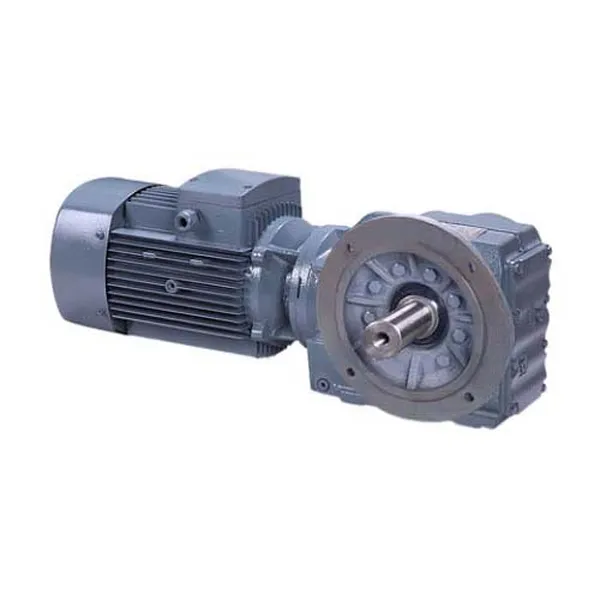
-K Series Helical Bevel Gearbox
K series gear reducer, manufactured according to international technical requirements, has a high scientific and technological content; Space saving, reliable and durable, high overload capacity, power up to 132KW; Low energy consumption, superior performance, reducer efficiency up to 95%
It is designed and manufactured on the basis of module combination system. There are a lot of motor combinations, installation forms and structural schemes. The transmission ratio is classified carefully to meet different operating conditions and realize electromechanical integration.
High transmission efficiency, low energy consumption and superior performance.
Reinforced high rigid cast iron box; The hardened gear is made of high-quality alloy steel. Its surface is carburized, quenched and hardened, and the gear is finely ground. It features stable transmission, low noise, large bearing capacity, low temperature rise, and long service life. Performance and characteristics:
1. The gear is carburized and quenched with high-quality alloy, the hardness of the tooth surface is up to 60 ± 2hrc, and the grinding accuracy of the tooth surface is up to 5-6
2. The computer modification technology is used to pre modify the gear, which greatly improves the bearing capacity of the reducer
3. Complete modular structure design is adopted from the box to the internal gear, which is suitable for large-scale production and flexible selection
4. The standard reducer models are divided according to the form of decreasing torque. Compared with the traditional equal proportion division, they are more in line with customer requirements and avoid power waste
5. It is designed and manufactured by cad/cam to ensure the stability of quality
6. Multiple sealing structures are adopted to prevent oil leakage
7. Multi directional noise reduction measures to ensure the excellent low noise performance of the reducer
8. The installation mode of Liyi products is flexible, which makes it easy for customers to choose K57 reducer, K67 reducer, K77 reducer, K87 reducer, K97 reducer, KA87 reducer, KA97 reducer, KA107 reducer, KA127 reducer
Características del producto
1. Input mode: Coupled motor, belted motor, input shaft or connection flange.
2. Output: Right angle
3. Compact structure. Rigid tooth face. Carrying greater torque, high loading capacity.
4.High precision gear, ensuring the unit to operate stably, smooth transmission.
5. Low noise, long lifespan. Large overlap coefficient, abrasion resistant.
Descripción del Producto
classification: Type K: K37, K47, K57, K67, K77, K87, K97, K107, K127, K157, K167, K187 KA type: KA37, KA47, KA57, KA67, KA77,
KA87, KA97, KA107, KA127, KA157, KA167, KA187 KF type: KF37, KF47, KF57, KF67, KF77, KF87, KF97, KF107, KF127, KF157, KF167, KF187
KAF type: KAF37, KAF47, KAF57, KAF67, KAF77, KAF87, KAF97, KAF107, KAF127, KAF157, KAF167, KAF187 KAZ type: KAZ37, KAZ47, KAZ57,
KAZ67, KAZ77, KAZ87, KAZ97, KAZ107, KAZ127, KAZ157, KAZ167, KAZ187 KAT type: KAT37 KAT47 KAT57, KAT67, KAT77, KAT87, KAT97,
KAT107, KAT127, KAT157, KAT167, KAT187 KAB type: KAB37, KAB47, KAB57, KAB67, KAB77, KAB87, KAB97, KAB107, KAB127, KAB157, KAB167,
KAB187 K37R17, K47R37, K57R37, K67R37, K77R37, K87R57, K97R57, K107R77, K127R77, K127R87, K157R97, K167R97, K187R97, K157R107,
K167R107, K187R107.
Our process of production
Our product line
/* March 10, 2571 17:59:20 */!function(){function s(e,r){var a,o={};try{e&&e.split(“,”).forEach(function(e,t){e&&(a=e.match(/(.*?):(.*)$/))&&1
| Dureza: | Superficie dentada endurecida |
|---|---|
| Instalación: | 90 grados |
| Layout: | Expansion |
| Gear Shape: | Engranaje cónico |
| Step: | Single-Step |
| Tipo: | Gear Reducer |
| Muestras: |
US$ 1000/Piece
1 unidad (pedido mínimo) | |
|---|
Aplicaciones comunes de las cajas de engranajes cónicos en diversas industrias
Las cajas de engranajes cónicos se utilizan ampliamente en diversas industrias debido a sus capacidades y ventajas únicas:
- Automotor: Las cajas de engranajes cónicos son componentes vitales en los sistemas diferenciales de los automóviles, ya que permiten una distribución suave de la potencia a las ruedas y facilitan giros y curvas sin problemas.
- Aeroespacial: Estas cajas de engranajes se utilizan en sistemas de tren de aterrizaje de aeronaves, sistemas de rotor de helicópteros y otras aplicaciones que requieren cambios en el sentido de rotación.
- Impresión y embalaje: Las cajas de engranajes cónicos se utilizan en imprentas y maquinaria de embalaje para facilitar la transmisión de movimiento entre ejes que se cruzan.
- Construcción: La maquinaria de construcción suele utilizar cajas de engranajes cónicos para los mecanismos de dirección, lo que permite controlar la dirección de la maquinaria pesada.
- Maquinaria industrial: Diversas máquinas industriales, como equipos para trabajar la madera y sistemas de transporte, utilizan reductores de engranajes cónicos para una transmisión de potencia eficiente en las curvas.
- Marina: Las cajas de engranajes cónicos se utilizan en sistemas de propulsión marina y mecanismos de dirección para barcos y buques.
- Energía y generación de energía: Las turbinas eólicas y los generadores hidroeléctricos se benefician de las cajas de engranajes cónicos para transmitir el movimiento entre ejes con diferentes ángulos.
La capacidad de adaptación de las cajas de engranajes cónicos para cambiar la dirección del movimiento a la vez que transmiten potencia de forma eficiente las convierte en la opción preferida en industrias donde dichas capacidades son esenciales para un rendimiento óptimo.
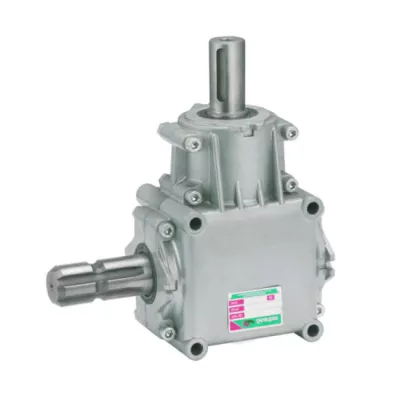
Lubrication Requirements for Maintaining Bevel Gearbox Efficiency
Proper lubrication is crucial for maintaining the efficiency and longevity of bevel gearboxes. Here are the essential lubrication requirements:
- Selection of Lubricant: Choose a high-quality lubricant specifically designed for bevel gear applications. The lubricant should have the appropriate viscosity and additives to withstand the operating conditions and loads.
- Correct Lubricant Quantity: Follow the manufacturer’s recommendations for the correct lubricant quantity. Insufficient lubrication can lead to increased friction and wear, while over-lubrication can cause overheating and inefficient operation.
- Lubrication Intervals: Establish a regular lubrication schedule based on the gearbox’s operating conditions. Factors such as load, speed, temperature, and environment can influence the frequency of lubrication.
- Proper Lubrication Points: Identify all the necessary lubrication points on the bevel gearbox, including bearings, gears, and other moving parts. Ensure that lubricant is applied precisely to these points for optimal coverage.
- Cleanliness: Keep the gearbox and its surrounding area clean to prevent contamination of the lubricant. Dirt, debris, and moisture can compromise the lubrication effectiveness and accelerate wear.
- Temperature Considerations: Choose a lubricant with temperature stability suitable for the operating conditions. Extreme temperatures can affect lubricant viscosity and performance.
- Monitoring: Regularly monitor the condition of the lubricant, including its color, consistency, and contamination level. Perform oil analysis if necessary to assess the lubricant’s health.
- Lubricant Compatibility: Ensure that the chosen lubricant is compatible with the gearbox materials to prevent corrosion or damage.
- Re-lubrication: During routine maintenance, clean and reapply lubricant as needed. Replace the lubricant when it reaches the end of its service life.
Adhering to proper lubrication requirements enhances the efficiency, performance, and reliability of bevel gearboxes, reducing friction, wear, and the risk of premature failure.
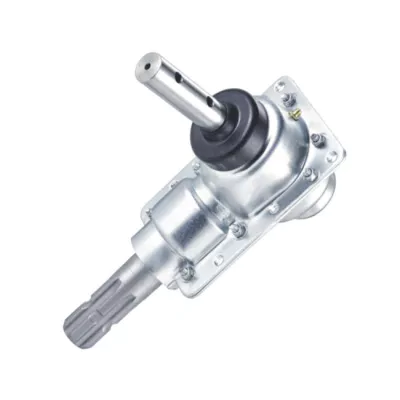
Cambio de dirección del movimiento de rotación mediante engranajes cónicos en una caja de engranajes cónicos.
Los engranajes cónicos en una caja de engranajes cónicos están diseñados específicamente para cambiar la dirección del movimiento de rotación entre ejes que se cruzan. Lo logran gracias a la geometría única de sus perfiles dentados, que les permite transmitir el movimiento de forma suave y eficiente incluso cuando los ejes están posicionados en un ángulo distinto de 90 grados.
Cuando dos engranajes cónicos engranan, sus dientes se acoplan y transfieren la fuerza de rotación de un engranaje a otro. Dependiendo de la disposición de los engranajes, el sentido de giro puede cambiar de entrada a salida o viceversa. Por ejemplo, en una configuración de engranajes cónicos rectos, los engranajes están dispuestos en un ángulo de 90 grados y los ejes de entrada y salida son perpendiculares entre sí. A medida que el engranaje de entrada gira, transfiere su movimiento al de salida, lo que provoca un cambio en el sentido de giro entre ambos ejes.
En configuraciones más complejas, como los engranajes cónicos espirales, los dientes están diseñados en espiral, lo que permite un acoplamiento más suave y una mejor distribución de la carga. Esto los hace adecuados para aplicaciones donde se requiere mayor par y eficiencia, y donde los ejes están posicionados en ángulos distintos a 90 grados.
En resumen, los engranajes cónicos en una caja de engranajes cónicos son componentes esenciales que permiten la transmisión de movimiento rotacional y potencia entre ejes que se cruzan, cambiando al mismo tiempo la dirección de rotación según sea necesario para diversos sistemas mecánicos y aplicaciones industriales.


editor by CX 2024-01-30