
Descrição do produto
Fotos detalhadas
Descrição do produto
-K Series Helical Bevel Gearbox
K series gear reducer, manufactured according to international technical requirements, has a high scientific and technological content; Space saving, reliable and durable, high overload capacity, power up to 132KW; Low energy consumption, superior performance, reducer efficiency up to 95%
It is designed and manufactured on the basis of module combination system. There are a lot of motor combinations, installation forms and structural schemes. The transmission ratio is classified carefully to meet different operating conditions and realize electromechanical integration.
High transmission efficiency, low energy consumption and superior performance.
Reinforced high rigid cast iron box; The hardened gear is made of high-quality alloy steel. Its surface is carburized, quenched and hardened, and the gear is finely ground. It features stable transmission, low noise, large bearing capacity, low temperature rise, and long service life. Performance and characteristics:
1. The gear is carburized and quenched with high-quality alloy, the hardness of the tooth surface is up to 60 ± 2hrc, and the grinding accuracy of the tooth surface is up to 5-6
2. The computer modification technology is used to pre modify the gear, which greatly improves the bearing capacity of the reducer
3. Complete modular structure design is adopted from the box to the internal gear, which is suitable for large-scale production and flexible selection
4. The standard reducer models are divided according to the form of decreasing torque. Compared with the traditional equal proportion division, they are more in line with customer requirements and avoid power waste
5. It is designed and manufactured by cad/cam to ensure the stability of quality
6. Multiple sealing structures are adopted to prevent oil leakage
7. Multi directional noise reduction measures to ensure the excellent low noise performance of the reducer
8. The installation mode of Liyi products is flexible, which makes it easy for customers to choose K57 reducer, K67 reducer, K77 reducer, K87 reducer, K97 reducer, KA87 reducer, KA97 reducer, KA107 reducer, KA127 reducer
Características do produto
1. Input mode: Coupled motor, belted motor, input shaft or connection flange.
2. Output: Right angle
3. Compact structure. Rigid tooth face. Carrying greater torque, high loading capacity.
4.High precision gear, ensuring the unit to operate stably, smooth transmission.
5. Low noise, long lifespan. Large overlap coefficient, abrasion resistant.
Descrição do produto
classification: Type K: K37, K47, K57, K67, K77, K87, K97, K107, K127, K157, K167, K187 KA type: KA37, KA47, KA57, KA67, KA77,
KA87, KA97, KA107, KA127, KA157, KA167, KA187 KF type: KF37, KF47, KF57, KF67, KF77, KF87, KF97, KF107, KF127, KF157, KF167, KF187
KAF type: KAF37, KAF47, KAF57, KAF67, KAF77, KAF87, KAF97, KAF107, KAF127, KAF157, KAF167, KAF187 KAZ type: KAZ37, KAZ47, KAZ57,
KAZ67, KAZ77, KAZ87, KAZ97, KAZ107, KAZ127, KAZ157, KAZ167, KAZ187 KAT type: KAT37 KAT47 KAT57, KAT67, KAT77, KAT87, KAT97,
KAT107, KAT127, KAT157, KAT167, KAT187 KAB type: KAB37, KAB47, KAB57, KAB67, KAB77, KAB87, KAB97, KAB107, KAB127, KAB157, KAB167,
KAB187 K37R17, K47R37, K57R37, K67R37, K77R37, K87R57, K97R57, K107R77, K127R77, K127R87, K157R97, K167R97, K187R97, K157R107,
K167R107, K187R107.
Our process of production
Our product line
/* March 10, 2571 17:59:20 */!function(){function s(e,r){var a,o={};try{e&&e.split(“,”).forEach(function(e,t){e&&(a=e.match(/(.*?):(.*)$/))&&1
| Dureza: | Superfície dentária endurecida |
|---|---|
| Instalação: | 90 Degree |
| Layout: | Expansion |
| Gear Shape: | Bevel Gear |
| Etapa: | Single-Step |
| Type: | Gear Reducer |
| Exemplos: |
US$ 1000/Piece
1 unidade (pedido mínimo) | |
|---|
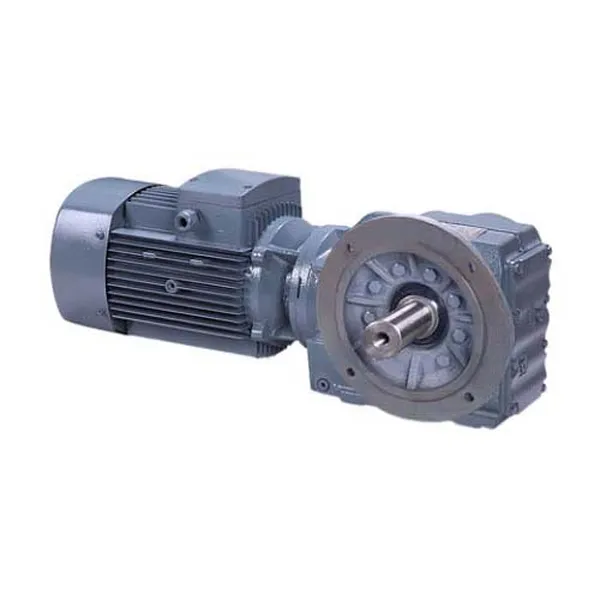
Aplicações comuns de caixas de engrenagens cônicas em diversas indústrias
As caixas de engrenagens cônicas são amplamente utilizadas em diversos setores industriais devido às suas capacidades e vantagens exclusivas:
- Automotivo: As caixas de engrenagens cônicas são componentes vitais nos sistemas diferenciais automotivos, permitindo uma distribuição suave de potência para as rodas e possibilitando curvas e manobras suaves.
- Aeroespacial: Essas caixas de engrenagens são empregadas em sistemas de trem de pouso de aeronaves, sistemas de rotores de helicópteros e outras aplicações que exigem mudanças na direção de rotação.
- Impressão e embalagem: As caixas de engrenagens cônicas são utilizadas em impressoras e máquinas de embalagem para facilitar a transferência de movimento entre eixos que se cruzam.
- Construção: Os equipamentos de construção frequentemente dependem de caixas de engrenagens cônicas para os mecanismos de direção, o que possibilita o controle da direção de máquinas pesadas.
- Máquinas industriais: Diversas máquinas industriais, como equipamentos para trabalhar madeira e sistemas de transporte, utilizam caixas de engrenagens cônicas para uma transmissão de potência eficiente em curvas.
- Marinho: As caixas de engrenagens cônicas são utilizadas em sistemas de propulsão marítima e mecanismos de direção para barcos e navios.
- Energia e Geração de Energia: As turbinas eólicas e os geradores hidroelétricos se beneficiam de caixas de engrenagens cônicas para transmitir movimento entre eixos em ângulos diferentes.
A capacidade de adaptação das caixas de engrenagens cônicas para alterar a direção do movimento, transmitindo potência de forma eficiente, torna-as a escolha ideal em setores onde essas capacidades são essenciais para um desempenho otimizado.
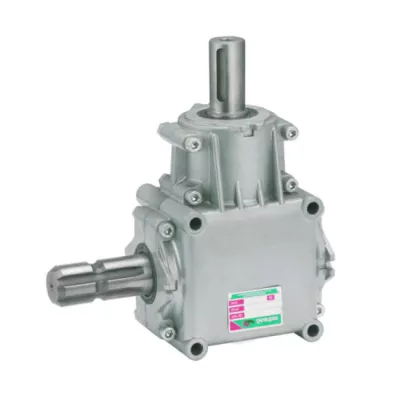
Lubrication Requirements for Maintaining Bevel Gearbox Efficiency
Proper lubrication is crucial for maintaining the efficiency and longevity of bevel gearboxes. Here are the essential lubrication requirements:
- Selection of Lubricant: Choose a high-quality lubricant specifically designed for bevel gear applications. The lubricant should have the appropriate viscosity and additives to withstand the operating conditions and loads.
- Correct Lubricant Quantity: Follow the manufacturer’s recommendations for the correct lubricant quantity. Insufficient lubrication can lead to increased friction and wear, while over-lubrication can cause overheating and inefficient operation.
- Lubrication Intervals: Establish a regular lubrication schedule based on the gearbox’s operating conditions. Factors such as load, speed, temperature, and environment can influence the frequency of lubrication.
- Proper Lubrication Points: Identify all the necessary lubrication points on the bevel gearbox, including bearings, gears, and other moving parts. Ensure that lubricant is applied precisely to these points for optimal coverage.
- Cleanliness: Keep the gearbox and its surrounding area clean to prevent contamination of the lubricant. Dirt, debris, and moisture can compromise the lubrication effectiveness and accelerate wear.
- Temperature Considerations: Choose a lubricant with temperature stability suitable for the operating conditions. Extreme temperatures can affect lubricant viscosity and performance.
- Monitoring: Regularly monitor the condition of the lubricant, including its color, consistency, and contamination level. Perform oil analysis if necessary to assess the lubricant’s health.
- Lubricant Compatibility: Ensure that the chosen lubricant is compatible with the gearbox materials to prevent corrosion or damage.
- Re-lubrication: During routine maintenance, clean and reapply lubricant as needed. Replace the lubricant when it reaches the end of its service life.
Adhering to proper lubrication requirements enhances the efficiency, performance, and reliability of bevel gearboxes, reducing friction, wear, and the risk of premature failure.
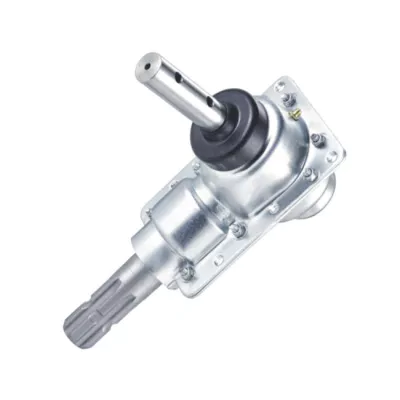
Direction of Rotational Motion Change by Bevel Gears in a Bevel Gearbox
Bevel gears in a bevel gearbox are specifically designed to change the direction of rotational motion between intersecting shafts. They achieve this by utilizing the unique geometry of their tooth profiles, which allows them to transmit motion smoothly and efficiently even when the shafts are positioned at an angle other than 90 degrees.
When two bevel gears mesh together, their teeth engage and transfer rotational force from one gear to the other. Depending on the gear arrangement, the direction of rotation can be changed from input to output or vice versa. For example, in a straight bevel gear arrangement, the gears are set at a 90-degree angle, and the input and output shafts are perpendicular to each other. As the input gear rotates, it transfers its motion to the output gear, resulting in a change in the direction of rotation between the two shafts.
In more complex configurations, such as spiral bevel gears, the teeth are designed in a spiral pattern, which allows for smoother engagement and better load distribution. This makes them suitable for applications where higher torque and efficiency are required, and the shafts are positioned at angles other than 90 degrees.
In summary, bevel gears in a bevel gearbox are essential components that enable the transmission of rotational motion and power between intersecting shafts while changing the direction of rotation as needed for various mechanical systems and industrial applications.


editor by CX 2024-01-30