
Descripción del Producto
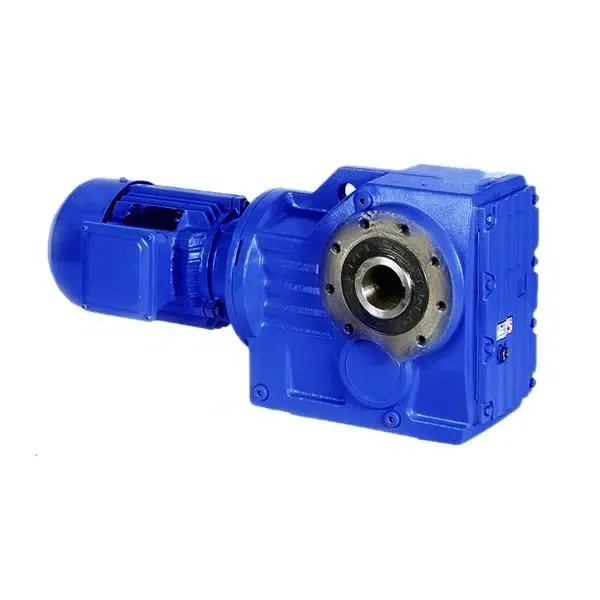
Aokman Drive High torque K series helical bevel gear motor reducer gearbox
Descripción del Producto
Description: K Series Helical Bevel Gearbox
Overview
(1) Input mode: coupled motor, belted motor, input shaft or connection flange.
(2) Right angle output.
(3) Compact structure.
(4) Rigid tooth face.
(5) Carrying greater torque, high loading capacity.
(6) High precision gear, ensuring the unit to operate stably, smooth transmission.
(7) Low noise, long lifespan.
(8) Large overlap coefficient, abrasion resistant.
Detailed Photos
K series gear units are available in the following designs:
KAZ..Y..Short-flange-mounted helical-bevel gear units with hollow shaft
K…Y…Foot-mounted helical-bevel gear units with CHINAMFG shaft
KAT…Y…Torque-arm-mounted helical-bevel gear units with hollow shaft
KAB…Y…Foot-mounted helical-bevel gear units with hollow shaft
K(KF,KA,KAF,KAB,KAZ)S…Shaft input helical-bevel gear units
KA…Y…Helical-bevel gear units with hollow shaft
KA(K, KF ,KAF, KAB ,KAZ)R..Y..Combinatorial helical-bevel gear units
KF…Y…Flange-mounted helical-bevel gear units with CHINAMFG shaft
KA(K, KF ,KAF ,KAZ)S…R…Shaft input combinatorial helical-bevel gear units
KAF…Y…Flange-mounted helical-bevel gear units with hollow shaft
KA(K, KF ,KAF, KAB ,KAZ)…Y…When equipping the user’s motor or the special 1 ,the flange is required to be connected
The weights are mean values, only for reference.
Maximum torque means the biggest 1 of the maximum torque related to the different ratio for the specified size.
Rated Power:0.18KW~200KW
Rated Torque:Up to 50000N.m
Gear Arrangement:Bevel Helical Hardened Gearbox
Input Speed:50HZ or 60HZ of 4Pole,6Pole and 8pole motor
Ratio:5.36~192.18
Product Parameters
Structure:
| K(-) |
K(A) | K(F) | Input power range | Output speed | Output torque |
| Foot-mounted | Hollow shaft output |
Flange-mounted | 0.18-200kw | 0.1-270r/min | Up to 50000Nm |
Input power rating and maximum torque:
| Size |
38 | 48 | 58 | 68 | 78 | 88 | 98 | 108 | 128 | 158 | 168 | 188 |
| Structure |
K KA KF KAF KAZ KAT KAB | |||||||||||
| Input power rating(kw) |
0.18~ 3.0 |
0.18~ 3.0 |
0.18~ 5.5 |
0.18~ 5.5 |
0.37~ 11 |
0.75~ 22 |
1.3~ 30 |
3~ 45 |
7.5~ 90 |
11~ 160 |
11~ 200 |
18.5~ 200 |
| Ratio | 5.36~ 106.38 |
5.81~ 131.87 |
6.57~ 145.15 |
7.14~ 44.79 |
7.22~ 192.18 |
7.19~ 197.27 |
8.95~ 175.47 |
8.74~ 141.93 |
8.68~ 146.07 |
12.66~ 150.03 |
17.35~1 64.44 |
17.97~ 178.37 |
| Maximum Torque(N.m) |
200 | 400 | 600 | 820 | 1550 | 2770 | 4300 | 8000 | 13000 | 18000 | 32000 | 50000 |
Gear unit weight:
| Size |
38 | 48 | 58 | 68 | 78 | 88 | 98 | 108 | 128 | 158 | 168 | 188 |
| Weight |
11 | 20 | 27 | 33 | 57 | 85 | 130 | 250 | 380 | 610 | 1015 | 1700 |
Packaging & Shipping
Company Profile
After Sales Service
| Pre-sale services | 1. Select equipment model. |
| 2.Design and manufacture products according to clients’ special requirement. | |
| 3.Train technical personal for clients | |
| Services during selling | 1.Pre-check and accept products ahead of delivery. |
| 2. Help clients to draft solving plans. | |
| After-sale services | 1.Assist clients to prepare for the first construction scheme. |
| 2. Train the first-line operators. | |
| 3.Take initiative to eliminate the trouble rapidly. | |
| 4. Provide technical exchanging. |
Preguntas frecuentes
1. How to choose a gearbox which meets our requirement?
You can refer to our catalogue to choose the gearbox or we can help to choose when you provide
the technical information of required output torque, output speed and motor parameter etc.
2. What information shall we give before placing a purchase order?
a) Type of the gearbox, ratio, input and output type, input flange, mounting position, and motor information etc.
b) Housing color.
c) Purchase quantity.
d) Other special requirements.
3. What industries are your gearboxes being used?
Our gearboxes are widely used in the areas of textile, food processing, beverage, chemical industry,
escalator,automatic storage equipment, metallurgy, environmental protection, logistics and etc.
4.Do you offer any visiting?
Yes! We sincerely invite you to visit us! We can pick you from airport, railway station and so on. Also, we can arrange housing for you. Please let us know in advanced.
5.Is your quality good?
Quality never tell lies, we’re theprofessional manufacturer and exporter of gear reducer and motor in Asia, who has been given license since 1982. Also, we had achieved ISO9001 and CE Certificate among all manufacturers.
Contact:
If you are interested in our product, welcome you contact me.
Our team will support any need you might have. /* October 22, 2571 15:47:17 */(()=>{function d(e,r){var a,o={};try{e&&e.split(“,”).forEach(function(e,t){e&&(a=e.match(/(.*?):(.*)$/))&&1
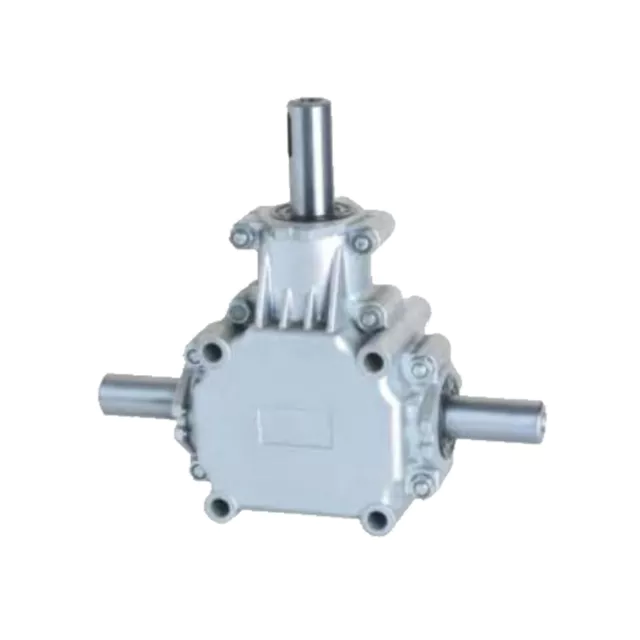
Distinguishing Bevel Gearboxes from Other Gear Systems
Bevel gearboxes stand out from other types of gear systems due to their unique characteristics and applications:
- Angle of Intersection: Bevel gearboxes are designed to transmit motion between intersecting shafts at specific angles, making them ideal for changing the direction of rotational motion.
- Direction Change: Unlike parallel shaft gear systems, bevel gearboxes change the direction of motion by 90 degrees or other specified angles, allowing them to efficiently transmit power around corners.
- Compact and Space-Saving: Bevel gearboxes are often compact and space-saving, making them suitable for applications with limited room for gear assembly.
- Wide Range of Angles: Bevel gearboxes can handle various angle configurations beyond 90 degrees, providing flexibility in designing complex mechanical systems.
- Specialized Applications: Bevel gearboxes are commonly used in applications requiring changes in direction, such as automotive differential systems, steering mechanisms, printing presses, and machinery with intersecting axes.
These distinguishing features make bevel gearboxes a versatile choice for scenarios where changing the direction of rotational motion or transmitting power between intersecting shafts is essential.
Cajas de engranajes cónicos en aplicaciones marinas y aeroespaciales
Sí, las cajas de engranajes cónicos se encuentran comúnmente tanto en aplicaciones marinas como aeroespaciales, ofreciendo ventajas únicas en estas industrias:
- Aplicaciones marinas: Las cajas de engranajes cónicos se utilizan en sistemas de propulsión marina para transmitir potencia de los motores a las hélices. Su capacidad para cambiar el sentido de giro y transmitir un par motor elevado las hace idóneas para ajustar el paso de la hélice y optimizar el empuje. Además, se emplean en sistemas de cabrestantes, mecanismos de dirección y diversos equipos a bordo.
- Aplicaciones aeroespaciales: Las cajas de engranajes cónicos desempeñan un papel crucial en los sistemas aeroespaciales, como los sistemas de rotor de helicópteros. Transmiten la potencia del motor a las palas del rotor, permitiendo además cambios en el sentido de giro. En las aeronaves, se utilizan en los mecanismos del tren de aterrizaje, los sistemas de control de flaps y los accionamientos de los accesorios del motor. Su diseño compacto resulta especialmente ventajoso en aplicaciones aeroespaciales, donde el espacio y el peso son factores esenciales.
La versatilidad, la eficiencia y la fiabilidad de las cajas de engranajes cónicos las hacen idóneas para afrontar los retos y requisitos únicos de los entornos marinos y aeroespaciales.
Importancia del ángulo entre los engranajes cónicos en una caja de engranajes cónicos
El ángulo entre los engranajes cónicos en una caja de engranajes cónicos desempeña un papel crucial en la transmisión del movimiento de rotación entre los ejes que se cruzan. Este ángulo, a menudo denominado «ángulo del eje» o «ángulo de paso», tiene implicaciones significativas para el rendimiento, la eficiencia y la capacidad de carga de la caja de engranajes.
El ángulo entre los engranajes cónicos afecta a varios aspectos clave:
- Ventaja mecánica: El ángulo determina la ventaja mecánica o la relación de transmisión de la caja de engranajes cónicos. Un ángulo menor resulta en una menor relación de transmisión, lo que proporciona un mayor par motor y una menor velocidad de rotación, mientras que un ángulo mayor produce una mayor relación de transmisión, lo que resulta en una mayor velocidad de rotación y un menor par motor.
- Eficiencia: El ángulo afecta la eficiencia de la transmisión de potencia. Un ángulo menor generalmente conlleva una mayor eficiencia debido a una mejor distribución de la carga y a la reducción de las pérdidas por fricción.
- Distribución de carga: Los ángulos elegidos correctamente contribuyen a una distribución uniforme de la carga entre los dientes de los engranajes cónicos. Los ángulos incorrectos pueden provocar un desgaste desigual y fallos prematuros.
- Restricciones de espacio: El ángulo influye en las dimensiones generales de la caja de engranajes cónicos, lo cual puede ser fundamental cuando el espacio es limitado en ciertas aplicaciones.
El ángulo entre los engranajes cónicos se selecciona generalmente en función de los requisitos específicos del sistema mecánico y la aplicación prevista. Se trata de un aspecto fundamental del diseño que los ingenieros analizan minuciosamente para garantizar un rendimiento y una fiabilidad óptimos de la caja de engranajes cónicos.


editor by lmc 2024-11-27