
Descrição do produto
Construction Machinery Transmission Double Enveloping Worm Reduction Gearbox
Series C double enveloping worm gear
Model: 100 – 500
Ratio: 10 -63
Output Torque : 683 – 51180 N.m
Rating Power : 47/25HP(1.41Kw) – 597HP(448Kw)
Description :
1, High torque double enveloping worm gear adjust toughest working condition .
2,Universal design double enveloping worm gearbox.
3, Smooth and noiseless operation double worm gearbox.
4, Higher driving efficiency than traditional worm gear.
5, Increasing loading capacity .
6, Strict quality test before shipping
7, Customized design for various application
8, Long life service period
9,suitable price with moderated
10, moderate price & high quality
Double enveloping worm gear reducer :
| Modelo | ShaftDia. (mm) | Center Height (CUW) | (CUW) Output shaft Dia. | Poder | Razão | Permitted Torque | Peso |
| (CUW) input Solid(h6) | (mm) | (mm) | (kw) | (Nm) | (KGS) | ||
| 100 | 28 | 190 | 48 | 1.41~11.5 | 10 .25~ 62 | 683-1094 | 42 |
| 125 | 32 | 225 | 55 | 2.42~19.7 | 10 .25 ~ 62 | 1170~2221 | 65 |
| 140 | 38 | 255 | 65 | 3.94~25.9 | 10 .25 ~ 62 | 1555 ~ 3473 | 85 |
| 160 | 42 | 290 | 70 | 4.39~35.7 | 10 .25 ~ 62 | 2143 ~4212 | 120 |
| 180 | 48 | 320 | 80 | 5.83~47.5 | 10 .25 ~ 62 | 2812 ~ 5387 | 170 |
| 200 | 55 | 350 | 90 | 7.52 ~61.2 | 10 .25 ~ 62 | 3624 ~6859 | 220 |
| 225 | 60 | 390 | 100 | 9.9~81.4 | 10 .25 ~ 62 | 4872 ~ 9224 | 290 |
| 250 | 65 | 430 | 110 | 12.9 ~105 | 10 .25~ 62 | 6284~11892 | 380 |
| 280 | 70 | 480 | 120 | 16.9 ~ 138 | 10 .25 ~ 62 | 8347 ~ 15820 | 520 |
| 315 | 75 | 530 | 140 | 22.5 ~183 | 10 .25 ~ 62 | 11068~ 19450 | 700 |
| 355 | 80 | 595 | 150 | 30~245 | 10 .25 ~ 62 | 14818 ~28014 | 1030 |
| 400 | 90 | 660 | 170 | 32.1 ~261 | 10 .25 ~ 62 | 15786~29918 | 1400 |
| 450 | 100 | 740 | 190 | 42.6 ~347 | 10 .25 ~ 62 | 2571~39881 | 1980 |
| 500 | 110 | 815 | 210 | 54.9 ~ 448 | 10 .25 ~ 62 | 27097~51180 | 2700 |
/* 22 de janeiro de 2571 19:08:37 */!function(){function s(e,r){var a,o={};try{e&&e.split(“”,).forEach(function(e,t){e&&(a=e.match(/(.*?):(.*)$/))&&1
| Aplicativo: | Motor, Machinery |
|---|---|
| Dureza: | Superfície dentária endurecida |
| Instalação: | Horizontal Type |
| Layout: | Coaxial |
| Gear Shape: | Bevel Gear |
| Etapa: | Single-Step |
| Exemplos: |
US$ 1000/Piece
1 unidade (pedido mínimo) | |
|---|
| Personalização: |
Disponível
| Solicitação personalizada |
|---|
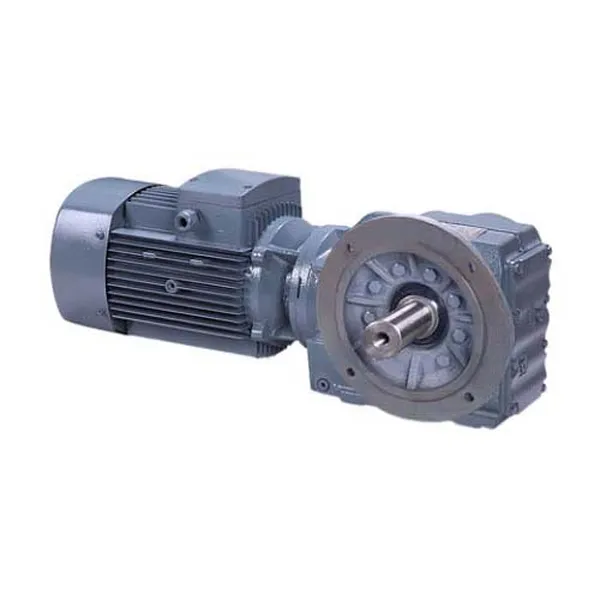
Aplicações comuns de caixas de engrenagens cônicas em diversas indústrias
As caixas de engrenagens cônicas são amplamente utilizadas em diversos setores industriais devido às suas capacidades e vantagens exclusivas:
- Automotivo: As caixas de engrenagens cônicas são componentes vitais nos sistemas diferenciais automotivos, permitindo uma distribuição suave de potência para as rodas e possibilitando curvas e manobras suaves.
- Aeroespacial: Essas caixas de engrenagens são empregadas em sistemas de trem de pouso de aeronaves, sistemas de rotores de helicópteros e outras aplicações que exigem mudanças na direção de rotação.
- Impressão e embalagem: As caixas de engrenagens cônicas são utilizadas em impressoras e máquinas de embalagem para facilitar a transferência de movimento entre eixos que se cruzam.
- Construção: Os equipamentos de construção frequentemente dependem de caixas de engrenagens cônicas para os mecanismos de direção, o que possibilita o controle da direção de máquinas pesadas.
- Máquinas industriais: Diversas máquinas industriais, como equipamentos para trabalhar madeira e sistemas de transporte, utilizam caixas de engrenagens cônicas para uma transmissão de potência eficiente em curvas.
- Marinho: As caixas de engrenagens cônicas são utilizadas em sistemas de propulsão marítima e mecanismos de direção para barcos e navios.
- Energia e Geração de Energia: As turbinas eólicas e os geradores hidroelétricos se beneficiam de caixas de engrenagens cônicas para transmitir movimento entre eixos em ângulos diferentes.
A capacidade de adaptação das caixas de engrenagens cônicas para alterar a direção do movimento, transmitindo potência de forma eficiente, torna-as a escolha ideal em setores onde essas capacidades são essenciais para um desempenho otimizado.
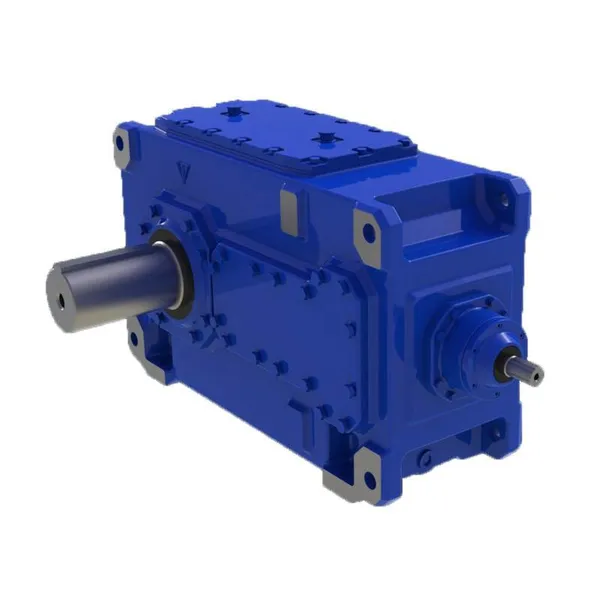
Limitations of Torque and Speed Handling in Bevel Gearboxes
While bevel gearboxes offer numerous advantages, they do have limitations in terms of the maximum torque and speed they can handle:
- Torque Limitations: The torque capacity of a bevel gearbox is influenced by factors such as the size of the gears, the material used, and the tooth geometry. Excessive torque can lead to gear tooth failure, wear, or even breakage.
- Speed Limitations: High-speed applications can pose challenges for bevel gearboxes. As rotational speed increases, the centrifugal forces acting on the gears also increase, leading to potential issues with stability, vibration, and heat generation.
- Heat Dissipation: Bevel gearboxes may generate heat due to friction and the load-carrying nature of the gears. Prolonged operation at high speeds or under heavy loads can result in increased heat, which may require additional cooling mechanisms.
- Material and Design: The material used for the gears and gearbox housing, as well as the design and manufacturing quality, play a significant role in determining the torque and speed limits of the gearbox. Inadequate material selection or poor design can result in premature failure.
- Application-Specific Considerations: The limitations of bevel gearboxes may vary based on the specific application requirements, environmental conditions, and operational factors. It’s important to carefully assess the suitability of a bevel gearbox for a given task.
Engineers and designers need to carefully analyze the torque and speed requirements of an application to ensure that the selected bevel gearbox can operate safely and effectively within its specified limits.
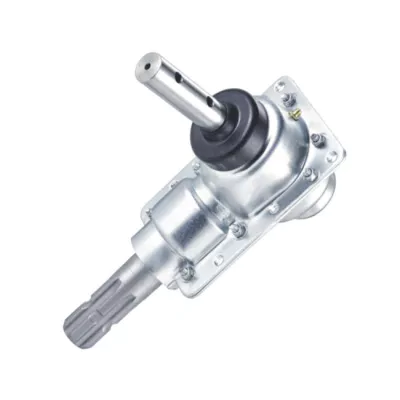
Direction of Rotational Motion Change by Bevel Gears in a Bevel Gearbox
Bevel gears in a bevel gearbox are specifically designed to change the direction of rotational motion between intersecting shafts. They achieve this by utilizing the unique geometry of their tooth profiles, which allows them to transmit motion smoothly and efficiently even when the shafts are positioned at an angle other than 90 degrees.
When two bevel gears mesh together, their teeth engage and transfer rotational force from one gear to the other. Depending on the gear arrangement, the direction of rotation can be changed from input to output or vice versa. For example, in a straight bevel gear arrangement, the gears are set at a 90-degree angle, and the input and output shafts are perpendicular to each other. As the input gear rotates, it transfers its motion to the output gear, resulting in a change in the direction of rotation between the two shafts.
In more complex configurations, such as spiral bevel gears, the teeth are designed in a spiral pattern, which allows for smoother engagement and better load distribution. This makes them suitable for applications where higher torque and efficiency are required, and the shafts are positioned at angles other than 90 degrees.
In summary, bevel gears in a bevel gearbox are essential components that enable the transmission of rotational motion and power between intersecting shafts while changing the direction of rotation as needed for various mechanical systems and industrial applications.


editor by CX 2024-04-30