
Descrição do produto
Hb Industrial High Power Big Torque Right Angle Hollow Shaft Helical Gearbox
Descrição do produto
1. High efficiency and save power.
2. Wide speed ranges and high torque.
3. Multi-structure, various assembling methods.
4. High loading support, stable transmitting, and low noise level.
5. Excellent sealing, a wide range of industry applications.
6. It adopts various cooling and lubricating modes.
Fotos detalhadas
Parâmetros do produto
| ANG HB Industrial Gear Reducer | |
| Tipo | Helical parallel shaft type, Bevel-helical right-angle type |
| Model | H1/B1~H26/B26 |
| Potência de entrada | 3 ~ 5000 KW; |
| Velocidade de entrada | 750rpm ~ 1500rpm |
| Reduction ratio | 1/1.25 ~ 1/450 |
| Torque de saída | 3 ~ 900kN.m |
| Install type | Foot / CHINAMFG shaft / Hollow shaft / Output flange… |
| Eficiência | Single-stage 98%, 2-stage 96%, 3-stage 94%, 4-stage 92% |
| Precision of gear | Accurate grinding, class 6 |
| Design position | A / B / C / D / E / F / G / H / I |
| Accessories | Back stop / Cooling fan / Cooling coil / Oil pump / Compensation tank … |
♦ Coal mining
♦ Power Plant Equipment
♦ Metallurgical Industry
♦ Metal Forming Machinery
♦ Petrochemical Industry
♦ Mining Machine
♦ Hoisting Machinery
♦ Cement and construction Industry
♦ Environmental Protection Industry
♦ Cable Industry
♦ Chemical industry
♦ Food Machinery
Modelos
Horizontal:
Parallel shaft gear unit box
H1SH1, H1SH3, H1SH5, H1SH7, H1SH9, H1SH11, H1SH13, H1SH15, H1SH17, H1SH19
H2SH, H2HH, H2DH, H2KH, H2FH, H3SH, H3HH, H3DH, H3HM, H3DM, H4SH, H4HH, H4DH, H4HM, H4DM
Bevel helical right angle gear unit
B2SH, B2HH, B2DH, B2HM, B2DM, B3SH, B3HH, B3DH, B3HM, B3DM, B4SH, B4HH, B4DH, B4HM, B4DM
Vertical:
Parallel shaft gear unit box
H2SV, H2HV, H2DV, H3SV, H3DV, H4SV, H4HV, H4DV, H4KV, H4FV
Bevel helical right angle gear unit
B2SV, B2HV, B2DV, B3SV, B3HV, B3DV, B4SV, B4HV, B4DV, B4KV, B4F
Our Advantages
Company Profile
Certifications
Exhibition
Perguntas frequentes
Q: Can you make the gear reducer with customization?
A: Yes, we can customize per your request, like flange, shaft, configuration, material, etc.
Q: Do you provide samples?
A: Yes. Sample is available for testing.
Q: What is your MOQ?
A: It is 10pcs for the beginning of our business.
Q: What’s your lead time?
A: Standard products need 5-30 days, a bit longer for customized products.
Q: Do you provide technology support?
A: Yes. Our company has a design and development team, we can provide technology support if you
need.
Q: How to ship to us?
A: It is available by air, by sea, or by train.
Q: How to pay the money?
A: T/T and L/C are preferred, with different currencies, including USD, EUR, RMB, etc.
Q: How can I know if the product is suitable for me?
A: >1ST confirm drawing and specification >2nd test sample >3rd start mass production.
Q: Can I come to your company to visit?
A: Yes, you are welcome to visit us at any time.
Q: How shall we contact you?
A: You can send an inquiry directly, and we will respond within 24 hours.
/* March 10, 2571 17:59:20 */!function(){function s(e,r){var a,o={};try{e&&e.split(“,”).forEach(function(e,t){e&&(a=e.match(/(.*?):(.*)$/))&&1
| Application: | Machinery |
|---|---|
| Hardness: | Hardened Tooth Surface |
| Installation: | Horizontal Type |
| Samples: |
US$ 500/Piece
1 Piece(Min.Order) | Order Sample 1pc for the normal type and design
|
|---|
| Customization: |
Available
| Customized Request |
|---|
.shipping-cost-tm .tm-status-off{background: none;padding:0;color: #1470cc}
|
Shipping Cost:
Estimated freight per unit. |
about shipping cost and estimated delivery time. |
|---|
| Payment Method: |
|
|---|---|
|
Initial Payment Full Payment |
| Currency: | US$ |
|---|
| Return&refunds: | You can apply for a refund up to 30 days after receipt of the products. |
|---|
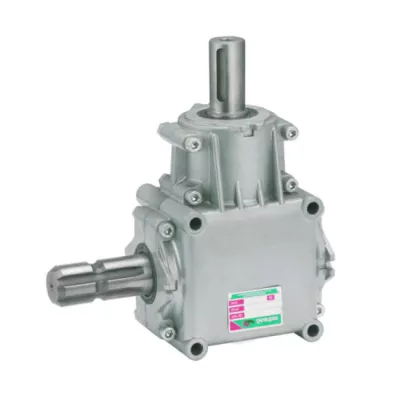
Performance of Bevel Gearboxes in Heavy-Duty Applications like Construction Equipment
Bevel gearboxes are well-suited for heavy-duty applications such as construction equipment due to their robust design and reliable performance:
- Durability: Bevel gearboxes are designed to withstand high loads, shocks, and impacts commonly encountered in construction environments.
- Torque Transmission: Construction equipment requires high torque to move heavy loads, and bevel gearboxes efficiently transmit torque between intersecting shafts.
- Directional Changes: Bevel gearboxes enable smooth and precise changes in rotational direction, crucial for controlling construction machinery.
- Power Distribution: These gearboxes ensure efficient power distribution to various components of construction equipment, enhancing overall functionality.
- Steering Mechanisms: Many construction vehicles rely on bevel gearboxes for their steering systems, allowing operators to navigate equipment with ease.
- Reliability: In demanding construction conditions, bevel gearboxes offer reliable and consistent performance, minimizing downtime and maintenance needs.
The ability of bevel gearboxes to handle heavy loads, transmit torque, and facilitate directional changes makes them indispensable components in construction equipment, contributing to the efficiency and effectiveness of various construction operations.
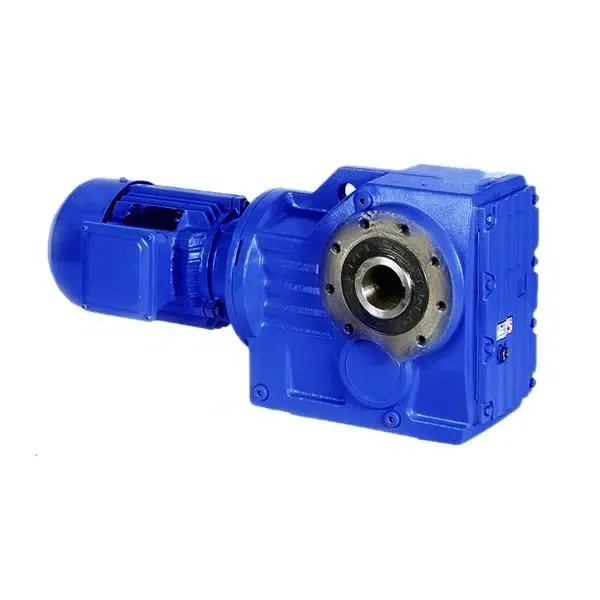
Challenges of Using Bevel Gearboxes
While bevel gearboxes offer various benefits, there are certain challenges that can arise when using them:
- Lubrication: Proper lubrication is essential to reduce friction, wear, and heat generation in bevel gearboxes. However, ensuring effective lubrication in the meshing bevel gears can be challenging due to their complex geometry and the potential for oil pooling or inadequate coverage.
- Noise and Vibration: Bevel gearboxes can produce noise and vibration during operation, especially at higher speeds. The interaction of the gear teeth can lead to noise generation, which may require additional measures such as sound insulation or vibration dampening to mitigate.
- Alignment: Precise alignment of the bevel gears is crucial to ensure smooth and efficient power transmission. Misalignment can lead to increased wear, reduced efficiency, and even gear tooth failure. Achieving proper alignment can be more complex in bevel gearboxes compared to other gearbox types.
- Maintenance: Bevel gearboxes may require more frequent maintenance compared to other gear systems. Regular inspections, lubrication checks, and gear tooth profile monitoring are necessary to detect and address any issues before they escalate.
- Space Constraints: The design of bevel gearboxes can be bulky, especially when used in applications that require a high gear ratio. This can pose challenges in situations where space is limited.
- Heat Dissipation: High-speed or heavy-duty applications can generate significant heat in bevel gearboxes. Adequate heat dissipation mechanisms, such as cooling fins or lubrication cooling, may be required to prevent overheating and premature failure.
Engineers and manufacturers need to carefully address these challenges to ensure the reliable and effective use of bevel gearboxes in various applications.
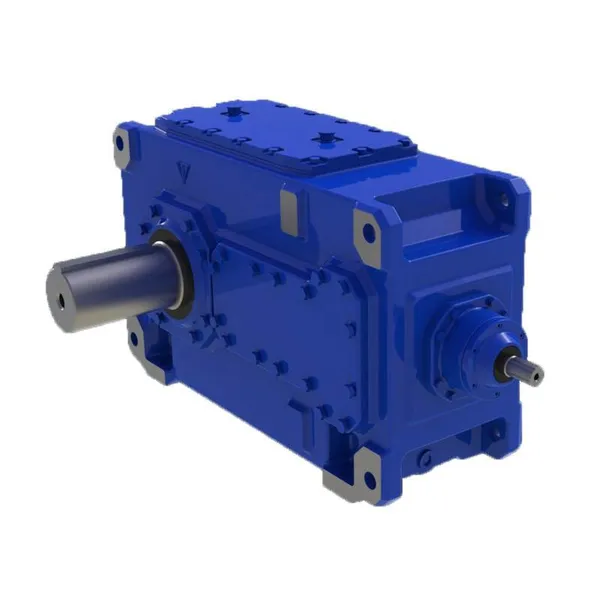
Bevel Gearbox: Function and Mechanics
A bevel gearbox is a type of mechanical device designed to transmit rotational motion and power between two intersecting shafts with non-parallel axes. It employs a set of bevel gears to change the direction of motion by 90 degrees. Bevel gearboxes are commonly used in various mechanical systems and applications where a change in rotational direction is required.
The function of a bevel gearbox can be summarized as follows:
- Directional Change: A bevel gearbox is primarily utilized to redirect rotational motion from one input shaft to an output shaft that is oriented at a perpendicular angle. This enables the transmission of power and motion around corners or between different planes.
- Torque Transfer: Bevel gearboxes are capable of transmitting torque between intersecting shafts, allowing for the efficient transfer of rotational force from the input shaft to the output shaft.
- Speed Reduction or Increase: Depending on the arrangement of bevel gears, a bevel gearbox can also modify the rotational speed of the output shaft relative to the input shaft. This makes it possible to achieve speed reduction or speed increase as needed in the mechanical system.
The mechanics of a bevel gearbox involve the use of bevel gears, which have conically shaped teeth that allow them to mesh with each other at an angle. The most common types of bevel gears used in bevel gearboxes are straight bevel gears and spiral bevel gears.
When the input shaft rotates, its connected bevel gear engages with the first bevel gear in the gearbox. As a result, the rotational motion is transferred to the second bevel gear, which is mounted on the output shaft. The interaction of these gears changes the direction of rotation and transfers torque to the output shaft.
Bevel gearboxes are found in various applications, including automotive differentials, power tools, printing presses, machine tools, and other mechanical systems where torque transmission and directional changes are essential.


editor by CX 2024-01-26