
Descrizione del prodotto
Product Description
R series reducer is a kind of gear is used to reduce the motor speed and improve the output torque of the principle of speed reducer. It uses the gear and gear meshing, with advanced design and novel structure of retarding mechanism.
It has beenwidely used in metallurgy, mining, petroleum, chemical industry, ship, light industry, food, textile, printing and dyeing.
| Product Name | R series hard tooth flank gear reducer |
| materiale degli ingranaggi | 20CrMnTi |
| Colore | Customer Request |
| Case Material | HT250 |
| Shaft Material | 20CrMnTi |
| Gear Processing | Grinding finish by HOFLER Grinding Machines |
| Noise Test | Bellow 65dB |
| Marca dei cuscinetti | C&U bearing, ZWZ,LYC, HRB,NSK ,etc |
| Marca del paraolio | NAK or other brand |
| Temp. rise (MAX) | 40ºC |
| Temp. rise (Oil)(MAX) | 50ºC |
| Vibrazione | ≤20µm |
Product Feature
Our R series helical gear reducers are based on the building block design, so its convenientfor them to fit all types of motors or to connect with other power input, and its possiblefor different types of machines to combine or connect.
1. Compact construction, saves space for mounting, large load-bearing capacity and long life.
2. High transmission efficiency and low noise. A single machine can reach a transmission efficiency as much as 96%.
3. Precise division of transmission ratio with a wide range. The combination of machines can produce a larger transmission ratio at a low output rotational speed.
4. Installation: Foot-mounted, B5/B14 flange-mounted, input shaft, hollow output shaft, etc.
Input power rating and permissible torque
| Misurare | 17 | 27 | 37 | 47 | 57 | 67 | 77 | 87 | 97 | 107 | 137 | 147 | 167 | |
| Struttura | R RF | |||||||||||||
| Rated Power(kw) | 0.18-0.75 | 0.18-0.3 | 0.18-3 | 0.18-5.5 | 0.18-7.5 | 0.18-7.5 | 0.18-11 | 0.55-22 | 0.55-30 | 2.2-45 | 5.5-55 | 11-90 | 11-160 | |
| Rapporto | 3.83-74.84 | 3.37-135.09 | 3.33-134.82 | 3.83-176.88 | 4.39-186.89 | 4.29-199.81 | 5.21-195.24 | 5.36-246.54 | 4.49-289.74 | 5.06-249.16 | 5.15-222.60 | 5.00-163.31 | 10.24-229.71 | |
| Coppia (Nm) | 85 | 130 | 200 | 300 | 450 | 600 | 820 | 1550 | 3000 | 4300 | 8000 | 13000 | 18000 | |
| Misurare | 37 | 57 | 67 | 77 | 87 | 97 | 107 | 127 | 157 | |
| Struttura | RX RXF | |||||||||
| Rated Power(kw) | 0.18-1.1 | 0.18-5.5 | 0.18-7.5 | 1.1-11 | 3-22 | 5.5-30 | 7.4-45 | 7.5-90 | 11-132 | |
| Rapporto | 1.62-4.43 | 1.3-5.5 | 1.4-6.07 | 1.42-8.00 | 1.39-8.65 | 1.42-8.23 | 1.44-6.63 | 1.51-6.2 | 1.57-6.2 | |
| Torque | 20 | 70 | 135 | 215 | 400 | 600 | 830 | 1110 | 1680 | |
| Gear Unit Weight | |||||||||||||
| Gear Unit Type | R17 | R27 | R37 | R47 | R57 | R67 | R77 | R87 | R97 | R107 | R137 | R147 | R167 |
| Weight(kg) |
4 | 5.5 | 8.5 | 10 | 18 | 25 | 36 | 63 | 101 | 153 | 220 | 400 | 700 |
| Gear Unit Type | RX37 | RX57 | RX67 | RX77 | RX87 | RX97 | RX107 | RX127 | RX157 | ||||
| Weight(kg) | 5 | 8 | 14 | 23 | 39 | 70 | 100 | 150 | 250 | ||||
| The weight are mean values, only for reference | |||||||||||||
Gear Unit Version
| Single Stage | Misurare | |||||||||||
| 57 | 67 | 77 | 87 | 97 | 107 | |||||||
| RX.. | Montato a piedi | RX57 | RX67 | RX77 | RX87 | RX97 | RX107 | |||||
| RXF.. | Montaggio flangiato | RXF57 | RXF67 | RXF77 | RX87 | RX97 | RX107 | |||||
| Multi-stage | Misurare (17/27/37/47/57/67/77/87/97/107/137/147/167) | |||||||||||
| R.. | Montato a piedi | R17 | R27 | R37 | R47 | R57 | R67 | |||||
| R..F | Foot-mounted and flange-mounted | R17F | R27F | R37F | R47F | R57F | R67F | |||||
| RF.. | B5 flange-mounted | RF17 | RF27 | RF37 | RF47 | RF57 | RF67 | |||||
| Multi-stage | Misurare (17/27/37/47/57/67/77/87/97/107/137/147/167) | ||||||
| R.. | R77 | R87 | R97 | R107 | R137 | R147 | R167 |
| R..F | R77F | R87F | R97F | R107F | R137F | R147F | R167F |
| RF.. | RF77 | RF87 | RF97 | RF107 | RF137 | RF147 | RF167 |
Product Application
Packing & Shipping
/* January 22, 2571 19:08:37 */!function(){function s(e,r){var a,o={};try{e&&e.split(“,”).forEach(function(e,t){e&&(a=e.match(/(.*?):(.*)$/))&&1
| Application: | Motor, Electric Cars, Motorcycle, Machinery, Marine, Toy, Car, Factories |
|---|---|
| Hardness: | Hardened Tooth Surface |
| Installation: | as Request |
| Layout: | Helical Inline |
| Step: | Three-Step |
| Type: | Bevel Gear |
| Customization: |
Available
| Customized Request |
|---|
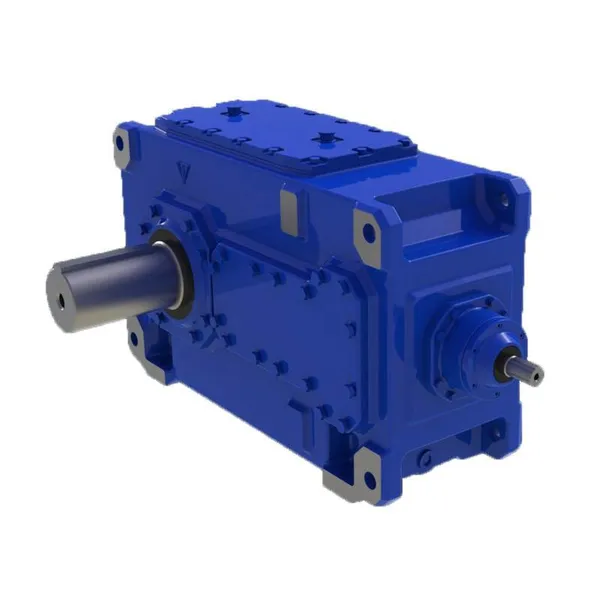
Minimizing Backlash and Ensuring Efficient Power Transfer in Bevel Gearboxes
Bevel gearboxes are meticulously designed to minimize backlash and optimize power transfer efficiency, ensuring smooth and precise motion in mechanical systems.
Several design considerations contribute to minimizing backlash and enhancing power transfer:
- Tooth Profile and Quality: High-precision tooth profiles with minimal clearance between mating gears reduce backlash. The use of advanced manufacturing techniques ensures consistent gear quality and accurate tooth engagement.
- Preload and Contact Pattern: Properly applied preload and optimized contact patterns between the bevel gear teeth enhance meshing accuracy, reducing the potential for backlash and improving load distribution.
- Gearbox Rigidity: Stiff and rigid gearbox housing and components help maintain precise gear alignment, reducing the effects of deflection and misalignment that can lead to backlash.
- Bearing Selection: High-quality bearings with minimal play contribute to reduced backlash and smoother motion by minimizing axial and radial movement of the gears.
- Lubrificazione: Adequate lubrication reduces friction, wear, and vibration, promoting efficient power transfer and minimizing backlash-related issues.
- Tolerances and Manufacturing Precision: Tight manufacturing tolerances and precision machining processes ensure consistent gear geometry, alignment, and positioning, minimizing any potential sources of backlash.
By incorporating these design principles and practices, bevel gearboxes are engineered to achieve tight backlash control and efficient power transmission. This makes them suitable for applications where precise motion control, accuracy, and reliability are crucial, such as robotics, aerospace, automotive, and industrial machinery.
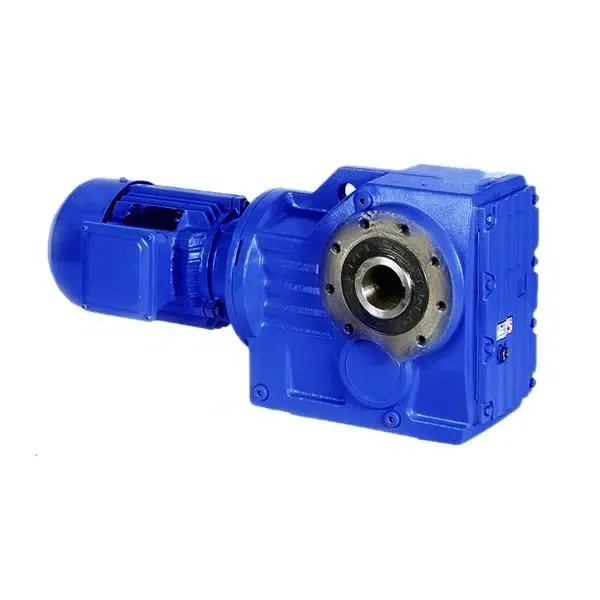
Sfide nell'utilizzo dei riduttori a ingranaggi conici
Sebbene i riduttori a ingranaggi conici offrano diversi vantaggi, il loro utilizzo può presentare alcune problematiche:
- Lubrificazione: Una lubrificazione adeguata è essenziale per ridurre l'attrito, l'usura e la generazione di calore nei riduttori a ingranaggi conici. Tuttavia, garantire una lubrificazione efficace negli ingranaggi conici in presa può essere difficile a causa della loro complessa geometria e del potenziale ristagno di olio o di una copertura insufficiente.
- Rumore e vibrazioni: I riduttori a ingranaggi conici possono produrre rumore e vibrazioni durante il funzionamento, soprattutto ad alte velocità. L'interazione tra i denti degli ingranaggi può generare rumore, che potrebbe richiedere misure aggiuntive come l'isolamento acustico o lo smorzamento delle vibrazioni per essere attenuato.
- Allineamento: L'allineamento preciso degli ingranaggi conici è fondamentale per garantire una trasmissione di potenza fluida ed efficiente. Un disallineamento può causare un'usura maggiore, una riduzione dell'efficienza e persino la rottura dei denti degli ingranaggi. Ottenere un allineamento corretto può essere più complesso nei riduttori a ingranaggi conici rispetto ad altri tipi di riduttori.
- Manutenzione: I riduttori a ingranaggi conici possono richiedere una manutenzione più frequente rispetto ad altri sistemi di ingranaggi. Ispezioni regolari, controlli della lubrificazione e monitoraggio del profilo dei denti degli ingranaggi sono necessari per individuare e risolvere eventuali problemi prima che si aggravino.
- Vincoli di spazio: I riduttori a ingranaggi conici possono risultare ingombranti, soprattutto se utilizzati in applicazioni che richiedono un elevato rapporto di trasmissione. Ciò può rappresentare una sfida in situazioni in cui lo spazio è limitato.
- Dissipazione del calore: Le applicazioni ad alta velocità o per impieghi gravosi possono generare un calore considerevole nei riduttori a ingranaggi conici. Per prevenire il surriscaldamento e i guasti prematuri, potrebbero essere necessari meccanismi di dissipazione del calore adeguati, come alette di raffreddamento o raffreddamento del lubrificante.
Gli ingegneri e i produttori devono affrontare attentamente queste sfide per garantire un utilizzo affidabile ed efficace dei riduttori a ingranaggi conici in diverse applicazioni.
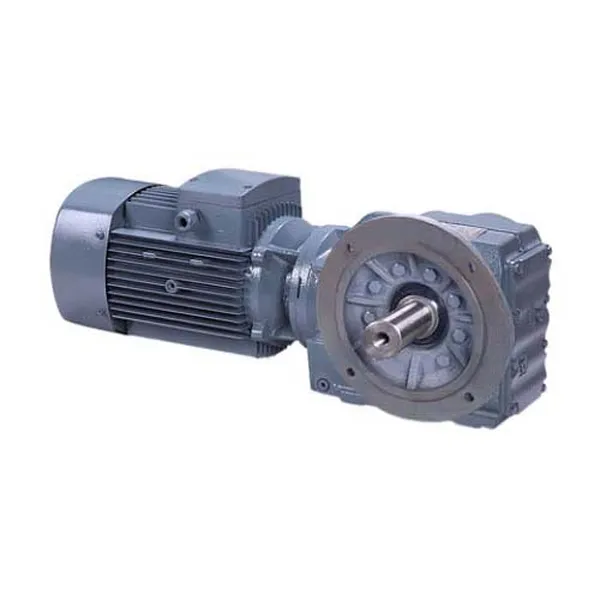
Transmission of Motion at an Angle with Bevel Gearboxes
Bevel gearboxes are designed to transmit motion between intersecting shafts that are positioned at an angle to each other. They accomplish this by using a set of bevel gears, which have teeth that are cut in a conical shape.
When two bevel gears mesh, their teeth engage at the point of contact. As one gear rotates, it drives the other gear, transmitting motion and torque between the shafts. The angle between the shafts and the orientation of the gear teeth determine the direction and speed of motion transfer.
There are two main types of bevel gears commonly used in bevel gearboxes:
- Straight Bevel Gears: These gears have straight-cut teeth and are used when the intersecting shafts are at a 90-degree angle. They are the simplest form of bevel gears and provide efficient motion transmission.
- Spiral Bevel Gears: These gears have teeth that are cut at an angle, allowing them to gradually engage and disengage. Spiral bevel gears are used when the intersecting shafts are at angles other than 90 degrees. They provide smoother operation, less noise, and increased load-carrying capacity compared to straight bevel gears.
The precision manufacturing of bevel gear teeth ensures accurate and reliable motion transmission at various angles, making bevel gearboxes suitable for applications that require motion to be transferred between intersecting shafts in non-parallel orientations.


editor by CX 2024-04-08