
Descripción del Producto
Descripción del Producto
KPM-KPB series helical-hypoid gearboxes are the new-generation product with a compromise of advanced technology both at home and abroad.This product is widely used in textile, foodstuff, beverage,tobacco, logistics industrial fields,etc.
Main Features:
(1) Driven by hypoid gears, which has big ratios.
(2) Large output torque, high efficiency(up to 92%), energy saving and environmental protection.
(3) High quality aluminum alloy housing, light in weight and non-rusting.
(4) Smooth in running and low in noise, and can work long time in dreadful conditions.
(5) Good-looking appearance, durable service life and small volume.
(6) Suitable for all round installation, wide application and easy use.
(7) KPM series can replace NMRV worm gearbox; KPB series can replace CHINAMFG W series worm gearbox;
(8) Modular and multi-structure can meet the demands of various conditions.
Main Material:
(1) Housing: aluminum alloy
(2) Gear wheel: 20CrMnTiH1,carbonize & quencher heat treatment make the hardness of gears surface up to 56-62 HRC, retain carburization layers thickness between 0.3 and 0.5mm after precise grinding.
Fotos detalladas
Parámetros del producto
Model Information:
| GEARBOX SELECTING TABLES | ||||||||||||
| KPM50.. | n1=1400r/min | 160Nm | ||||||||||
| Model | i | i | n2 | M2max | Fr2 | 63B5 | 71B5/B14 | 80B5/B14 | 90B5/B14 | |||
| nominal | actual | [r/min] | [Nm] | [N] | ||||||||
| 3 Stage | ||||||||||||
| KPM50C | 300 | 294.05 | 4.8 | 130 | 4100 | N/A | N/A | N/A | ||||
| KPM50C | 250 | 244.29 | 5.8 | 130 | 4100 | N/A | N/A | N/A | ||||
| KPM50C | 200 | 200.44 | 7.0 | 130 | 4100 | N/A | N/A | N/A | ||||
| KPM50C | 150 | 146.67 | 9.6 | 160 | 4000 | N/A | N/A | N/A | ||||
| KPM50C | 125 | 120.34 | 12 | 160 | 3770 | N/A | N/A | |||||
| KPM50C | 100 | 101.04 | 14 | 160 | 3560 | N/A | N/A | |||||
| KPM50C | 75 | 74.62 | 19 | 160 | 3220 | N/A | N/A | |||||
| KPM50C | 60 | 62.36 | 23 | 160 | 3030 | N/A | N/A | |||||
| KPM50C | 50 | 52.36 | 27 | 160 | 2860 | N/A | N/A | |||||
| 2 Stage | ||||||||||||
| KPM50B | 60 | 58.36 | 24 | 130 | 2960 | N/A | N/A | |||||
| KPM50B | 50 | 48.86 | 29 | 130 | 2790 | N/A | ||||||
| KPM50B | 40 | 40.09 | 35 | 130 | 2610 | N/A | ||||||
| KPM50B | 30 | 29.33 | 48 | 160 | 2350 | N/A | ||||||
| KPM50B | 25 | 24.07 | 59 | 160 | 2200 | |||||||
| KPM50B | 20 | 20.21 | 70 | 160 | 2080 | |||||||
| KPM50B | 15 | 14.92 | 94 | 160 | 1880 | |||||||
| KPM50B | 12.5 | 12.47 | 113 | 160 | 1770 | |||||||
| KPM50B | 10 | 10.47 | 134 | 160 | 1670 | |||||||
| KPM50B | 7.5 | 7.73 | 182 | 160 | 1510 | |||||||
| KPM63..,KPB63.. | n1=1400r/min | 180Nm | ||||||||||
| Model | i | i | n2 | M2max | Fr2 | 63B5 | 71B5/B14 | 80B5/B14 | 90B5/B14 | |||
| nominal | actual | [r/min] | [Nm] | [N] | ||||||||
| 3 Stage | ||||||||||||
| KPM63C | KPB63C | 300 | 302.50 | 4.7 | 160 | 4800 | N/A | N/A | N/A | |||
| KPM63C | KPB63C | 250 | 243.57 | 5.8 | 160 | 4800 | N/A | N/A | N/A | |||
| KPM63C | KPB63C | 200 | 196.43 | 7.2 | 160 | 4800 | N/A | N/A | ||||
| KPM63C | KPB63C | 150 | 151.56 | 9.3 | 180 | 4650 | N/A | N/A | ||||
| KPM63C | KPB63C | 125 | 122.22 | 12 | 180 | 4330 | N/A | N/A | ||||
| KPM63C | KPB63C | 100 | 94.50 | 14 | 180 | 4070 | N/A | N/A | ||||
| KPM63C | KPB63C | 75 | 73.33 | 20 | 180 | 3650 | N/A | |||||
| KPM63C | KPB63C | 60 | 63.33 | 23 | 180 | 3480 | N/A | |||||
| KPM63C | KPB63C | 50 | 52.48 | 27 | 180 | 3270 | N/A | |||||
| 2 Stage | ||||||||||||
| KPM63B | KPB63B | 60 | 60.50 | 24 | 160 | 3430 | N/A | |||||
| KPM63B | KPB63B | 50 | 48.71 | 29 | 160 | 3190 | ||||||
| KPM63B | KPB63B | 40 | 39.29 | 36 | 160 | 2970 | ||||||
| KPM63B | KPB63B | 30 | 30.31 | 47 | 180 | 2720 | ||||||
| KPM63B | KPB63B | 25 | 24.44 | 58 | 180 | 2530 | N/A | |||||
| KPM63B | KPB63B | 20 | 18.90 | 70 | 180 | 2380 | N/A | |||||
| KPM63B | KPB63B | 15 | 14.67 | 96 | 180 | 2130 | N/A | N/A | ||||
| KPM63B | KPB63B | 12.5 | 12.67 | 111 | 180 | 2030 | N/A | N/A | ||||
| KPM63B | KPB63B | 10 | 10.50 | 134 | 180 | 1910 | N/A | N/A | ||||
| KPM63B | KPB63B | 7.5 | 7.60 | 185 | 180 | 1710 | N/A | N/A | ||||
| KPM75..,KPB75.. | n1=1400r/min | 350Nm | ||||||||||
| Model | i | i | n2 | M2max | Fr2 | 63B5 | 71B5 | 80B5/B14 | 90B5/B14 | 100B5/B14 | 112B5/B14 | |
| nominal | actual | [r/min] | [Nm] | [N] | ||||||||
| 3 Stage | ||||||||||||
| KPM75C | KPB75C | 300 | 297.21 | 4.8 | 300 | 6500 | N/A | N/A | N/A | N/A | ||
| KPM75C | KPB75C | 250 | 240.89 | 5.9 | 300 | 6500 | N/A | N/A | N/A | N/A | ||
| KPM75C | KPB75C | 200 | 200.66 | 7.0 | 300 | 6500 | N/A | N/A | N/A | N/A | ||
| KPM75C | KPB75C | 150 | 149.30 | 9.3 | 350 | 6500 | N/A | N/A | N/A | |||
| KPM75C | KPB75C | 125 | 121.00 | 12 | 350 | 5980 | N/A | N/A | N/A | |||
| KPM75C | KPB75C | 100 | 100.80 | 15 | 350 | 5520 | N/A | N/A | N/A | |||
| KPM75C | KPB75C | 75 | 79.40 | 19 | 350 | 5040 | N/A | N/A | ||||
| KPM75C | KPB75C | 60 | 62.43 | 23 | 350 | 4730 | N/A | N/A | N/A | |||
| KPM75C | KPB75C | 50 | 49.18 | 29 | 350 | 4370 | N/A | N/A | N/A | |||
| 2 Stage | ||||||||||||
| KPM75B | KPB75B | 60 | 59.44 | 24 | 300 | 4660 | N/A | N/A | N/A | |||
| KPM75B | KPB75B | 50 | 48.18 | 30 | 300 | 4340 | N/A | N/A | N/A | |||
| KPM75B | KPB75B | 40 | 40.13 | 35 | 300 | 4080 | N/A | N/A | ||||
| KPM75B | KPB75B | 30 | 29.86 | 47 | 350 | 3720 | N/A | N/A | N/A | |||
| KPM75B | KPB75B | 25 | 24.20 | 56 | 350 | 3500 | N/A | N/A | ||||
| KPM75B | KPB75B | 20 | 20.16 | 71 | 350 | 3230 | N/A | N/A | ||||
| KPM75B | KPB75B | 15 | 15.88 | 93 | 350 | 2950 | N/A | N/A | ||||
| KPM75B | KPB75B | 12.5 | 12.49 | 113 | 350 | 2770 | N/A | N/A | N/A | |||
| KPM75B | KPB75B | 10 | 9.84 | 143 | 350 | 2550 | N/A | N/A | N/A | |||
| KPM75B | KPB75B | 7.5 | 7.48 | 188 | 350 | 2330 | N/A | N/A | N/A | |||
| KPM90..,KPB86.. | n1=1400r/min | 500Nm | ||||||||||
| Model | i | i | n2 | M2max | Fr2 | 63B5 | 71B5 | 80B5/B14 | 90B5/B14 | 100B5/B14 | 112B5/B14 | |
| nominal | actual | [r/min] | [Nm] | [N] | ||||||||
| 3 Stage | ||||||||||||
| KPM90C | KPB86C | 300 | 297.21 | 4.8 | 450 | 6500 | N/A | N/A | N/A | N/A | ||
| KPM90C | KPB86C | 250 | 240.89 | 5.9 | 450 | 6500 | N/A | N/A | N/A | |||
| KPM90C | KPB86C | 200 | 200.66 | 7.0 | 450 | 6500 | N/A | N/A | N/A | |||
| KPM90C | KPB86C | 150 | 151.20 | 9.3 | 500 | 6500 | N/A | N/A | N/A | |||
| KPM90C | KPB86C | 125 | 125.95 | 12 | 500 | 5980 | N/A | N/A | N/A | |||
| KPM90C | KPB86C | 100 | 99.22 | 15 | 500 | 5520 | N/A | N/A | N/A | |||
| KPM90C | KPB86C | 75 | 75.45 | 19 | 500 | 5040 | N/A | N/A | N/A | |||
| KPM90C | KPB86C | 60 | 62.43 | 23 | 500 | 4730 | N/A | N/A | N/A | |||
| KPM90C | KPB86C | 50 | 49.18 | 29 | 500 | 4370 | N/A | N/A | N/A | |||
| 2 Stage | ||||||||||||
| KPM90B | KPB86B | 60 | 59.44 | 24 | 450 | 5890 | N/A | N/A | ||||
| KPM90B | KPB86B | 50 | 48.18 | 30 | 450 | 5500 | N/A | N/A | ||||
| KPM90B | KPB86B | 40 | 40.13 | 35 | 450 | 5170 | N/A | N/A | ||||
| KPM90B | KPB86B | 30 | 30.24 | 47 | 500 | 4710 | N/A | N/A | ||||
| KPM90B | KPB86B | 25 | 25.19 | 56 | 500 | 4430 | N/A | N/A | ||||
| KPM90B | KPB86B | 20 | 19.84 | 71 | 500 | 4090 | N/A | N/A | N/A | |||
| KPM90B | KPB86B | 15 | 15.09 | 93 | 500 | 3730 | N/A | N/A | N/A | |||
| KPM90B | KPB86B | 12.5 | 12.49 | 113 | 500 | 3510 | N/A | N/A | N/A | |||
| KPM90B | KPB86B | 10 | 9.84 | 143 | 500 | 3240 | N/A | N/A | N/A | |||
| KPM90B | KPB86B | 7.5 | 7.48 | 188 | 500 | 2950 | N/A | N/A | N/A | |||
Outline Dimension:
Perfil de la empresa
About our company:
We are a professional reducer manufacturer located in HangZhou, ZHangZhoug province.Our leading products is full range of RV571-150 worm reducers , also supplied hypoid helical gearbox, PC units, UDL Variators and AC Motors.Products are widely used for applications such as: foodstuffs, ceramics, packing, chemicals, pharmacy, plastics, paper-making, construction machinery, metallurgic mine, environmental protection engineering, and all kinds of automatic lines, and assembly lines.With fast delivery, superior after-sales service, advanced producing facility, our products sell well both at home and abroad. We have exported our reducers to Southeast Asia, Eastern Europe and Middle East and so on.Our aim is to develop and innovate on basis of high quality, and create a good reputation for reducers.
Packing information:Plastic Bags+Cartons+Wooden Cases , or on request
We participate Germany Hannver Exhibition-ZheJiang PTC Fair-Turkey Win Eurasia
Logística
Servicio postventa
1.Maintenance Time and Warranty:Within 1 year after receiving goods.
2.Other Service: Including modeling selection guide, installation guide, and problem resolution guide, etc.
Preguntas frecuentes
1.Q:Can you make as per customer drawing?
A: Yes, we offer customized service for customers accordingly. We can use customer’s nameplate for gearboxes.
2.Q:What is your terms of payment ?
A: 30% deposit before production,balance T/T before delivery.
3.Q:Are you a trading company or manufacturer?
A:We are a manufacurer with advanced equipment and experienced workers.
4.Q:What’s your production capacity?
A:8000-9000 PCS/MONTH
5.Q:Free sample is available or not?
A:Yes, we can supply free sample if customer agree to pay for the courier cost
6.Q:Do you have any certificate?
A:Yes, we have CE certificate and SGS certificate report.
Contact information:
Ms Lingel Pan
For any questions just feel free ton contact me. Many thanks for your kind attention to our company!
| Application: | Motor, Machinery, Marine, Agricultural Machinery, Industry |
|---|---|
| Function: | Distribution Power, Change Drive Torque, Change Drive Direction, Speed Changing, Speed Reduction |
| Layout: | Right-Angle |
| Hardness: | Hardened Tooth Surface |
| Installation: | Horizontal Type |
| Step: | Two Stage-Three Stage |
| Samples: |
US$ 45/Piece
1 Piece(Min.Order) | |
|---|
| Customization: |
Available
| Customized Request |
|---|
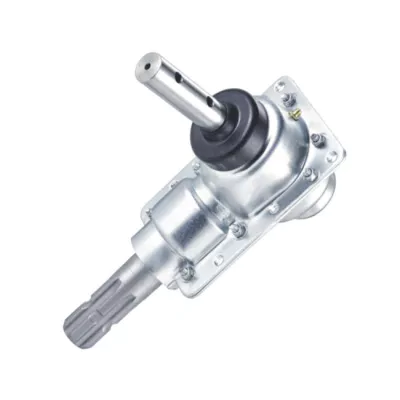
Advantages of Bevel Gearboxes in Specific Scenarios
Bevel gearboxes offer distinct advantages in certain scenarios, making them preferred over other gearbox types:
- Angular Transmission: When rotational motion needs to be transmitted between intersecting shafts at different angles, bevel gearboxes excel due to their ability to change direction.
- Compact Spaces: Bevel gearboxes are well-suited for applications with limited space, as they can fit into tight configurations without sacrificing performance.
- High Torque at 90 Degrees: In situations requiring high torque transmission at a 90-degree angle, bevel gearboxes are more efficient than other types.
- Steering Mechanisms: Bevel gearboxes are commonly used in steering systems of vehicles and machinery, providing smooth and accurate directional control.
- Complex Motion Requirements: When machinery or equipment requires intricate motion patterns involving changes in direction and speed, bevel gearboxes offer the necessary versatility.
- Heavy-Duty Applications: Bevel gearboxes excel in heavy-duty environments where robustness, torque transmission, and durability are crucial.
The specific design and capabilities of bevel gearboxes make them a preferred choice in these scenarios, contributing to optimal performance and efficiency in various industrial applications.
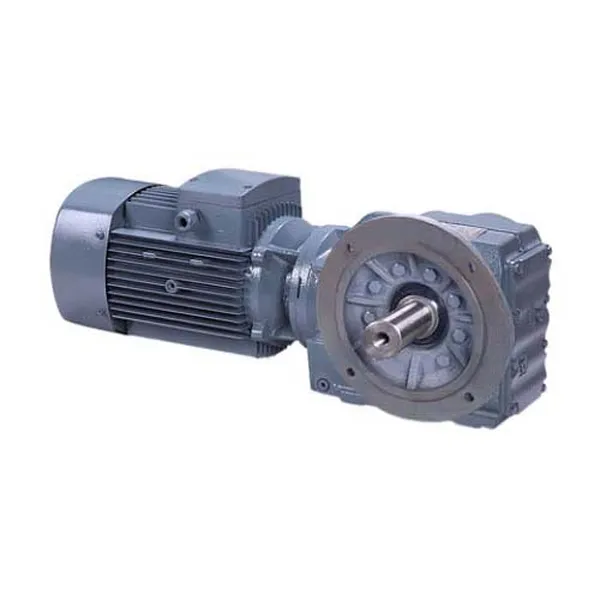
Proper Installation and Alignment of Bevel Gearboxes
Installing and aligning a bevel gearbox correctly is essential to ensure its optimal performance and longevity. Here are the steps typically involved in the process:
- Preparation: Before installation, thoroughly clean the mounting surfaces of both the gearbox and the driven equipment to ensure proper contact. Check that all components are in good condition and free from damage.
- Positioning: Carefully position the gearbox and the driven equipment according to the manufacturer’s specifications and the intended orientation of the bevel gears.
- Alignment: Use precision alignment tools, such as dial indicators or laser alignment systems, to ensure accurate alignment of the bevel gears. The goal is to achieve proper concentricity and parallelism between the input and output shafts of the gearbox.
- Bolt and Fasten: Securely bolt and fasten the gearbox to the mounting surface. Use appropriate torque settings as recommended by the manufacturer to ensure proper clamping force without overloading the fasteners.
- Lubrication: Apply the recommended lubricant to the bevel gears and other relevant components according to the manufacturer’s guidelines. Proper lubrication is crucial for reducing friction and wear during operation.
- Testing: After installation, perform a thorough functional test of the bevel gearbox. Check for any abnormal noise, vibration, or overheating during operation. Ensure that the gearbox operates smoothly and efficiently under different load conditions.
- Monitoring: Regularly monitor the performance of the bevel gearbox through routine inspections and maintenance. Keep an eye out for any signs of misalignment, wear, or other issues that may affect performance.
It’s important to follow the manufacturer’s installation and alignment guidelines closely, as proper installation practices contribute to the reliable and efficient operation of the bevel gearbox.
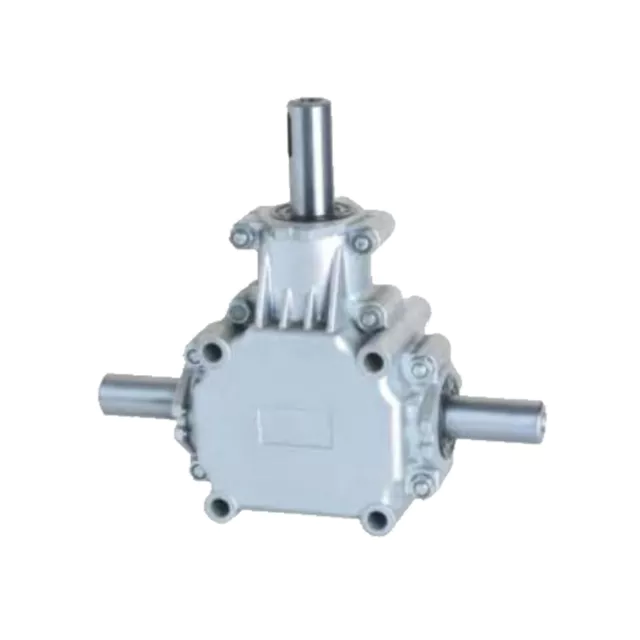
Importancia del ángulo entre los engranajes cónicos en una caja de engranajes cónicos
El ángulo entre los engranajes cónicos en una caja de engranajes cónicos desempeña un papel crucial en la transmisión del movimiento de rotación entre los ejes que se cruzan. Este ángulo, a menudo denominado «ángulo del eje» o «ángulo de paso», tiene implicaciones significativas para el rendimiento, la eficiencia y la capacidad de carga de la caja de engranajes.
El ángulo entre los engranajes cónicos afecta a varios aspectos clave:
- Ventaja mecánica: El ángulo determina la ventaja mecánica o la relación de transmisión de la caja de engranajes cónicos. Un ángulo menor resulta en una menor relación de transmisión, lo que proporciona un mayor par motor y una menor velocidad de rotación, mientras que un ángulo mayor produce una mayor relación de transmisión, lo que resulta en una mayor velocidad de rotación y un menor par motor.
- Eficiencia: El ángulo afecta la eficiencia de la transmisión de potencia. Un ángulo menor generalmente conlleva una mayor eficiencia debido a una mejor distribución de la carga y a la reducción de las pérdidas por fricción.
- Distribución de carga: Los ángulos elegidos correctamente contribuyen a una distribución uniforme de la carga entre los dientes de los engranajes cónicos. Los ángulos incorrectos pueden provocar un desgaste desigual y fallos prematuros.
- Restricciones de espacio: El ángulo influye en las dimensiones generales de la caja de engranajes cónicos, lo cual puede ser fundamental cuando el espacio es limitado en ciertas aplicaciones.
El ángulo entre los engranajes cónicos se selecciona generalmente en función de los requisitos específicos del sistema mecánico y la aplicación prevista. Se trata de un aspecto fundamental del diseño que los ingenieros analizan minuciosamente para garantizar un rendimiento y una fiabilidad óptimos de la caja de engranajes cónicos.


editor by CX 2023-12-15