
Produktbeschreibung
K Series Gear Reducer Helical Bevel Gearbox
Produktbeschreibung
Beschreibung: Kegelradgetriebe der K-Serie
Überblick
(1) Eingangsart: gekoppelter Motor, Riemenmotor, Eingangswelle oder Anschlussflansch.
(2) Rechtwinkliger Ausgang.
(3) Kompakte Bauweise.
(4) Starre Zahnfläche.
(5) Höheres Drehmoment, hohe Belastbarkeit.
(6) Hochpräzisionsgetriebe, das einen stabilen Betrieb der Einheit und eine reibungslose Kraftübertragung gewährleistet.
(7) Geräuscharm, lange Lebensdauer.
(8) Großer Überlappungskoeffizient, abriebfest.
Detaillierte Fotos
Die Getriebe der K-Serie sind in folgenden Ausführungen erhältlich:
KAZ..Y..Kurzflanschmontierte Kegelradgetriebe mit Hohlwelle
K…Y…Fußmontierte Kegelradgetriebe mit CHINAMFG-Welle
KAT…Y…Drehmomentarm-montierte Kegelradgetriebe mit Hohlwelle
KAB…Y…Fußmontierte Kegelradgetriebe mit Hohlwelle
K(KF,KA,KAF,KAB,KAZ)S…Gelenkwellen-Schrägverzahnungen
KA…Y…Schrägverzahnte Kegelradgetriebe mit Hohlwelle
KA(K, KF ,KAF, KAB ,KAZ)R..Y..Kombinatorische Schräg-Kegelradgetriebe
KF…Y…Flanschmontierte Kegelradgetriebe mit CHINAMFG-Welle
KA(K, KF ,KAF ,KAZ)S…R…Kombinatorische Kegelradgetriebe mit Welleneingang
KAF…Y…Flanschmontierte Kegelradgetriebe mit Hohlwelle
KA(K, KF, KAF, KAB, KAZ)…Y…Bei der Montage des Benutzermotors oder des speziellen Motors 1 muss der Flansch angeschlossen werden.
Die Gewichte sind Mittelwerte und dienen nur als Referenz.
Das maximale Drehmoment ist das größte der maximalen Drehmomente, die sich aus dem unterschiedlichen Übersetzungsverhältnis für die angegebene Größe ergeben.
Nennleistung: 0,18 kW bis 200 kW
Nenndrehmoment: Bis zu 50000 Nm
Getriebeanordnung: Gehärtetes Kegelstirnradgetriebe
Eingangsdrehzahl: 50 Hz oder 60 Hz für 4-, 6- und 8-polige Motoren
Verhältnis: 5,36~192,18
Produktparameter
Struktur:
| K(-) |
K(A) | K(F) | Eingangsleistungsbereich | Ausgangsgeschwindigkeit | Ausgangsdrehmoment |
| Fußmontiert | Hohlwelle Ausgabe |
Flanschmontage | 0,18–200 kW | 0,1–270 U/min | Bis zu 50000 Nm |
Nennleistung und maximales Drehmoment:
| Größe |
38 | 48 | 58 | 68 | 78 | 88 | 98 | 108 | 128 | 158 | 168 | 188 |
| Struktur |
K KA KF KAF KAZ KAT KAB | |||||||||||
| Nennleistung (kW) |
0.18~ 3.0 |
0.18~ 3.0 |
0.18~ 5.5 |
0.18~ 5.5 |
0.37~ 11 |
0.75~ 22 |
1.3~ 30 |
3~ 45 |
7.5~ 90 |
11~ 160 |
11~ 200 |
18.5~ 200 |
| Verhältnis | 5.36~ 106.38 |
5.81~ 131.87 |
6.57~ 145.15 |
7.14~ 44.79 |
7.22~ 192.18 |
7.19~ 197.27 |
8.95~ 175.47 |
8.74~ 141.93 |
8.68~ 146.07 |
12.66~ 150.03 |
17.35~1 64.44 |
17.97~ 178.37 |
| Maximal Drehmoment (Nm) |
200 | 400 | 600 | 820 | 1550 | 2770 | 4300 | 8000 | 13000 | 18000 | 32000 | 50000 |
Gewicht des Getriebes:
| Größe |
38 | 48 | 58 | 68 | 78 | 88 | 98 | 108 | 128 | 158 | 168 | 188 |
| Gewicht |
11 | 20 | 27 | 33 | 57 | 85 | 130 | 250 | 380 | 610 | 1015 | 1700 |
Verpackung & Versand
Unternehmensprofil
Kundendienst
| Vorverkaufsdienstleistungen | 1. Gerätemodell auswählen. |
| 2. Produkte nach den speziellen Anforderungen der Kunden entwerfen und herstellen. | |
| 3. Technisches Personal für Kunden schulen. | |
| Dienstleistungen während des Verkaufs | 1. Produkte vor der Lieferung prüfen und abnehmen. |
| 2. Den Kunden bei der Erstellung von Lösungsplänen helfen. | |
| Kundendienst | 1. Kunden bei der Vorbereitung des ersten Bauvorhabens unterstützen. |
| 2. Schulen Sie die Bediener an vorderster Front. | |
| 3. Ergreifen Sie die Initiative, um das Problem schnellstmöglich zu beseitigen. | |
| 4. Technischen Austausch ermöglichen. |
Häufig gestellte Fragen
1. Wie wählen wir ein Getriebe aus, das unseren Anforderungen entspricht?
Sie können in unserem Katalog nachsehen, um das Getriebe auszuwählen, oder wir helfen Ihnen gerne bei der Auswahl, wenn Sie uns Ihre Angaben mitteilen.
die technischen Informationen zu erforderlichem Ausgangsdrehmoment, Ausgangsdrehzahl und Motorparametern usw.
2. Welche Informationen müssen wir vor der Bestellung angeben?
a) Getriebetyp, Übersetzungsverhältnis, Eingangs- und Ausgangstyp, Eingangsflansch, Montageposition und Motorinformationen usw.
b) Gehäusefarbe.
c) Bestellmenge.
d) Sonstige besondere Anforderungen.
3. In welchen Branchen werden Ihre Getriebe eingesetzt?
Unsere Getriebe finden breite Anwendung in den Bereichen Textilindustrie, Lebensmittelverarbeitung, Getränkeindustrie und chemische Industrie.
Rolltreppen, automatische Lageranlagen, Metallurgie, Umweltschutz, Logistik usw.
4. Bieten Sie Besichtigungen an?
Ja! Wir laden Sie herzlich zu einem Besuch ein! Wir holen Sie gerne vom Flughafen, Bahnhof usw. ab. Auch eine Unterkunft können wir für Sie organisieren. Bitte geben Sie uns im Voraus Bescheid.
5. Ist Ihre Qualität gut?
Qualität lügt nicht. Wir sind ein professioneller Hersteller und Exporteur von Getrieben und Motoren in Asien und verfügen seit 1982 über die entsprechende Lizenz. Außerdem haben wir als einer der führenden Hersteller die Zertifizierungen ISO 9001 und CE erhalten.
Kontakt:
Wenn Sie an unserem Produkt interessiert sind, kontaktieren Sie mich gerne.
Unser Team wird Sie bei allen Anliegen unterstützen.
| Application: | Motor, Machinery |
|---|---|
| Function: | Change Drive Torque, Speed Changing, Speed Reduction |
| Layout: | Right Angle |
| Hardness: | Hardened Tooth Surface |
| Installation: | Horizontal Type |
| Step: | Four-Step |
| Samples: |
US$ 20/Piece
1 Piece(Min.Order) | |
|---|
| Customization: |
Available
| Customized Request |
|---|
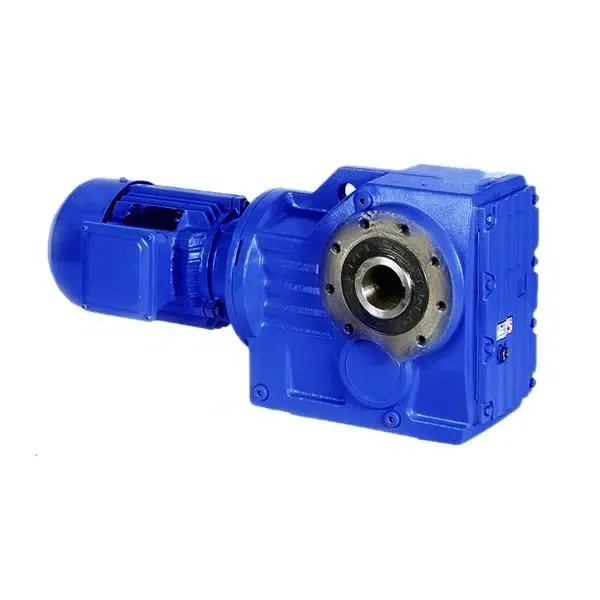
Distinguishing Bevel Gearboxes from Other Gear Systems
Bevel gearboxes stand out from other types of gear systems due to their unique characteristics and applications:
- Angle of Intersection: Bevel gearboxes are designed to transmit motion between intersecting shafts at specific angles, making them ideal for changing the direction of rotational motion.
- Direction Change: Unlike parallel shaft gear systems, bevel gearboxes change the direction of motion by 90 degrees or other specified angles, allowing them to efficiently transmit power around corners.
- Compact and Space-Saving: Bevel gearboxes are often compact and space-saving, making them suitable for applications with limited room for gear assembly.
- Wide Range of Angles: Bevel gearboxes can handle various angle configurations beyond 90 degrees, providing flexibility in designing complex mechanical systems.
- Specialized Applications: Bevel gearboxes are commonly used in applications requiring changes in direction, such as automotive differential systems, steering mechanisms, printing presses, and machinery with intersecting axes.
These distinguishing features make bevel gearboxes a versatile choice for scenarios where changing the direction of rotational motion or transmitting power between intersecting shafts is essential.
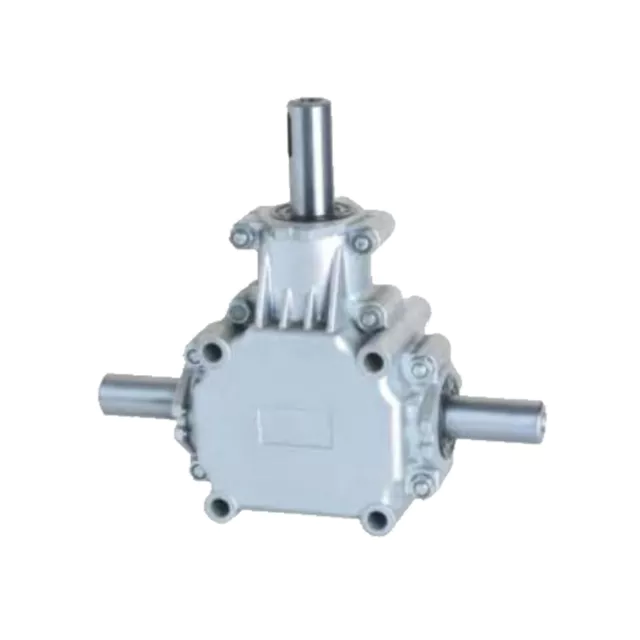
Bevel Gearboxes in Marine and Aerospace Applications
Yes, bevel gearboxes are commonly found in both marine and aerospace applications, offering unique advantages in these industries:
- Marine Applications: Bevel gearboxes are used in marine propulsion systems to transmit power from engines to propellers. Their ability to change rotational direction and transmit high torque makes them suitable for adjusting propeller pitch and optimizing thrust. Additionally, bevel gearboxes are employed in winch systems, steering mechanisms, and various onboard equipment.
- Aerospace Applications: Bevel gearboxes play a crucial role in aerospace systems, such as helicopter rotor systems. They transmit power from the engine to the rotor blades while allowing changes in rotational direction. In aircraft, bevel gearboxes are used in landing gear mechanisms, flap control systems, and engine accessory drives. The compact design of bevel gearboxes is especially beneficial in aerospace applications where space and weight considerations are essential.
The versatility, efficiency, and reliability of bevel gearboxes make them well-suited for addressing the unique challenges and requirements of marine and aerospace environments.
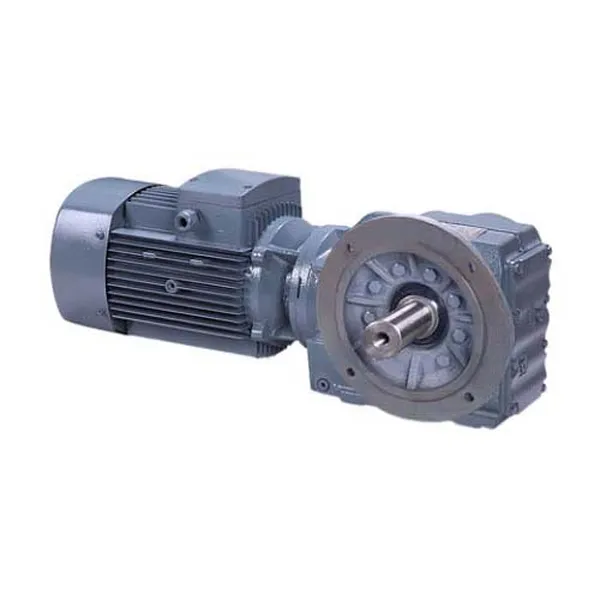
Transmission of Motion at an Angle with Bevel Gearboxes
Bevel gearboxes are designed to transmit motion between intersecting shafts that are positioned at an angle to each other. They accomplish this by using a set of bevel gears, which have teeth that are cut in a conical shape.
When two bevel gears mesh, their teeth engage at the point of contact. As one gear rotates, it drives the other gear, transmitting motion and torque between the shafts. The angle between the shafts and the orientation of the gear teeth determine the direction and speed of motion transfer.
There are two main types of bevel gears commonly used in bevel gearboxes:
- Straight Bevel Gears: These gears have straight-cut teeth and are used when the intersecting shafts are at a 90-degree angle. They are the simplest form of bevel gears and provide efficient motion transmission.
- Spiral Bevel Gears: These gears have teeth that are cut at an angle, allowing them to gradually engage and disengage. Spiral bevel gears are used when the intersecting shafts are at angles other than 90 degrees. They provide smoother operation, less noise, and increased load-carrying capacity compared to straight bevel gears.
The precision manufacturing of bevel gear teeth ensures accurate and reliable motion transmission at various angles, making bevel gearboxes suitable for applications that require motion to be transferred between intersecting shafts in non-parallel orientations.


editor by CX 2023-12-12