
Every hộp số bánh răng côn xoắn datasheet lists a transmission efficiency figure of 94–96%. Most engineers acknowledge it, few calculate what it actually means in euros, dollars, or kilowatt-hours over the lifetime of a drive. This article puts real numbers to the efficiency specification — and explains why a 2% difference in gearbox efficiency can be worth more than the purchase price of the gearbox itself within the first operating year.
1. What Transmission Efficiency Actually Measures
Transmission efficiency is the ratio of output power to input power, expressed as a percentage:
The power that does not reach the output shaft converts to heat in the gear mesh, bearings, and seals. A hộp số bánh răng côn xoắn at 95% efficiency converts 5% of input power to heat. A worm gearbox at 60% efficiency converts 40% to heat. That heat must go somewhere — and in industrial machinery, it goes into the oil, the housing, and the surrounding air, driving up oil change frequency, bearing temperatures, and ultimately maintenance costs.
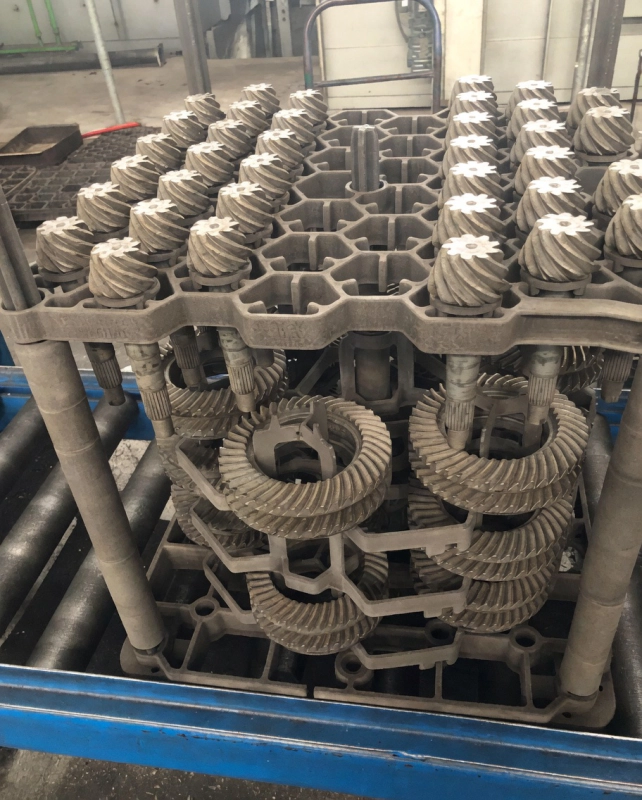
The 94–96% efficiency of spiral bevel gearboxes is achieved through two design advantages: rolling contact between gear teeth (rather than sliding), and precision-ground tooth profiles at ISO Grade 5–6 that minimise friction losses at the gear mesh interface.
2. The Energy Cost Calculation: Real Numbers
Consider a standard industrial scenario: a 22 kW motor driving a conveyor through a right-angle gearbox, operating 16 hours per day, 250 days per year (4,000 hours annually). European industrial electricity cost: €0.22 per kWh.
| Gearbox Type | Hiệu quả | Power Lost (kW) | Energy Lost/Year (kWh) | Annual Cost |
|---|---|---|---|---|
| Spiral Bevel (Ever Power) | 95% | 1.1 kW | 4,400 kWh | €968 |
| Worm Gearbox (20:1) | 60% | 8.8 kW | 35,200 kWh | €7,744 |
| Worm Gearbox (10:1) | 75% | 5.5 kW | 22,000 kWh | €4,840 |
| Helical Bevel (2-stage) | 93% | 1.54 kW | 6,160 kWh | €1,355 |
Annual saving by choosing Ever Power spiral bevel over a 20:1 worm gearbox: €6,776 per drive. On a plant with 10 such drives, that is €67,760 per year — more than enough to justify the entire gearbox replacement cost in under six months.

3. The Hidden Cost of Inefficiency: Heat
The power lost in an inefficient gearbox does not disappear — it becomes heat. Heat has cascading consequences:
Every 10°C rise in oil temperature approximately halves the oil service life. A worm gearbox generating 8.8 kW of heat in a 22 kW drive may require oil changes every 3 months instead of annually.
Elevated oil temperature reduces bearing grease and oil film viscosity. At 90°C oil temperature, L10 bearing life is reduced to approximately 25% of the rated value at 60°C operating temperature.
High-ratio worm gearboxes often require external oil cooling fans or heat exchangers — additional capital cost, maintenance points, and energy consumption that further erode the initial cost advantage.
To deliver 22 kW of mechanical output through a 60% efficient worm gearbox, the motor must supply 36.7 kW of input power. The motor must be sized for 36.7 kW, not 22 kW — increasing motor cost, cable sizing, and switchgear rating.
4. Efficiency Across the Ever Power Spiral Bevel Range
| Ratio | Typical Efficiency | Power Lost per 10 kW Input | Notes |
|---|---|---|---|
| 1:1 | 96% | 0.4 kW | Pure direction change — maximum efficiency |
| 1.5:1 | 95.5% | 0.45 kW | Fan and pump drives |
| 2:1 | 95% | 0.5 kW | Most common industrial ratio |
| 3:1 | 94% | 0.6 kW | Conveyor and mixer drives |
5. How Ever Power Achieves and Maintains 94–96% Efficiency
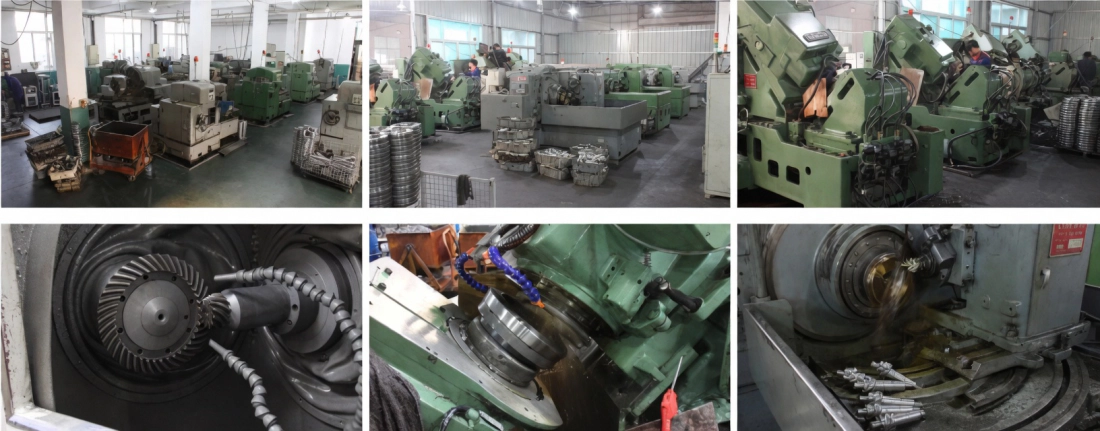
Tooth profile errors below 6 microns minimise transmission error — the primary source of dynamic friction losses at the gear mesh. Lower transmission error means lower dynamic loads and lower heat generation throughout the speed range.
Spiral bevel gears operate with predominantly rolling contact — friction coefficient approximately 0.03–0.05 vs 0.1–0.15 for sliding contact in worm drives. Lower friction coefficient = lower heat and higher efficiency.
Ever Power specifies GB L-CKC220-460 / Shell Omala 220-460 for standard operating temperatures. Correct viscosity minimises churning losses while maintaining adequate film thickness — over- or under-viscous oil both reduce efficiency.
Tapered roller bearings are pre-loaded to the correct setting during assembly — eliminating excess play that creates dynamic loads, without excess pre-load that increases rolling friction. Bearing losses account for 1–2% of total gearbox losses.
Customer Cases: Efficiency Upgrades
Netherlands — Chemical Plant, Rotterdam
Replaced four 20:1 worm gearboxes (62% efficiency) with Ever Power 3:1 spiral bevel units (94% efficiency) on agitator drives. Annual energy saving: 24,800 kWh per drive. Total plant saving across four drives: 99,200 kWh — €21,824 per year. Capital payback: 11 months.
“The ROI calculation was the easiest business case we have ever presented to management.” — Energy Manager
Germany — Wastewater Treatment Plant
Eight sludge mixer drives running worm gearboxes were upgraded to Ever Power spiral bevel units as part of a plant energy efficiency programme. Combined annual saving: 142,000 kWh. Carbon reduction: 58 tonnes CO2 per year based on German grid intensity.
“This single project contributed 12% of our annual carbon reduction target.” — Sustainability Engineer
Australia — Food Processing, Victoria
Conveyor drives running worm gearboxes at 78% efficiency replaced with Ever Power 2:1 spiral bevel at 95%. The lower heat generation eliminated oil overheating shutdowns that had caused six production stoppages per year, recovering an estimated AUD 180,000 in lost production value.
“The energy saving was important but stopping the production shutdowns was the real win.” — Operations Director
FAQ
Find out how much your drives are wasting — and what switching to spiral bevel saves
Ever Power provides a free energy saving calculation for any drive replacement. Send us your current gearbox type, motor power, and operating hours.