
Descrição do produto
|
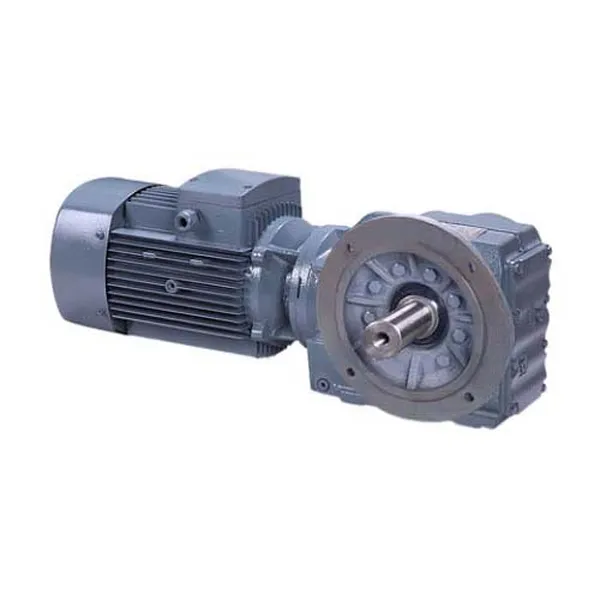
K series helical bevel speed gearbox reducer |
|
|
Product name |
Model K 107 series helical bevel gearbox motor reducer with oil seal overload parallel transmission 90 degree China factory |
|
Warranty |
1 year |
|
Applicable Industries |
Hotels, Building Material Shops, Manufacturing Plant, Machinery Repair Shops, Food & Beverage Factory, Farms, Home Use, Retail, |
|
Weight (KG) |
50KG |
|
Customized support |
OEM, ODM, OBM |
|
Arranjo de Engrenagens |
Helical |
|
Torque de saída |
3.5-56845N.m |
|
Velocidade de entrada |
0-3000rpm/min |
|
Velocidade de saída |
0.1-356rpm/min |
|
Place of Origin |
China |
|
Product name |
K Series Parallel Shaft Helical Gear Reducer |
|
Torque de saída |
10-62800N.m |
|
Velocidade de saída |
750-3000rpm/min |
|
Velocidade de entrada |
0-3000rpm/min |
|
Potência de entrada |
0.12-250kw |
|
Posição de montagem |
Foot Mounted. Flange Mounted |
|
Razão |
3.77~281.71 |
|
Arranjo de Engrenagens |
Helical |
|
Reduction ratio |
68 |
|
Hardness of Tooth Surface |
Tooth surface hardness |
Fotos detalhadas
Descrição do produto
-K Series Helical Bevel Gearbox
K series product performance
High transmission efficiency, low energy consumption and superior performance. High rigidity cast iron box with ribs; hard-toothed gears are made of high-quality alloy steel, the surface is carburized and quenched and hardened, and the teeth are finely machined, with stable transmission, low noise, large bearing capacity, low temperature rise and long service life.
High hardness high grinding accuracy
The gears are made of high-quality alloy carburizing and quenching, the tooth surface hardness is as high as 60±2hrc, and the tooth surface grinding accuracy is as high as 5-6 grades.
Elaborate design
From the box to the internal gear, it adopts a complete modular structure design, which is suitable for largescale production and
flexible selection.
Save power
The standard reducer model is divided according to the form of decreasing torque. Compared with the traditional equal proportion division, it is more in line with customer requirements and avoids power waste.
Certifications
/* March 10, 2571 17:59:20 */!function(){function s(e,r){var a,o={};try{e&&e.split(“,”).forEach(function(e,t){e&&(a=e.match(/(.*?):(.*)$/))&&1
| Hardness: | Hardened Tooth Surface |
|---|---|
| Installation: | 90 Degree |
| Layout: | Expansion |
| Gear Shape: | Bevel Gear |
| Step: | Single-Step |
| Type: | Gear Reducer |
| Samples: |
US$ 1000/Piece
1 Piece(Min.Order) | |
|---|
Common Applications of Bevel Gearboxes in Various Industries
Bevel gearboxes find widespread use across diverse industries due to their unique capabilities and advantages:
- Automotive: Bevel gearboxes are vital components in automotive differential systems, enabling smooth power distribution to the wheels and allowing for smooth turns and cornering.
- Aerospace: These gearboxes are employed in aircraft landing gear systems, helicopter rotor systems, and other applications requiring changes in rotational direction.
- Printing and Packaging: Bevel gearboxes are used in printing presses and packaging machinery to facilitate the transfer of motion between intersecting shafts.
- Construction: Construction equipment often relies on bevel gearboxes for steering mechanisms, making it possible to control the direction of heavy machinery.
- Industrial Machinery: Various industrial machines, such as woodworking equipment and conveyor systems, use bevel gearboxes for efficient power transmission around corners.
- Marine: Bevel gearboxes are utilized in marine propulsion systems and steering mechanisms for boats and ships.
- Energy and Power Generation: Wind turbines and hydroelectric generators benefit from bevel gearboxes to transmit motion between shafts at different angles.
The adaptability of bevel gearboxes to change motion direction while transmitting power efficiently makes them a go-to choice in industries where such capabilities are essential for optimal performance.
Proper Installation and Alignment of Bevel Gearboxes
Installing and aligning a bevel gearbox correctly is essential to ensure its optimal performance and longevity. Here are the steps typically involved in the process:
- Preparation: Before installation, thoroughly clean the mounting surfaces of both the gearbox and the driven equipment to ensure proper contact. Check that all components are in good condition and free from damage.
- Positioning: Carefully position the gearbox and the driven equipment according to the manufacturer’s specifications and the intended orientation of the bevel gears.
- Alignment: Use precision alignment tools, such as dial indicators or laser alignment systems, to ensure accurate alignment of the bevel gears. The goal is to achieve proper concentricity and parallelism between the input and output shafts of the gearbox.
- Bolt and Fasten: Securely bolt and fasten the gearbox to the mounting surface. Use appropriate torque settings as recommended by the manufacturer to ensure proper clamping force without overloading the fasteners.
- Lubrication: Apply the recommended lubricant to the bevel gears and other relevant components according to the manufacturer’s guidelines. Proper lubrication is crucial for reducing friction and wear during operation.
- Testing: After installation, perform a thorough functional test of the bevel gearbox. Check for any abnormal noise, vibration, or overheating during operation. Ensure that the gearbox operates smoothly and efficiently under different load conditions.
- Monitoring: Regularly monitor the performance of the bevel gearbox through routine inspections and maintenance. Keep an eye out for any signs of misalignment, wear, or other issues that may affect performance.
It’s important to follow the manufacturer’s installation and alignment guidelines closely, as proper installation practices contribute to the reliable and efficient operation of the bevel gearbox.
Types of Bevel Gearboxes and Their Classification
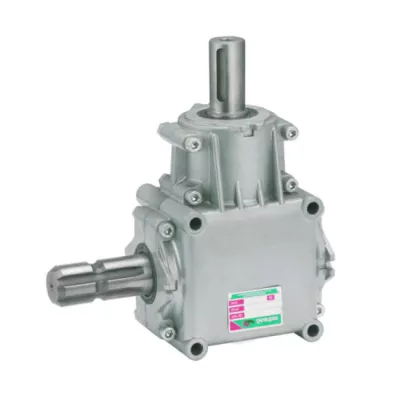
Bevel gearboxes come in various types, each designed for specific applications and requirements. They are classified based on factors such as gear arrangement, shaft orientation, and usage. Some common types of bevel gearboxes include:
- Straight Bevel Gearboxes: These gearboxes use straight bevel gears and are suitable for transmitting motion between intersecting shafts at a 90-degree angle.
- Spiral Bevel Gearboxes: These gearboxes use spiral bevel gears and are employed when the intersecting shafts are at angles other than 90 degrees. They offer smoother operation and higher load capacity.
- Skew Bevel Gearboxes: In skew bevel gearboxes, the axes of the input and output shafts are not parallel or intersecting. These gearboxes are used in applications where non-parallel and non-intersecting shafts need to be connected.
- Angular Bevel Gearboxes: Angular bevel gearboxes are designed to connect shafts at a specific angle, often used in applications where the required shaft angle is different from standard bevel gear configurations.
The classification of bevel gearboxes is based on the arrangement and orientation of the gear teeth and shafts. Manufacturers offer a variety of designs to accommodate different industrial needs and ensure efficient motion transmission at various angles.


editor by CX 2024-02-24