
Descripción del Producto
Gearbox For Snow Tillers
GEAR MATERIALS
20CrMnTi/20CrMnMo for your choice
CASTINGS MATERIALS
Gray cast iron HT250 according to standard GB/T 1348-2009 Ductile iron QT450-10 according to standard GB/T 1348-2009 Cast steel ZG310-570 according to standard GB/T 5613-2014
SHAFTS MATERIALS
40Cr,45#,20CrMnTi,20CrMnMo for your choice according to your request.
POWER To ensure the correct use of the product we recommand to pay attention to the specifications mentioned on our technical sheet.Consider also the input rotation speed,the power input and the transmission ratios.Where the rotation or other working conditions are different,please contact LongQuan technical department.
LUBRICATION
The reducer is usually supplied without lubricant.The recommended quantity of lubricant is indicated on our catalogue and the first replaced must be done after 50-60 hours of running,then replaced after 600-800 working hours. The emptying of the gearbox should be made immediately after the working,with the oil still hot,in order to avoid the deposition of sludge.Check frequently the oil level and top up the oil whenever necessary.
Related Products
Factory
Extensive use for agricultural machines
Guarantee: High precision, high wear resistance, low noise, smooth and steady, high strength
Our factory
/* March 10, 2571 17:59:20 */!function(){function s(e,r){var a,o={};try{e&&e.split(“,”).forEach(function(e,t){e&&(a=e.match(/(.*?):(.*)$/))&&1
| Type: | Agricultural Gearbox |
|---|---|
| Usage: | Agricultural Products Processing, Farmland Infrastructure, Tillage, Harvester, Planting and Fertilization, Grain Threshing, Cleaning and Drying, Agricultural Machine |
| Material: | Carbon Steel |
| Power Source: | Electricidad |
| Weight: | OEM |
| After-sales Service: | Installation Guide |
| Muestras: |
US$ 999/Piece
1 unidad (pedido mínimo) | |
|---|
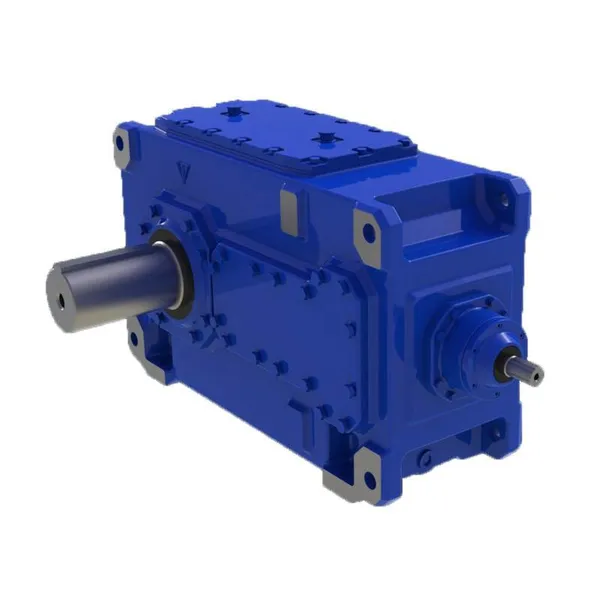
Minimizar la holgura y garantizar una transferencia de potencia eficiente en las cajas de engranajes cónicos.
Las cajas de engranajes cónicos están meticulosamente diseñadas para minimizar la holgura y optimizar la eficiencia de la transferencia de potencia, lo que garantiza un movimiento suave y preciso en los sistemas mecánicos.
Diversas consideraciones de diseño contribuyen a minimizar la holgura y mejorar la transferencia de potencia:
- Perfil y calidad dental: Los perfiles dentados de alta precisión con una holgura mínima entre los engranajes reducen el juego. El uso de técnicas de fabricación avanzadas garantiza una calidad constante de los engranajes y un acoplamiento preciso de los dientes.
- Precarga y patrón de contacto: La precarga aplicada correctamente y los patrones de contacto optimizados entre los dientes del engranaje cónico mejoran la precisión del engranaje, reduciendo la posibilidad de holgura y mejorando la distribución de la carga.
- Rigidez de la caja de cambios: La carcasa y los componentes rígidos de la caja de engranajes ayudan a mantener una alineación precisa de los engranajes, reduciendo los efectos de la deflexión y la desalineación que pueden provocar holgura.
- Selección de rodamientos: Los rodamientos de alta calidad con una holgura mínima contribuyen a reducir el juego y a conseguir un movimiento más suave al minimizar el movimiento axial y radial de los engranajes.
- Lubricación: Una lubricación adecuada reduce la fricción, el desgaste y la vibración, lo que favorece una transferencia de potencia eficiente y minimiza los problemas relacionados con el juego mecánico.
- Tolerancias y precisión de fabricación: Las estrictas tolerancias de fabricación y los procesos de mecanizado de precisión garantizan una geometría, alineación y posicionamiento uniformes de los engranajes, minimizando cualquier posible fuente de holgura.
Al incorporar estos principios y prácticas de diseño, las cajas de engranajes cónicos se diseñan para lograr un control preciso del juego y una transmisión de potencia eficiente. Esto las hace idóneas para aplicaciones donde el control preciso del movimiento, la exactitud y la fiabilidad son cruciales, como en robótica, industria aeroespacial, automoción y maquinaria industrial.
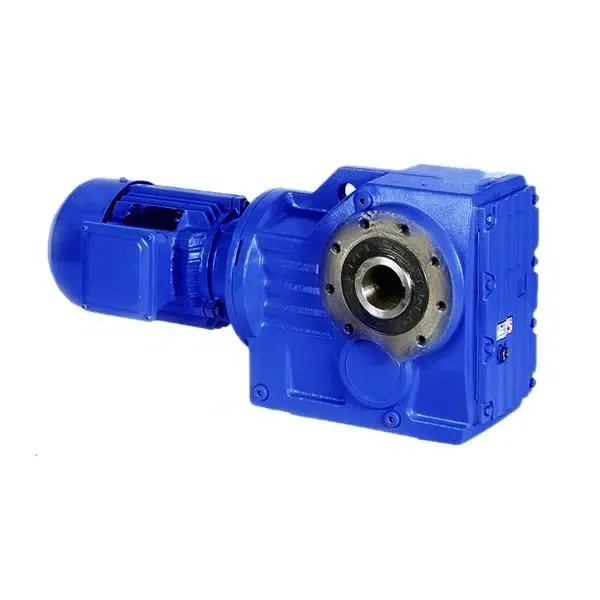
Challenges of Using Bevel Gearboxes
While bevel gearboxes offer various benefits, there are certain challenges that can arise when using them:
- Lubricación: Proper lubrication is essential to reduce friction, wear, and heat generation in bevel gearboxes. However, ensuring effective lubrication in the meshing bevel gears can be challenging due to their complex geometry and the potential for oil pooling or inadequate coverage.
- Noise and Vibration: Bevel gearboxes can produce noise and vibration during operation, especially at higher speeds. The interaction of the gear teeth can lead to noise generation, which may require additional measures such as sound insulation or vibration dampening to mitigate.
- Alignment: Precise alignment of the bevel gears is crucial to ensure smooth and efficient power transmission. Misalignment can lead to increased wear, reduced efficiency, and even gear tooth failure. Achieving proper alignment can be more complex in bevel gearboxes compared to other gearbox types.
- Maintenance: Bevel gearboxes may require more frequent maintenance compared to other gear systems. Regular inspections, lubrication checks, and gear tooth profile monitoring are necessary to detect and address any issues before they escalate.
- Restricciones de espacio: The design of bevel gearboxes can be bulky, especially when used in applications that require a high gear ratio. This can pose challenges in situations where space is limited.
- Heat Dissipation: High-speed or heavy-duty applications can generate significant heat in bevel gearboxes. Adequate heat dissipation mechanisms, such as cooling fins or lubrication cooling, may be required to prevent overheating and premature failure.
Engineers and manufacturers need to carefully address these challenges to ensure the reliable and effective use of bevel gearboxes in various applications.
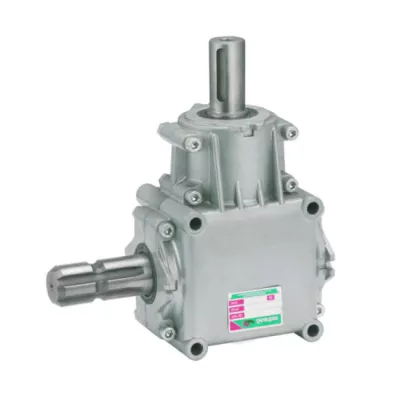
Types of Bevel Gearboxes and Their Classification
Bevel gearboxes come in various types, each designed for specific applications and requirements. They are classified based on factors such as gear arrangement, shaft orientation, and usage. Some common types of bevel gearboxes include:
- Straight Bevel Gearboxes: These gearboxes use straight bevel gears and are suitable for transmitting motion between intersecting shafts at a 90-degree angle.
- Spiral Bevel Gearboxes: These gearboxes use spiral bevel gears and are employed when the intersecting shafts are at angles other than 90 degrees. They offer smoother operation and higher load capacity.
- Skew Bevel Gearboxes: In skew bevel gearboxes, the axes of the input and output shafts are not parallel or intersecting. These gearboxes are used in applications where non-parallel and non-intersecting shafts need to be connected.
- Angular Bevel Gearboxes: Angular bevel gearboxes are designed to connect shafts at a specific angle, often used in applications where the required shaft angle is different from standard bevel gear configurations.
The classification of bevel gearboxes is based on the arrangement and orientation of the gear teeth and shafts. Manufacturers offer a variety of designs to accommodate different industrial needs and ensure efficient motion transmission at various angles.


editor by CX 2024-02-12