
Choosing between a spiralformad konisk växellåda and a worm gearbox is one of the most consequential decisions in industrial drive design. Both redirect rotational power through a 90-degree angle, both are widely available, and both have decades of engineering precedent behind them — yet they perform in fundamentally different ways under load, speed, and continuous duty conditions. This guide breaks down the technical differences so you can make the right call for your specific application.
1. The Core Difference: How Each Gearbox Transmits Power
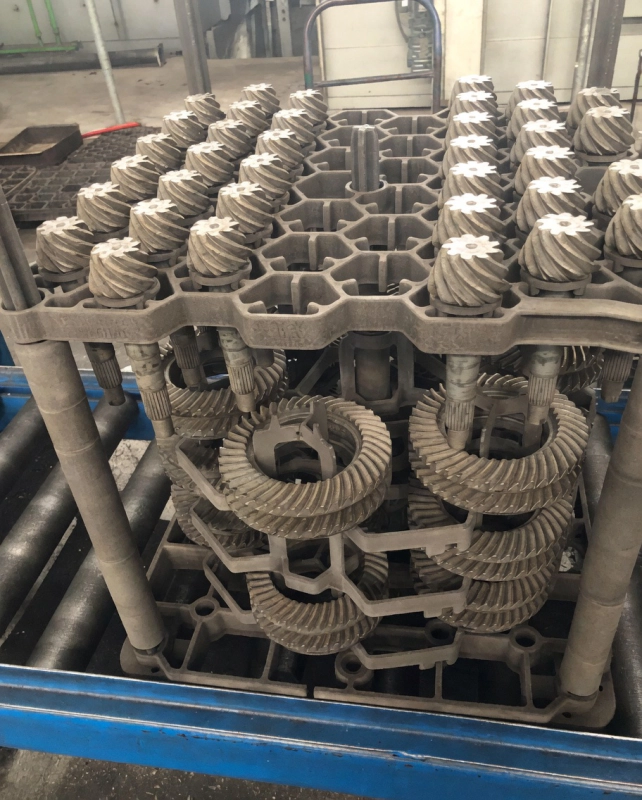
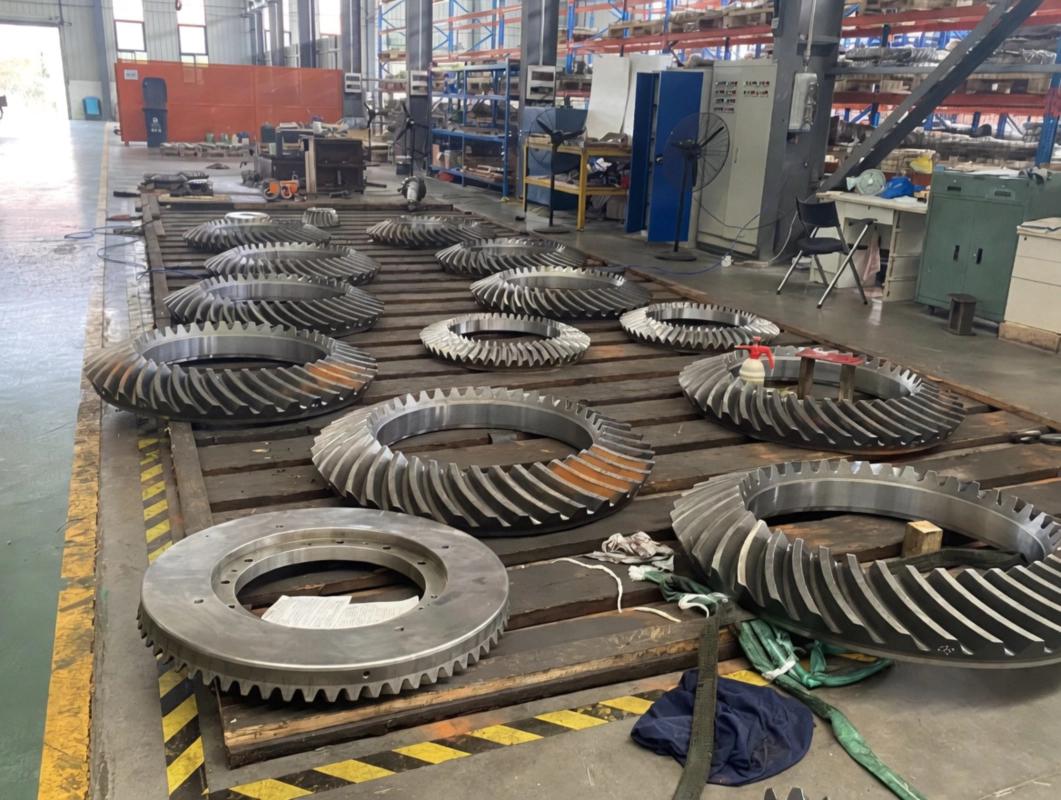
En spiralformad konisk växellåda uses a pair of conical gears with curved, helical teeth. The input and output shafts intersect at 90 degrees, and power transfers through rolling contact between the meshing teeth. Because multiple teeth engage simultaneously, the load is shared across a broad contact area — minimising peak stress and heat generation.
A worm gearbox, by contrast, uses a screw-type worm shaft meshing with a worm wheel. Power transfer relies heavily on sliding contact rather than rolling contact. This fundamental difference drives almost every performance gap between the two designs.
2. Head-to-Head Technical Comparison
| Parameter | Spiralformad konisk växellåda | Worm Gearbox |
|---|---|---|
| Transmission Efficiency | 94% – 96% | 50% – 90% (ratio-dependent) |
| Contact Type | Rolling contact | Sliding contact |
| Heat Generation | Low | High (especially at high ratios) |
| Available Ratios (single stage) | 1:1 – 6:1 | 5:1 – 100:1 |
| Noise Level | 60 – 68 dB | 65 – 85 dB |
| Backdrivability | Yes (bidirectional) | Self-locking at high ratios |
| Continuous Duty Suitability | Excellent | Moderate (heat limits duty cycle) |
| Load Capacity | High | Moderate |
| Relative Unit Cost | Moderate – Higher | Lower initial cost |
3. Efficiency: The Number That Changes Everything
The efficiency gap is where the decision becomes straightforward for continuous-duty applications. A spiralformad konisk växellåda maintains 94–96% transmission efficiency across its operating range. A worm gearbox running at a 30:1 ratio may deliver as little as 50–60% efficiency — meaning nearly half the input energy converts to heat rather than useful output torque.
For a 15 kW drive running 6,000 hours per year, the difference between 95% and 60% efficiency represents roughly 31,500 kWh of wasted energy annually. At €0.20 per kWh, that is over €6,300 in additional electricity costs every year — before accounting for the cooling system needed to manage that heat.
4. When Worm Gearboxes Still Make Sense
Worm gearboxes are not obsolete. They remain the right choice in specific scenarios:
When you need a single-stage ratio above 6:1 — up to 100:1 — a worm gearbox is simpler and more compact than a two-stage bevel arrangement.
At high ratios, worm gearboxes are self-locking, preventing the load from back-driving the motor. Useful in certain lifting and positioning applications without a separate brake.
For applications running less than 30 minutes per hour at moderate load, the efficiency penalty of worm design is financially negligible.
Where upfront capital cost is the sole decision criterion and long-term energy cost is not considered, worm gearboxes offer a lower initial price point.
5. When Spiral Bevel Gearboxes Are the Clear Choice
For the majority of modern industrial drive applications, a spiralformad konisk växellåda delivers superior results:
- Continuous-duty drives — conveyors, fans, pumps, mixers running 16–24 hours per day
- High-speed inputs — direct motor coupling at 1450 or 3000 rpm without speed limitation
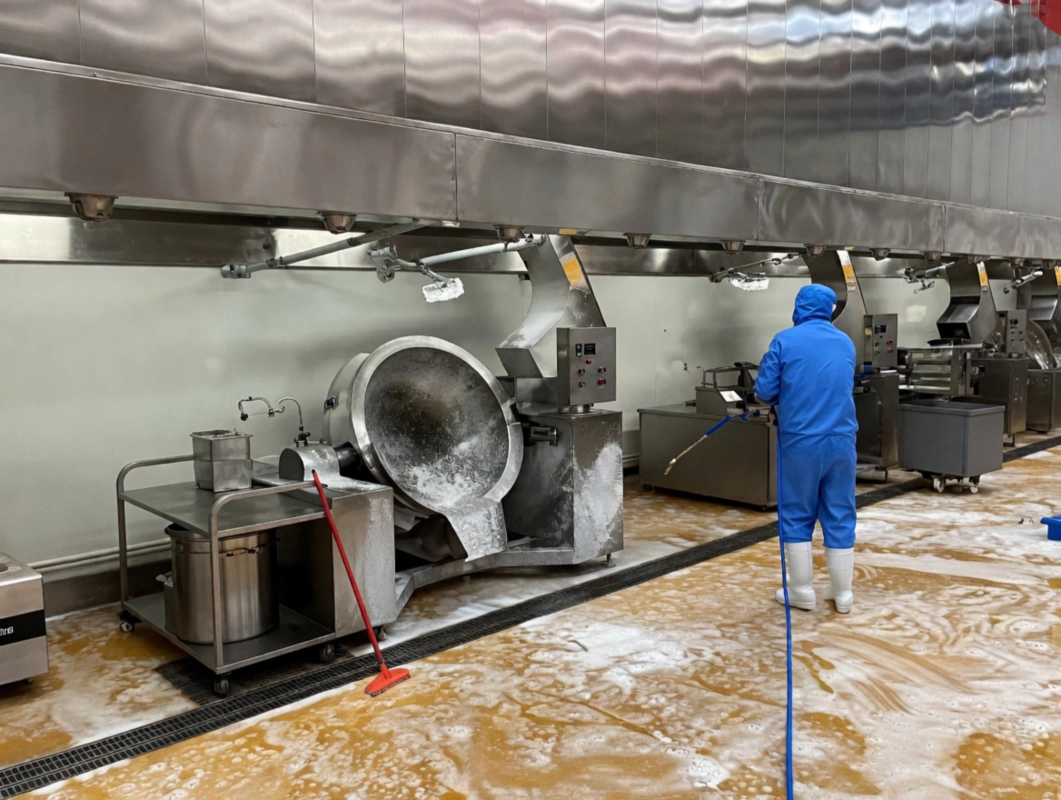
- Low-noise environments — food processing, pharmaceutical, and packaging machinery
- Precise positioning — servo-driven systems where backdrivability and low backlash are required
- High ambient temperatures — spiral bevel generates far less heat, avoiding thermal shutdown
- Stage machinery and entertainment — where silence and smooth motion are non-negotiable

6. Custom Spiral Bevel Gearboxes from Ever Power
Någonsin makt is a Netherlands-registered industrial transmission company with precision manufacturing in China. Beyond our standard series, we design and manufacture fully custom spiral bevel gearboxes based on your drawings, torque requirements, shaft dimensions, and operating environment. Standard lead times run 15–45 working days; urgent production scheduling is available for critical replacements.
Whether you are replacing a worm gearbox with a more efficient spiral bevel alternative, or specifying a new drive for a demanding industrial application, our engineering team provides 2D/3D CAD drawings, material certificates, and CE documentation with every order.
7. Customer Cases: Switching from Worm to Spiral Bevel
Netherlands — Chemical Processing Plant
An agitator drive running 20:1 worm gearboxes was overheating in a 38°C ambient. Replacing four units with Ever Power 3:1 spiral bevel gearboxes reduced oil temperature by 22°C and cut annual energy consumption by 18,400 kWh.
"The payback period was under 14 months. We should have made the switch five years earlier." — Plant Engineer, Rotterdam
Germany — Food Processing Line
A packaging conveyor using worm gearboxes was generating noise complaints on the production floor. Six Ever Power 2:1 spiral bevel units were installed. Measured noise dropped from 79 dB to 64 dB and no further heat-related shutdowns have occurred in 18 months.
"Quieter line, lower energy bill, zero downtime. Exactly what we needed." — Operations Manager, Bavaria
Australia — Mining Conveyor Drive
A surface mine in Queensland replaced worm gearboxes on three belt conveyor drives with Ever Power heavy-duty spiral bevel units. Continuous 24/7 operation at 45°C ambient with no thermal overload events recorded after 22 months in service.
"These run cooler and quieter than anything we had before. The CE paperwork for our compliance team was complete and accurate." — Maintenance Superintendent, Queensland
FAQ: Spiral Bevel Gearbox vs Worm Gearbox
Ready to upgrade from worm to spiral bevel?
Ever Power engineers are ready to assess your current drive and provide a cost-benefit analysis for switching to a high-efficiency spiral bevel gearbox.
Prata med en ingenjör