
제품 설명
제품 설명
-K Series Helical Bevel Gearbox
K series gear reducer, manufactured according to international technical requirements, has a high scientific and technological content; Space saving, reliable and durable, high overload capacity, power up to 132KW; Low energy consumption, superior performance, reducer efficiency up to 95%
It is designed and manufactured on the basis of module combination system. There are a lot of motor combinations, installation forms and structural schemes. The transmission ratio is classified carefully to meet different operating conditions and realize electromechanical integration.
High transmission efficiency, low energy consumption and superior performance.
Reinforced high rigid cast iron box; The hardened gear is made of high-quality alloy steel. Its surface is carburized, quenched and hardened, and the gear is finely ground. It features stable transmission, low noise, large bearing capacity, low temperature rise, and long service life. Performance and characteristics:
1. The gear is carburized and quenched with high-quality alloy, the hardness of the tooth surface is up to 60 ± 2hrc, and the grinding accuracy of the tooth surface is up to 5-6
2. The computer modification technology is used to pre modify the gear, which greatly improves the bearing capacity of the reducer
3. Complete modular structure design is adopted from the box to the internal gear, which is suitable for large-scale production and flexible selection
4. The standard reducer models are divided according to the form of decreasing torque. Compared with the traditional equal proportion division, they are more in line with customer requirements and avoid power waste
5. It is designed and manufactured by cad/cam to ensure the stability of quality
6. Multiple sealing structures are adopted to prevent oil leakage
7. Multi directional noise reduction measures to ensure the excellent low noise performance of the reducer
8. The installation mode of Liyi products is flexible, which makes it easy for customers to choose K57 reducer, K67 reducer, K77 reducer, K87 reducer, K97 reducer, KA87 reducer, KA97 reducer, KA107 reducer, KA127 reducer
제품 특징
1. Input mode: Coupled motor, belted motor, input shaft or connection flange.
2. Output: Right angle
3. Compact structure. Rigid tooth face. Carrying greater torque, high loading capacity.
4.High precision gear, ensuring the unit to operate stably, smooth transmission.
5. Low noise, long lifespan. Large overlap coefficient, abrasion resistant.
Shaft gear box speed reducer high efficiency and stable operation Gear box speed reducer gearbox with small vibration and low noise
Speed ratio is wide and the grading is fine
Gear reducer box Installation method variety
상세 사진
Our product line
/* March 10, 2571 17:59:20 */!function(){function s(e,r){var a,o={};try{e&&e.split(“,”).forEach(function(e,t){e&&(a=e.match(/(.*?):(.*)$/))&&1
| 경도: | 경화된 치아 표면 |
|---|---|
| 설치: | 90도 |
| Layout: | Expansion |
| Gear Shape: | Bevel Gear |
| Step: | Single-Step |
| Type: | Gear Reducer |
| 샘플: |
US$ 1000/Piece
1개 (최소 주문 수량) | |
|---|
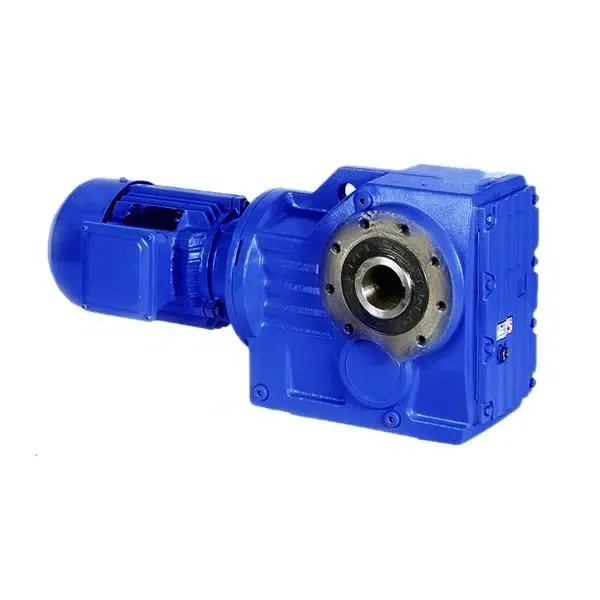
Distinguishing Bevel Gearboxes from Other Gear Systems
Bevel gearboxes stand out from other types of gear systems due to their unique characteristics and applications:
- Angle of Intersection: Bevel gearboxes are designed to transmit motion between intersecting shafts at specific angles, making them ideal for changing the direction of rotational motion.
- Direction Change: Unlike parallel shaft gear systems, bevel gearboxes change the direction of motion by 90 degrees or other specified angles, allowing them to efficiently transmit power around corners.
- Compact and Space-Saving: Bevel gearboxes are often compact and space-saving, making them suitable for applications with limited room for gear assembly.
- Wide Range of Angles: Bevel gearboxes can handle various angle configurations beyond 90 degrees, providing flexibility in designing complex mechanical systems.
- Specialized Applications: Bevel gearboxes are commonly used in applications requiring changes in direction, such as automotive differential systems, steering mechanisms, printing presses, and machinery with intersecting axes.
These distinguishing features make bevel gearboxes a versatile choice for scenarios where changing the direction of rotational motion or transmitting power between intersecting shafts is essential.
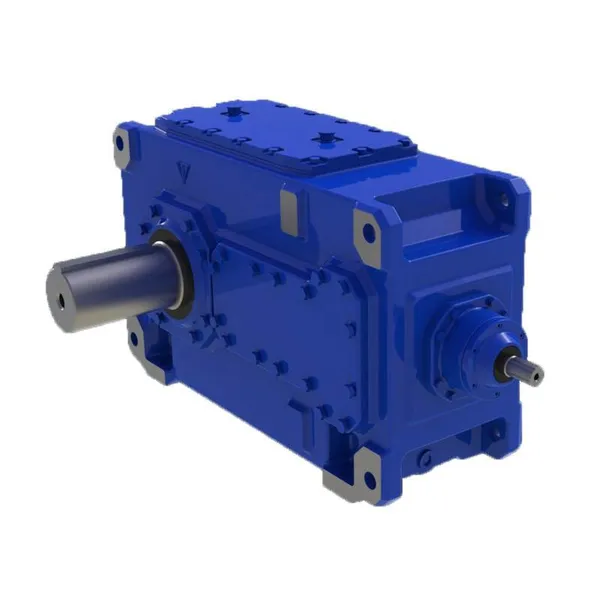
Limitations of Torque and Speed Handling in Bevel Gearboxes
While bevel gearboxes offer numerous advantages, they do have limitations in terms of the maximum torque and speed they can handle:
- Torque Limitations: The torque capacity of a bevel gearbox is influenced by factors such as the size of the gears, the material used, and the tooth geometry. Excessive torque can lead to gear tooth failure, wear, or even breakage.
- Speed Limitations: High-speed applications can pose challenges for bevel gearboxes. As rotational speed increases, the centrifugal forces acting on the gears also increase, leading to potential issues with stability, vibration, and heat generation.
- 열 방출: Bevel gearboxes may generate heat due to friction and the load-carrying nature of the gears. Prolonged operation at high speeds or under heavy loads can result in increased heat, which may require additional cooling mechanisms.
- Material and Design: The material used for the gears and gearbox housing, as well as the design and manufacturing quality, play a significant role in determining the torque and speed limits of the gearbox. Inadequate material selection or poor design can result in premature failure.
- Application-Specific Considerations: The limitations of bevel gearboxes may vary based on the specific application requirements, environmental conditions, and operational factors. It’s important to carefully assess the suitability of a bevel gearbox for a given task.
Engineers and designers need to carefully analyze the torque and speed requirements of an application to ensure that the selected bevel gearbox can operate safely and effectively within its specified limits.
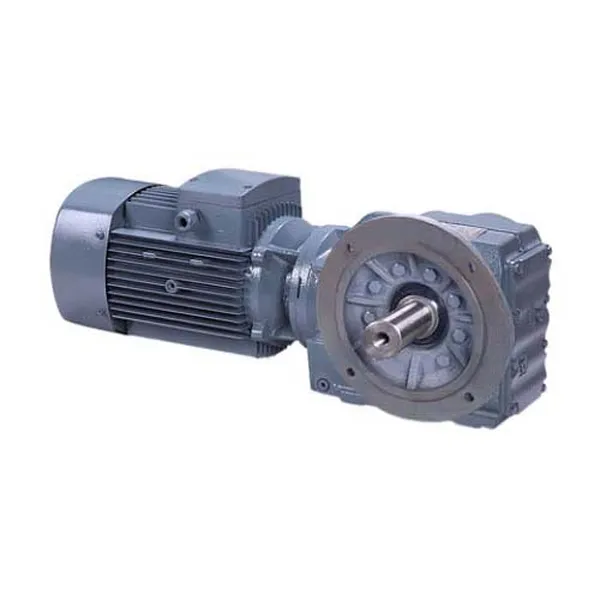
Transmission of Motion at an Angle with Bevel Gearboxes
Bevel gearboxes are designed to transmit motion between intersecting shafts that are positioned at an angle to each other. They accomplish this by using a set of bevel gears, which have teeth that are cut in a conical shape.
When two bevel gears mesh, their teeth engage at the point of contact. As one gear rotates, it drives the other gear, transmitting motion and torque between the shafts. The angle between the shafts and the orientation of the gear teeth determine the direction and speed of motion transfer.
There are two main types of bevel gears commonly used in bevel gearboxes:
- Straight Bevel Gears: These gears have straight-cut teeth and are used when the intersecting shafts are at a 90-degree angle. They are the simplest form of bevel gears and provide efficient motion transmission.
- Spiral Bevel Gears: These gears have teeth that are cut at an angle, allowing them to gradually engage and disengage. Spiral bevel gears are used when the intersecting shafts are at angles other than 90 degrees. They provide smoother operation, less noise, and increased load-carrying capacity compared to straight bevel gears.
The precision manufacturing of bevel gear teeth ensures accurate and reliable motion transmission at various angles, making bevel gearboxes suitable for applications that require motion to be transferred between intersecting shafts in non-parallel orientations.


editor by CX 2024-02-21