
Description du produit
Description du produit
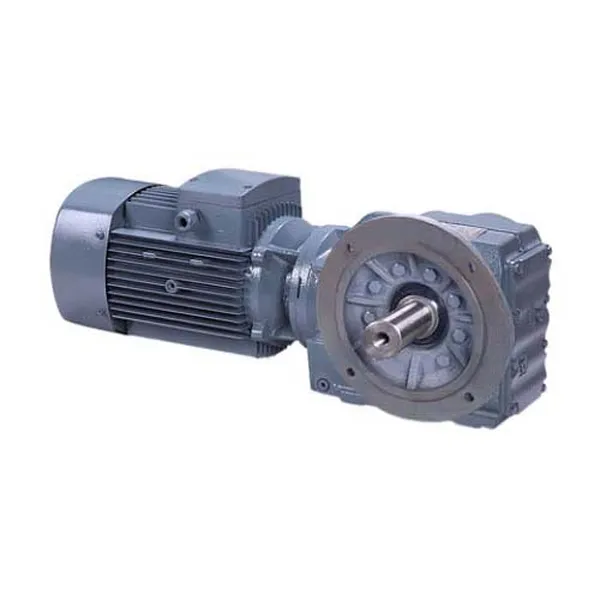
-K Series Helical Bevel Gearbox
K series gear reducer, manufactured according to international technical requirements, has a high scientific and technological content; Space saving, reliable and durable, high overload capacity, power up to 132KW; Low energy consumption, superior performance, reducer efficiency up to 95%
It is designed and manufactured on the basis of module combination system. There are a lot of motor combinations, installation forms and structural schemes. The transmission ratio is classified carefully to meet different operating conditions and realize electromechanical integration.
High transmission efficiency, low energy consumption and superior performance.
Reinforced high rigid cast iron box; The hardened gear is made of high-quality alloy steel. Its surface is carburized, quenched and hardened, and the gear is finely ground. It features stable transmission, low noise, large bearing capacity, low temperature rise, and long service life. Performance and characteristics:
1. The gear is carburized and quenched with high-quality alloy, the hardness of the tooth surface is up to 60 ± 2hrc, and the grinding accuracy of the tooth surface is up to 5-6
2. The computer modification technology is used to pre modify the gear, which greatly improves the bearing capacity of the reducer
3. Complete modular structure design is adopted from the box to the internal gear, which is suitable for large-scale production and flexible selection
4. The standard reducer models are divided according to the form of decreasing torque. Compared with the traditional equal proportion division, they are more in line with customer requirements and avoid power waste
5. It is designed and manufactured by cad/cam to ensure the stability of quality
6. Multiple sealing structures are adopted to prevent oil leakage
7. Multi directional noise reduction measures to ensure the excellent low noise performance of the reducer
8. The installation mode of Liyi products is flexible, which makes it easy for customers to choose K57 reducer, K67 reducer, K77 reducer, K87 reducer, K97 reducer, KA87 reducer, KA97 reducer, KA107 reducer, KA127 reducer
Caractéristiques du produit
1. Input mode: Coupled motor, belted motor, input shaft or connection flange.
2. Output: Right angle
3. Compact structure. Rigid tooth face. Carrying greater torque, high loading capacity.
4.High precision gear, ensuring the unit to operate stably, smooth transmission.
5. Low noise, long lifespan. Large overlap coefficient, abrasion resistant.
Our process of production
Our product line
/* 22 janvier 2571 19:08:37 */!function(){function s(e,r){var a,o={};try{e&&e.split(“,”).forEach(function(e,t){e&&(a=e.match(/(.*?):(.*)$/))&&1
| Dureté: | Surface dentaire durcie |
|---|---|
| Installation: | 90 Degree |
| Mise en page: | Expansion |
| Gear Shape: | Bevel Gear |
| Étape: | Single-Step |
| Type: | Gear Reducer |
| Exemples : |
US$ 1000/Piece
1 pièce (commande minimale) | |
|---|
Applications courantes des réducteurs à engrenages coniques dans diverses industries
Les réducteurs à engrenages coniques sont largement utilisés dans divers secteurs industriels en raison de leurs capacités et avantages uniques :
- Automobile: Les boîtes de vitesses à engrenages coniques sont des composants essentiels des systèmes différentiels automobiles, permettant une distribution fluide de la puissance aux roues et assurant des virages et des prises de virages en douceur.
- Aérospatial: Ces réducteurs sont utilisés dans les systèmes de trains d'atterrissage d'avions, les systèmes de rotors d'hélicoptères et d'autres applications nécessitant des changements de sens de rotation.
- Impression et emballage : Les réducteurs à engrenages coniques sont utilisés dans les presses d'imprimerie et les machines d'emballage pour faciliter la transmission du mouvement entre les arbres qui se croisent.
- Construction: Les engins de chantier utilisent souvent des réducteurs à engrenages coniques pour leurs mécanismes de direction, ce qui permet de contrôler la direction des machines lourdes.
- Machines industrielles : Diverses machines industrielles, telles que les équipements de travail du bois et les systèmes de convoyage, utilisent des réducteurs à engrenages coniques pour une transmission de puissance efficace dans les virages.
- Marin: Les réducteurs à engrenages coniques sont utilisés dans les systèmes de propulsion marine et les mécanismes de direction des bateaux et des navires.
- Production d'énergie et d'électricité : Les éoliennes et les générateurs hydroélectriques bénéficient de réducteurs à engrenages coniques pour transmettre le mouvement entre des arbres situés à différents angles.
L'adaptabilité des réducteurs à engrenages coniques, qui permettent de changer de direction tout en transmettant efficacement la puissance, en fait un choix privilégié dans les industries où de telles capacités sont essentielles pour des performances optimales.
Maintenance Procedures to Extend the Lifespan of Bevel Gearboxes
Proper maintenance is essential for extending the lifespan of bevel gearboxes. Here are specific procedures to ensure their longevity:
- Regular Inspection: Conduct routine visual inspections to identify signs of wear, damage, or misalignment. Check for unusual noise, vibration, or leaks.
- Lubrification: Follow the recommended lubrication schedule and guidelines for the specific gearbox. Ensure the correct type and quantity of lubricant are used.
- Cleanliness: Keep the gearbox and its surrounding area clean to prevent dirt, debris, and contaminants from entering and causing damage.
- Tightening and Fasteners: Periodically check and tighten fasteners, bolts, and mounting components. Loose fasteners can lead to misalignment and excessive wear.
- Alignment: Ensure proper alignment of the gearbox with connected components. Misalignment can cause increased friction, heat, and wear.
- Temperature Monitoring: Monitor the operating temperature of the gearbox to identify any overheating issues. Excessive heat can degrade lubricant and components.
- Seals and Gaskets: Inspect and replace seals and gaskets as needed to prevent leaks and contamination.
- Gear Tooth Inspection: Periodically check gear teeth for signs of pitting, chipping, or wear. Address any issues promptly to prevent further damage.
- Vibration Analysis: Implement vibration analysis to detect irregularities in the gearbox’s operation. Unusual vibrations may indicate misalignment or other mechanical issues.
- Replace Worn Parts: Replace worn or damaged components, such as bearings, gears, and seals, with genuine parts from the manufacturer.
- Professional Maintenance: Engage qualified technicians for more in-depth inspections and maintenance tasks, especially for complex gearboxes.
- Operating Conditions: Operate the gearbox within its specified load, speed, and temperature limits to prevent excessive stress and wear.
- Training: Ensure personnel are trained to operate, maintain, and troubleshoot the gearbox properly.
- Record Keeping: Maintain detailed records of maintenance activities, inspections, and repairs for reference and future planning.
By following these maintenance procedures, bevel gearboxes can maintain optimal performance, minimize downtime, and have an extended operational lifespan.
Transmission of Motion at an Angle with Bevel Gearboxes
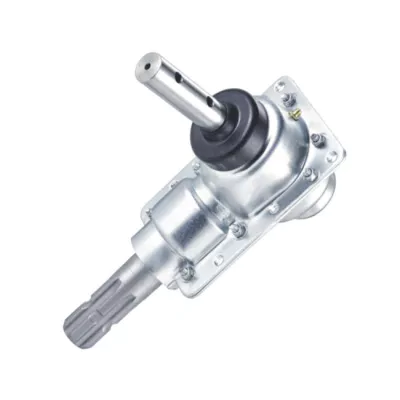
Bevel gearboxes are designed to transmit motion between intersecting shafts that are positioned at an angle to each other. They accomplish this by using a set of bevel gears, which have teeth that are cut in a conical shape.
When two bevel gears mesh, their teeth engage at the point of contact. As one gear rotates, it drives the other gear, transmitting motion and torque between the shafts. The angle between the shafts and the orientation of the gear teeth determine the direction and speed of motion transfer.
There are two main types of bevel gears commonly used in bevel gearboxes:
- Straight Bevel Gears: These gears have straight-cut teeth and are used when the intersecting shafts are at a 90-degree angle. They are the simplest form of bevel gears and provide efficient motion transmission.
- Spiral Bevel Gears: These gears have teeth that are cut at an angle, allowing them to gradually engage and disengage. Spiral bevel gears are used when the intersecting shafts are at angles other than 90 degrees. They provide smoother operation, less noise, and increased load-carrying capacity compared to straight bevel gears.
The precision manufacturing of bevel gear teeth ensures accurate and reliable motion transmission at various angles, making bevel gearboxes suitable for applications that require motion to be transferred between intersecting shafts in non-parallel orientations.


editor by CX 2024-04-25