
Descripción del Producto
Descripción del Producto
Detailed Photos
Parámetros del producto
|
Name |
High Precision Planetary Gearbox |
|
Model |
AB042, AB060, AB060A, AB090A, AB115, AB142, AB180, AB220 |
|
Gearing Arrangement |
Planetary |
|
Effeiency withfull load |
≥97 |
|
Backlash |
≤5 |
|
Weight |
0.5~48kg |
|
Tipo de engranaje |
Helical Gear |
|
Gear stages |
1 stage, 2 stage |
|
Rated Torque |
14N.m-2000N.m |
|
Gear Ratio One-stage |
3, 4, 5, 6, 7, 8, 9, 10 |
|
Gear Ratio Two-stage |
15, 20, 25, 30, 35, 40, 45, 50, 60, 70, 80, 90, 100 |
|
Mounting Position |
Horizontal (foot mounted) or Vertical (flange mounted) |
|
Usage |
stepper motor, servo motor, AC motor, DC motor, etc |
features:
AB-series reducer features:
1. Helical gear design The reduction mechanism adopts the helical gear design, and its tooth shape meshing rate is more than twice that of the general spur gear, and has the characteristics of smooth operation, low noise, high output torque and low backlash
2. Collet type locking mechanism The connection between the input end and the motor adopts a collet-type locking mechanism and undergoes dynamic balance analysis to ensure the concentricity of the joint interface and zero-backlash power transmission at high input speeds
3. Modular design of motor connection board The unique modular design of the motor connecting plate and shaft is suitable for any brand and type of servo motor;
4. Efficient surface treatment technology The surface of the gearbox is treated with electroless nickel, and the connecting plate of the motor is treated with black anodic treatment to improve the environmental tolerance and corrosion resistance
5. One-piece gearbox body The gearbox and the inner ring gear adopt an integrated design, with compact structure, high precision and large output torque
6. Accurate concentricity of gear bar The sun gear made of the whole gear bar has strong rigidity and accurate concentricity
7. Solid, Single piece sun gear construction obtains precise concentricity with increased strength and rigidity. 8.Precision taper roller bearing support to increases radial and axial loading capacity.
Aplicaciones
Certifications
Packaging & Shipping
/* 22 de enero de 2571 19:08:37 */!function(){function s(e,r){var a,o={};try{e&&e.split(“”,).forEach(function(e,t){e&&(a=e.match(/(.*?):(.*)$/))&&1
| Dureza: | Superficie del diente endurecida |
|---|---|
| Instalación: | Tipo vertical |
| Disposición: | Coaxial |
| Gear Shape: | Planetary |
| Paso: | Single-Step |
| Type: | Ab Series Gearbox, Gear Reducer |
| Muestras: |
US$ 100/Piece
1 unidad (pedido mínimo) | |
|---|
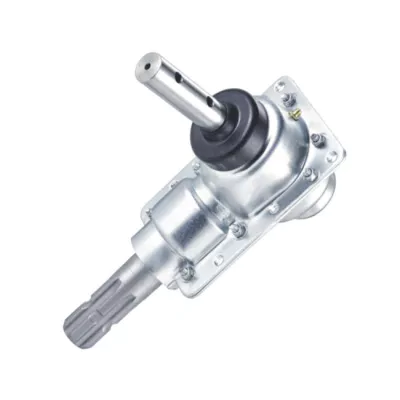
Advantages of Bevel Gearboxes in Specific Scenarios
Bevel gearboxes offer distinct advantages in certain scenarios, making them preferred over other gearbox types:
- Angular Transmission: When rotational motion needs to be transmitted between intersecting shafts at different angles, bevel gearboxes excel due to their ability to change direction.
- Compact Spaces: Bevel gearboxes are well-suited for applications with limited space, as they can fit into tight configurations without sacrificing performance.
- High Torque at 90 Degrees: In situations requiring high torque transmission at a 90-degree angle, bevel gearboxes are more efficient than other types.
- Steering Mechanisms: Bevel gearboxes are commonly used in steering systems of vehicles and machinery, providing smooth and accurate directional control.
- Complex Motion Requirements: When machinery or equipment requires intricate motion patterns involving changes in direction and speed, bevel gearboxes offer the necessary versatility.
- Heavy-Duty Applications: Bevel gearboxes excel in heavy-duty environments where robustness, torque transmission, and durability are crucial.
The specific design and capabilities of bevel gearboxes make them a preferred choice in these scenarios, contributing to optimal performance and efficiency in various industrial applications.
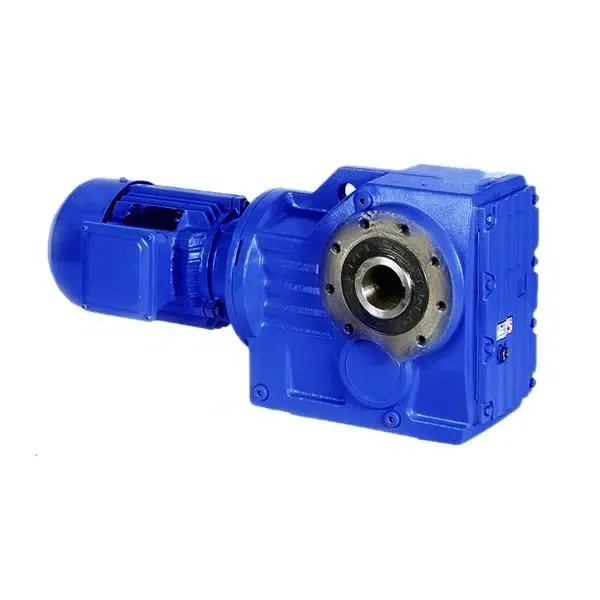
Challenges of Using Bevel Gearboxes
While bevel gearboxes offer various benefits, there are certain challenges that can arise when using them:
- Lubricación: Proper lubrication is essential to reduce friction, wear, and heat generation in bevel gearboxes. However, ensuring effective lubrication in the meshing bevel gears can be challenging due to their complex geometry and the potential for oil pooling or inadequate coverage.
- Noise and Vibration: Bevel gearboxes can produce noise and vibration during operation, especially at higher speeds. The interaction of the gear teeth can lead to noise generation, which may require additional measures such as sound insulation or vibration dampening to mitigate.
- Alignment: Precise alignment of the bevel gears is crucial to ensure smooth and efficient power transmission. Misalignment can lead to increased wear, reduced efficiency, and even gear tooth failure. Achieving proper alignment can be more complex in bevel gearboxes compared to other gearbox types.
- Maintenance: Bevel gearboxes may require more frequent maintenance compared to other gear systems. Regular inspections, lubrication checks, and gear tooth profile monitoring are necessary to detect and address any issues before they escalate.
- Restricciones de espacio: The design of bevel gearboxes can be bulky, especially when used in applications that require a high gear ratio. This can pose challenges in situations where space is limited.
- Heat Dissipation: High-speed or heavy-duty applications can generate significant heat in bevel gearboxes. Adequate heat dissipation mechanisms, such as cooling fins or lubrication cooling, may be required to prevent overheating and premature failure.
Engineers and manufacturers need to carefully address these challenges to ensure the reliable and effective use of bevel gearboxes in various applications.
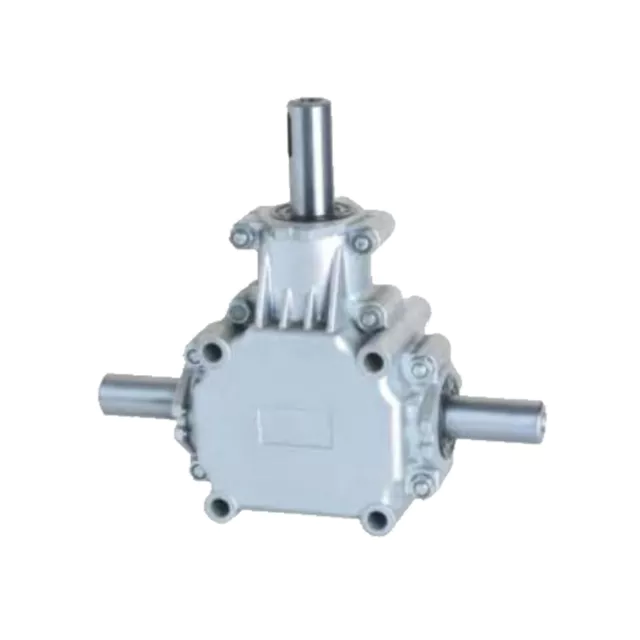
Importancia del ángulo entre los engranajes cónicos en una caja de engranajes cónicos
El ángulo entre los engranajes cónicos en una caja de engranajes cónicos desempeña un papel crucial en la transmisión del movimiento de rotación entre los ejes que se cruzan. Este ángulo, a menudo denominado «ángulo del eje» o «ángulo de paso», tiene implicaciones significativas para el rendimiento, la eficiencia y la capacidad de carga de la caja de engranajes.
El ángulo entre los engranajes cónicos afecta a varios aspectos clave:
- Ventaja mecánica: El ángulo determina la ventaja mecánica o la relación de transmisión de la caja de engranajes cónicos. Un ángulo menor resulta en una menor relación de transmisión, lo que proporciona un mayor par motor y una menor velocidad de rotación, mientras que un ángulo mayor produce una mayor relación de transmisión, lo que resulta en una mayor velocidad de rotación y un menor par motor.
- Eficiencia: El ángulo afecta la eficiencia de la transmisión de potencia. Un ángulo menor generalmente conlleva una mayor eficiencia debido a una mejor distribución de la carga y a la reducción de las pérdidas por fricción.
- Distribución de carga: Los ángulos elegidos correctamente contribuyen a una distribución uniforme de la carga entre los dientes de los engranajes cónicos. Los ángulos incorrectos pueden provocar un desgaste desigual y fallos prematuros.
- Restricciones de espacio: El ángulo influye en las dimensiones generales de la caja de engranajes cónicos, lo cual puede ser fundamental cuando el espacio es limitado en ciertas aplicaciones.
El ángulo entre los engranajes cónicos se selecciona generalmente en función de los requisitos específicos del sistema mecánico y la aplicación prevista. Se trata de un aspecto fundamental del diseño que los ingenieros analizan minuciosamente para garantizar un rendimiento y una fiabilidad óptimos de la caja de engranajes cónicos.


editor by CX 2024-04-26